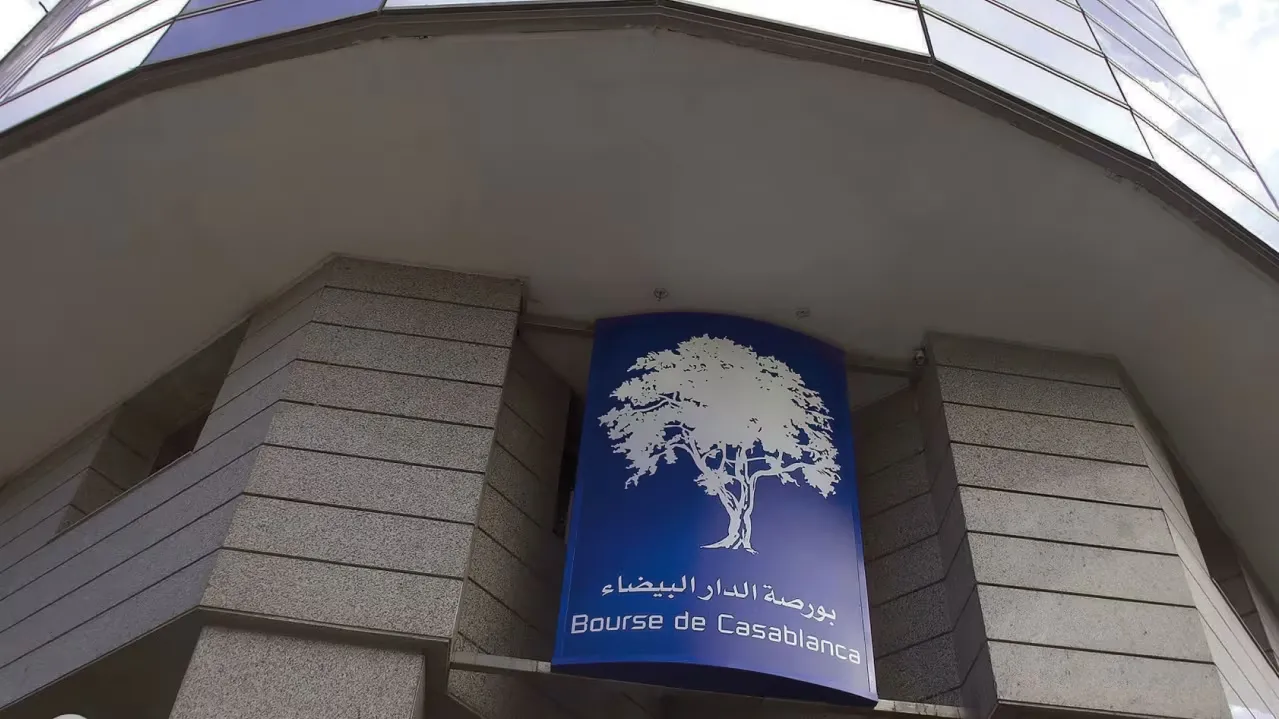

The Casablanca Stock Exchange is embarking on a significant transformation as it introduces futures contracts, marking a critical milestone in its evolution after a decade of stagnation. This development signals a shift towards more sophisticated investment strategies and enhances the exchange's regional attractiveness. The transition occurs within the broader context of financial recovery following the global financial crisis of 2008, as highlighted by the weekly magazine _Challenge_.
While Morocco managed to largely avoid the systemic shocks that affected advanced economies, the Casablanca Stock Exchange still felt the indirect repercussions of the crisis. International liquidity tightened, private investment slowed down, and institutional investors adopted a more cautious stance. Before 2008, the market experienced a euphoric phase driven by privatizations, major financial operations, and a boom in banking and real estate stocks. However, from 2009 to 2016, the Casablanca Stock Exchange operated within a narrow corridor marked by low liquidity, declining volumes, and a scarcity of new listings, as noted by Abdelmalek Benabdeljalil, vice-president of BMCE Capital, cited by _Challenge_.
Fortunately, this period of stagnation appears to be behind us. The Casablanca financial market is witnessing a notable resurgence, evidenced by recent IPOs of major groups. Its entry into the exclusive club of African exchanges with a futures market further illustrates this revival. This initiative, supported by the Ministry of Finance, Bank Al-Maghrib, and the Moroccan Capital Market Authority (AMMC), signifies a transition from a cash transaction-focused market to one that integrates derivative products. The first available instrument is a futures contract linked to the MASI.20 index, which tracks the twenty largest listed companies. These contracts operate under margin requirements and daily settlement adjustments.
"We are entering a new era for our capital market," states Nasser Seddiqi, General Director of the Casablanca Stock Exchange, in an interview with 2M. The futures market represents a structural advancement for the Moroccan financial ecosystem. By introducing these instruments, it allows investors to anticipate market changes, hedge against volatility, and diversify their strategies. "Today, we offer investors the ability to maintain their positions while having a hedge," he adds. This new framework also enhances trading liquidity and transparency, relying on a regulated system and a structured ecosystem involving market makers and accredited members.
Younes El Bacha, Director of Diversified and International Equity Management at Red Med Capital, emphasizes the profound impact of this innovation on investment strategies. "This new provision introduces a profound transformation of investment strategies. Until now, the market was dominated by directional approaches focused on buying and holding securities. Now, investors have tools that allow them to manage their market exposure effectively." He highlights that these instruments provide opportunities to hedge against declines and quickly adjust portfolio risk levels without selling the underlying shares. "Beyond these technical aspects, the futures market offers a new perspective by integrating a forward-looking dimension. This new instrument enables a shift from a primarily passive market to a more dynamic one, incorporating hedging, arbitrage, and tactical management strategies."
This innovation is also strategically positioned to bolster the attractiveness of the Casablanca financial market. The exchange aims not only to improve its liquidity but also to attract new types of investors, particularly international ones. The introduction of derivative products fosters the emergence of more sophisticated investment strategies and helps deepen the market. However, it is essential to acknowledge that these instruments come with inherent risks. "Generally, the introduction of derivative products carries significant risks, particularly regarding leverage," warns Younes El Bacha. "While leverage can amplify gains, it can also significantly increase losses, exposing less experienced investors to higher risk levels, especially in cases of margin calls. Furthermore, these instruments rely on more complex mechanisms than traditional stocks, necessitating a solid understanding of hedging and valuation concepts."
The year 2025 signifies a turning point for the Casablanca Stock Exchange. "More than just a cyclical rebound, the current performance aligns with a logic of recovery and maturation after nearly fifteen years of relative underperformance," explains a market insider. The resurgence of IPOs, the expansion of the investor base, and the symbolic crossing of the 1 trillion dirhams capitalization threshold reflect a gradual reclaiming of the capital market as a strategic tool for financing and value creation.
As reported by fr.le360.ma.