The Grand Stade Hassan II: A Fusion of Tradition and Modernity
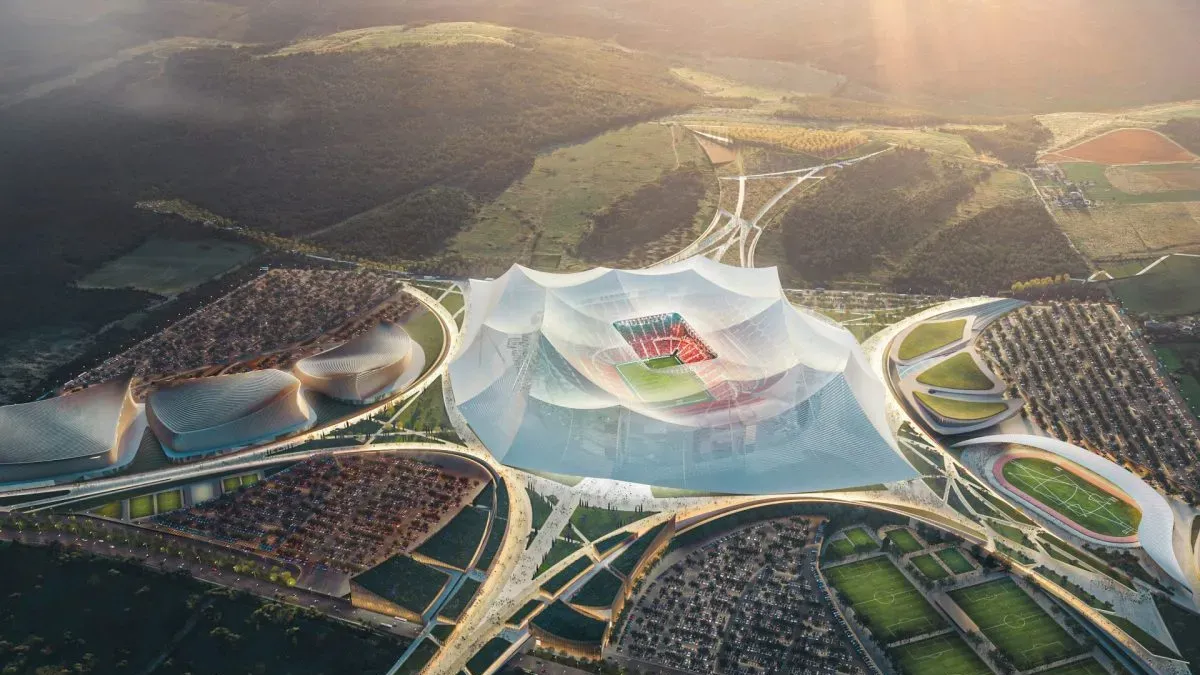
In stark contrast to many contemporary stadiums that favor futuristic designs, the Grand Stade Hassan II draws inspiration from a deeply rooted symbol of Moroccan culture: the _moussem_, which refers to the grand tents historically used for festivals, religious gatherings, and community meetings. This cultural reference has given rise to a massive aluminum tensile cover that appears to float over the landscape, creating a striking visual impact that is both modern and traditional.
The ambitious project is a collaboration between the Moroccan architectural firm Oualalou + Choi and the internationally renowned firm Populous, which is a leader in sports architecture. With a portfolio that includes transformative stadiums like London’s Tottenham Hotspur Stadium and the Lusail Olympic Stadium in Qatar—host of the 2022 World Cup final—Populous brings invaluable experience in managing large-scale international events. Meanwhile, Oualalou + Choi has infused the project with a sense of cultural identity, ensuring that the stadium is not just another generic venue but a building that resonates with Morocco's historical memory and traditional forms of gathering.
A Monumental Oasis with Cutting-Edge Design
Slated to open in 2028 as one of the primary venues for the 2030 World Cup, the Grand Stade Hassan II will boast a staggering capacity of 115,000 spectators, surpassing even the Rungrado 1st of May Stadium in North Korea, thus becoming the largest football-specific stadium in the world. This monumental structure will be located in Benslimane, strategically positioned between Casablanca and Rabat on a sprawling 100-hectare site enveloped by forest. The site has been carefully selected to facilitate easy access to both cities through newly constructed roads and a planned railway station.
Technically, the project is impressive: the stadium's cover will span over 100,000 square meters and will be engineered to shield the seating areas without obstructing sightlines for the audience. The design incorporates multiple levels for circulation, expansive access zones, and facilities tailored to accommodate over 100,000 visitors. Notably, the project will feature energy-efficient solutions and systems aimed at enhancing thermal comfort inside the stadium—a critical consideration given the region's climatic conditions.
One of the most distinctive aspects of the design is the integration of nature. The translucent cover, supported by 32 large structural cores that also serve as access points, will house gardens elevated approximately 28 meters above ground. These green spaces will be accessible to the public before and after events, while botanical gardens at ground level will further reinforce the connection between architecture and the surrounding landscape. The cover itself will be a centerpiece of the design, featuring a massive aluminum lattice structure that not only protects the stadium but also creates a translucent layer that filters natural light.
Hospitality sectors, VIP boxes, and commercial spaces will be incorporated into the lateral areas of the stadium, ensuring that it serves a purpose beyond match days and can host a variety of events throughout the year.
According to Tarik Oualalou, the project's lead architect and founding partner of Oualalou + Choi, "The Grand Stade Hassan II is deeply rooted in Moroccan culture, traditions, and contemporary expressions. It draws inspiration from ancestral figures such as the _moussem_, the tent, and the garden, as well as from Morocco's diverse landscapes. It is a generous space, open to the world and respectful of the nature it protects.”
The stadium is named in honor of Hassan II, who reigned over Morocco from 1961 until his death in 1999. He was one of the most influential figures in modern Moroccan history, known for his significant contributions to the country’s modernization and for navigating a complex political landscape marked by tensions known as the "years of lead." His legacy also includes monumental public works and national symbols, such as the Hassan II Mosque in Casablanca, inaugurated in 1993, which is one of the largest religious structures in the world. Like this iconic mosque, the new stadium aims to become a noteworthy architectural piece and a symbol of international projection for Morocco.
As Morocco prepares to host the 2030 World Cup alongside Spain and Portugal, the Grand Stade Hassan II aspires to be the venue for the tournament's most anticipated match—the final. While FIFA has yet to make a final decision regarding the location of the final, competition is heating up between Spain and Morocco. The Spanish candidate is the recently renovated Santiago Bernabéu Stadium in Madrid, which has become one of the most modern sports venues globally. FIFA President Gianni Infantino has expressed a preference for the final to take place there, partly due to his close relationship with Real Madrid President Florentino Pérez and the club's historical significance in international football. In response, Morocco is putting all its resources behind the future Hassan II Stadium, with the President of the Moroccan Football Federation, Fouzi Lekjaa, stating that the stadium "has no budget limits," reflecting the magnitude of this investment. The estimated budget ranges between 5 to 6.7 billion Moroccan dirhams (approximately 500 to 670 million USD).
Beyond the World Cup, the construction of the Hassan II Stadium is part of an ambitious sports infrastructure plan aimed at establishing Morocco as a host for major international events well into the future. The goal is for the stadium to remain active post-tournament, hosting football matches, concerts, and large-scale entertainment events. This venue is a critical component of a broader renovation of the country’s sports network, which includes stadiums in Agadir, Fez, Marrakech, Tangier, and Rabat, ultimately aiming to create lasting infrastructure and enhance Morocco's tourism positioning.
At this pivotal moment, Moroccan football is experiencing a significant growth surge, having emerged as a notable player on the international stage. The 2022 World Cup in Qatar marked a turning point, as the national team, led by coach Walid Regragui, made history by becoming the first African team to reach the World Cup semifinals. This success has been supported by sustained efforts in player development, particularly through the Mohamed VI Football Academy, established in 2010, which has produced talents like Nayef Aguerd, Azzedine Ounahi, and Youssef En-Nesyri, who have gone on to shine in Europe’s top leagues. Alongside these homegrown talents, players like Achraf Hakimi, Sofyan Amrabat, and Brahim Díaz represent a generation that blends locally developed talent with players emerging from the Moroccan diaspora in Europe. Historic clubs like Wydad Casablanca and Raja Casablanca are also driving this growth, solidifying Morocco's status as a rising power in the world of sports.
As reported by busqueda.com.uy.