Understanding the Threat of Iran's Nuclear Developments
Since the autumn of 2025, Western intelligence has observed the transfer of centrifuges to an underground facility fortified against aerial bombardments, raising pressing questions about the intent behind this move. It remains uncertain whether the primary objective is to safeguard the equipment or to enhance uranium enrichment and assemble nuclear weapons. Precision planning is essential for any targeted strikes on this facility, which would be influenced by various factors, including intelligence reports regarding the initiation of activities, the replenishment of U.S. heavy bomb stocks, and a meticulously coordinated attack plan capable of striking within a meter or two.
Experts in nuclear energy, including Israeli Prime Minister Benjamin Netanyahu and former U.S. President Donald Trump, share a growing concern that Iran could take its remaining stock of 60% enriched uranium and further enrich it to 90% using a limited number of operational centrifuges. Should the Iranian regime pursue this course of action—a possibility supported by emerging evidence—its aim would be to acquire fissile materials sufficient for the creation of more than one atomic bomb. The availability of such materials would significantly shorten the path to developing nuclear weapons.
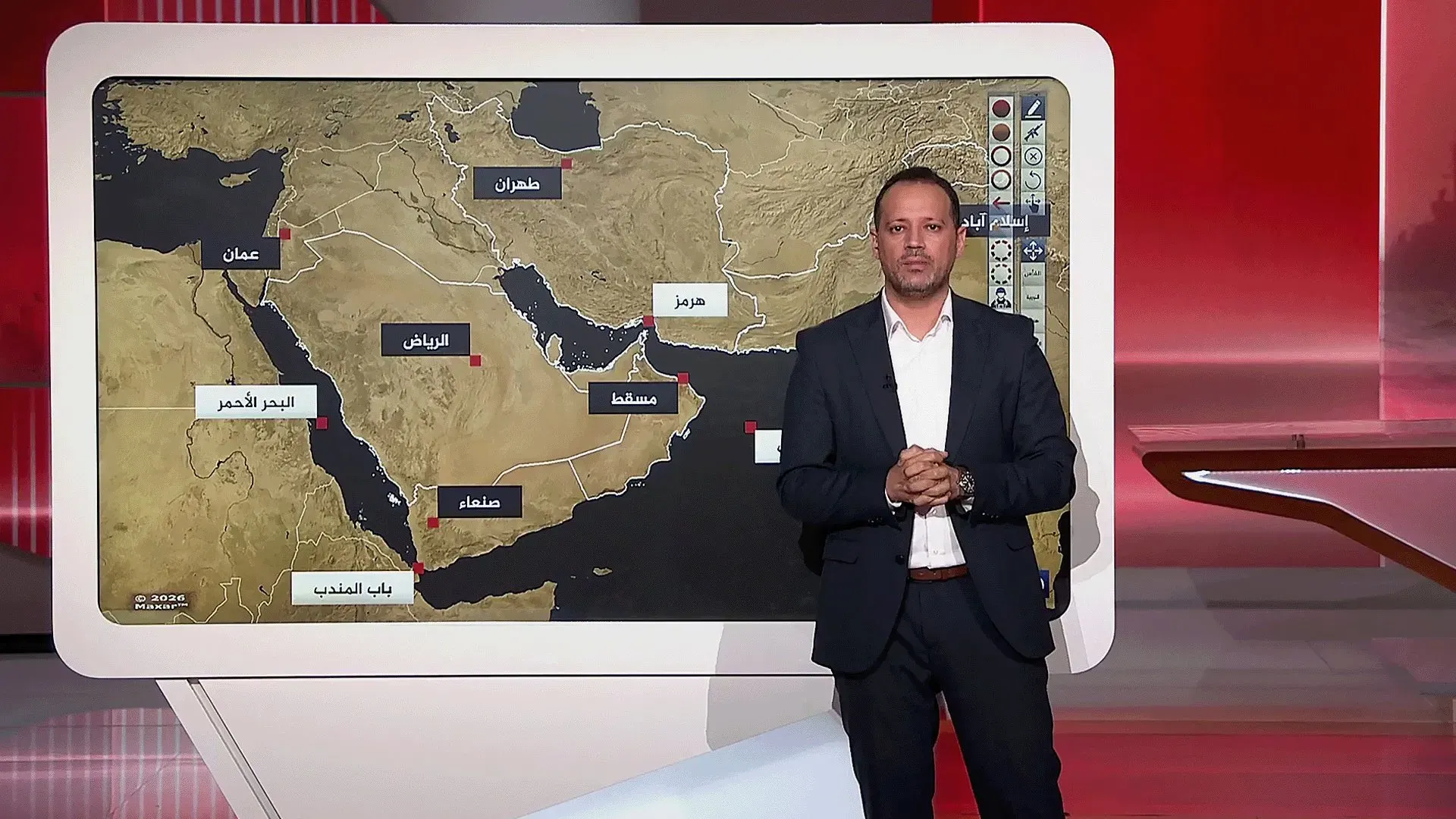
Additionally, highly enriched fissile materials could be weaponized into a "dirty bomb," which would function as a missile warhead or aerial bomb capable of dispersing a significant amount of radioactive material upon impact—even if intercepted—rendering vast areas uninhabitable. Consequently, the new network of tunnels and underground production halls being excavated by Iran, particularly in the region known as "Mount Fās," has become a focal point for intelligence agencies in Israel, the United States, and the broader Western community.
The Geopolitical Implications of Iran's Underground Facility
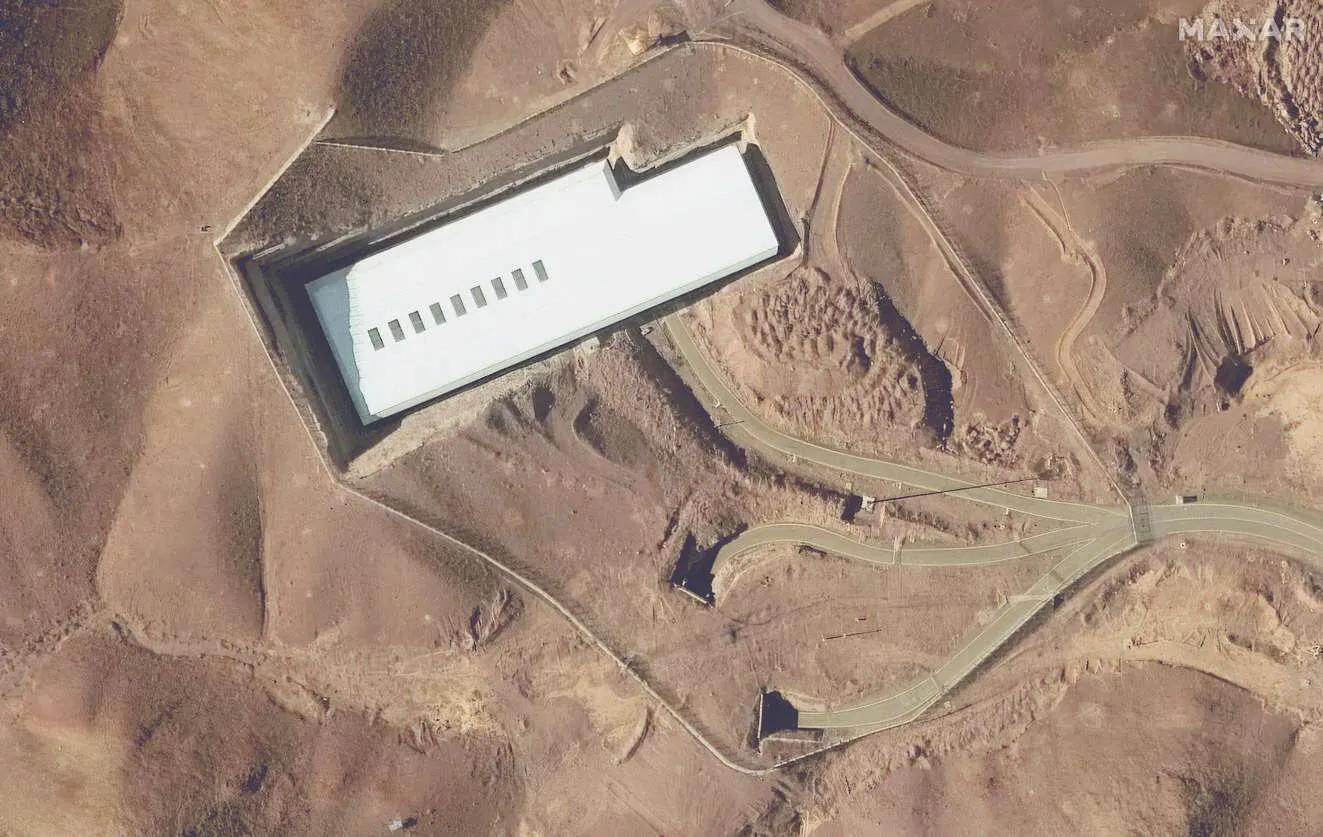
The excavation work at the "Mount Fās" facility, located approximately 1.5 kilometers south of the Natanz uranium enrichment and production complex, commenced in 2020. This site quickly attracted the attention of intelligence agencies and researchers due to the ambiguity surrounding Iran's intentions regarding this tunnel network. The pressing questions remain: Will Iran convert this site into an enrichment facility, relocating the latest centrifuges from the original Natanz site for protection? Or are there plans to accumulate nuclear weapons? These inquiries linger unanswered.
Geologically, Mount Fās consists primarily of granite, making the tunnels dug within it, reportedly located between 100 and 135 meters deep, nearly impervious to airstrikes. The combination of depth and the resilience of the rock bears similarities to the characteristics of the Fordow facility. As many may recall, at the conclusion of the "Rising Lion" operation last summer, U.S. B-2 bombers and specialized munitions (during the "Midnight Hammer" operation) were deployed to damage uranium enrichment facilities at Fordow and bury the 60% enriched uranium stockpiled there.
Interestingly, the term "Mount Fās" is a literal translation; the Persian name of the mountain, "Kuh Kolang," translates to "axe" or "pickaxe," suggesting that extracting uranium from this location was considered exceedingly challenging even in ancient times. To this day, despite Chinese knowledge and equipment, this task remains highly complex.
Reflecting on the attack on Fordow in June 2025—which may be required again in the future—one reason for not targeting the underground facility at that time was its limited or unclear usage. Following the "Rising Lion" operation, Iran began transferring centrifuges and other equipment from Natanz to the tunnels of Mount Fās, in addition to gathering equipment from other nuclear sites that had been bombed. This activity did not commence immediately; Iran took time to clear the entrances of the old tunnels in Natanz, Fordow, and Isfahan before quietly moving the remaining or slightly damaged centrifuges by the autumn of 2025.
Iran attempted to conceal this activity from satellite sensors and other intelligence tools utilized by Israel and the United States, albeit unsuccessfully. Nonetheless, Mount Fās was not attacked during the Israeli "Lion's Roar" and U.S. "Epic Fury" operations that began in late February 2026 and extended until a ceasefire in early April. A significant factor in this decision could be that the site had not yet engaged in any actual nuclear activity, such as enrichment or bomb design, but was merely for storage. Another crucial reason is that an actual assault on the Mount Fās tunnels would necessitate a highly substantial operation, feasible only by the U.S. military, as the American Air Force alone possesses GBU-57 bombs, which weigh approximately ten tons and can penetrate solid rock to depths of nearly 60 meters. Furthermore, only American forces have stealthy B-2 bombers, each capable of carrying several such bombs.
For instance, during the "Midnight Hammer" operation in June 2025, which targeted Fordow and other underground nuclear sites in Iran, the Americans deployed seven B-2 aircraft carrying 14 precision bombs capable of destroying hardened shelters. Each bomb was dropped into the crater created by the previous bomb, reaching depths of 80 to 100 meters. The shockwaves generated by these bombs in the Fordow area completely compromised sensitive centrifuges, resulting in their incapacitation.
This bombing operation represented one of the largest conducted by the U.S. Air Force since World War II. Seismic monitoring stations in the Fordow area recorded tremors equivalent to a magnitude 4.3 earthquake. The damage was not limited to the rapidly spinning centrifuges but extended to the foundations upon which they rested. Consequently, U.S. and Israeli intelligence concluded that the Fordow facility had been rendered inoperative, even though it had not been destroyed.
Following the bombing, the bombers returned directly to a base in Missouri, having logged over 30 hours of flight time. Additionally, a diversionary operation was executed by seven other modern B-2 bombers flying over Guam in the Pacific Ocean to mislead the Iranians into believing that the attack would originate from there. However, it is vital to note that the Americans expended a significant portion of their stock of penetrating bombs—14 out of almost 20 available. This indicates that targeting Mount Fās would be equally, if not more, complex: prior to the "Midnight Hammer" operation, the Israeli Air Force had paved the way for American bombers by destroying air defense systems on the way to Fordow, Natanz, and Isfahan. Nevertheless, the Americans deployed a fleet of 125 escort aircraft, including stealth F-22 fighters, electronic warfare planes, and others that provided cover for the B-2 bombers.
All these aircraft, including the Israeli support, would be utilized in the bombardment of Mount Fās. Therefore, at present, the balance between cost and benefit remains a primary consideration for Israel and the United States.
As reported by the Wall Street Journal, there are currently no active nuclear operations occurring at Mount Fās. The site is solely used for storing centrifuges and other uninstalled equipment, which are not processed in a manner that would allow for their use in the near future. Thus, to recreate the damage inflicted on the Fordow facility last year, four fundamental conditions must be met: 1. Intelligence indicating the transfer of 60% enriched uranium to the site and that the Iranians have installed and operationalized centrifuges and other equipment, even on a trial basis. 2. Sufficient intelligence regarding the locations of production halls and centrifuge operations to enable precise targeting. 3. The American military must replenish its stock of GBU-57 penetrating bombs. 4. The U.S. Air Force must complete the logistical plans and other preparations necessary for this operation, which is no less complex than the Midnight Hammer operation itself. This requires considerable time and effort.
It is likely that gathering intelligence on this facility is no simple task. For a tangible outcome, precise knowledge of the locations of the centrifuges is essential, along with accurately calculating the bomb drop sites to within a meter or two, if not less, to penetrate the granite and inflict severe damage on the production halls and centrifuges, rather than merely causing vibrations in the mountain.
In other words, this operation is one that must be executed at an exact moment: on one hand, just before the Iranians produce fissile materials there, and on the other hand, not too early so as not to cause any significant delays in the Iranian nuclear program.
Intelligence and military officials in Israel and the United States have preferred to keep this information confidential. However, just days ago, President Trump, in an interview on a popular podcast, revealed in response to a question that the United States was indeed planning an attack on Mount Fās. Thus, the axe has emerged from the bag, and the secret is no longer a secret.
Currently, there is no information suggesting that the Iranians have activated the stored centrifuges in the tunnels of Mount Fās, but satellite imagery indicates that they are conducting work around their openings and elsewhere to fortify and strengthen them in a manner that allows for access even if bombed. Meanwhile, these sites will be difficult for ground forces to reach should the United States decide to launch a ground operation to destroy the contents of Mount Fās, potentially to extract any enriched uranium that may be stored there.
As reported by alquds.co.uk.