The Return Journey: A Dream Shattered
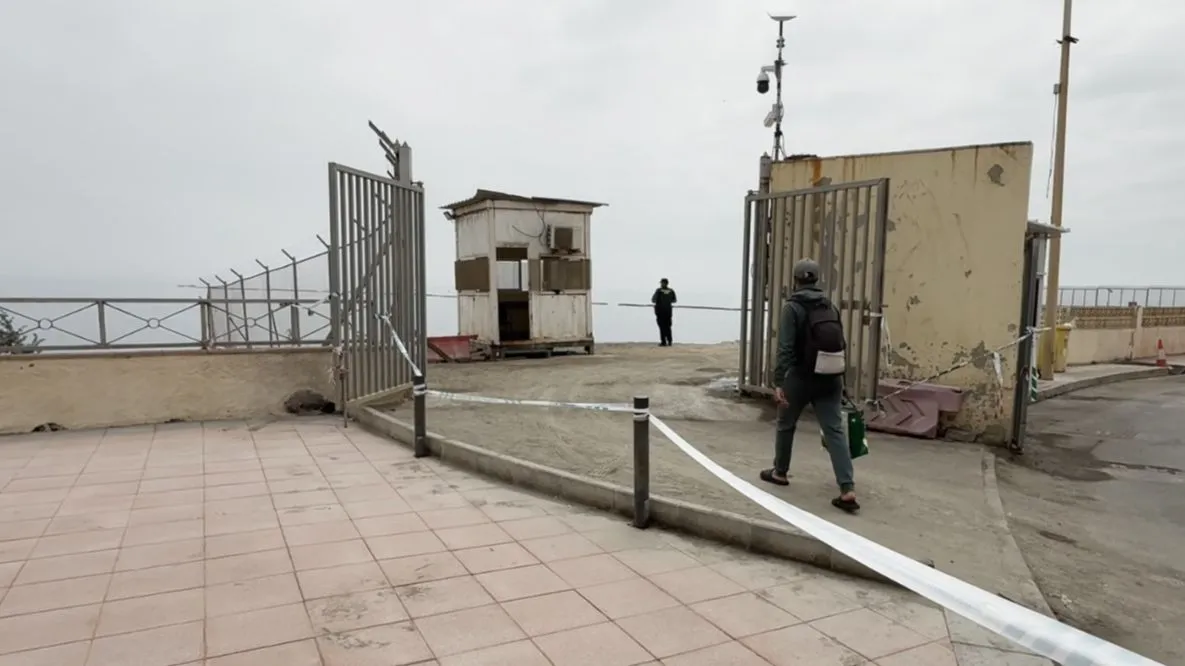
A visit to the Tarajal border in Ceuta reveals a poignant scene: a steady stream of individuals, many wearing flip-flops and carrying little more than a small backpack, make their way towards a dirt path that runs parallel to the sea. This path signifies the end of a dream for these migrants, who, after arriving by swimming to the beach just over a month ago, are now choosing to return to Morocco voluntarily. Disenchanted and devoid of hope, they abandon aspirations of a better life in search of solace back home.
Some embark on this journey alone, while others are accompanied by friends or family members. The Civil Guard facilitates their passage without delay. Nearby, numerous other irregular migrants wander aimlessly, and a few watch from a higher vantage point, perched on the guardrails of an elevated street. The bustle of activity is evident as vehicles and pedestrians come and go at the border crossing, moving between the two nations legally.
Among the migrants is Aiub, who, unlike many others, is following the dirt path back home. "There are too many people; 90% of them will not find a solution, and they will all return to Morocco. I prefer to go back voluntarily rather than be sent back," he shares with RTVE Noticias. Aiub hails from Beni Mellal, a city in central Morocco, and is waiting for a friend who entered Spain with him so they can return together.
A Search for a Better Future
This 22-year-old, dressed in an oversized white sweatshirt and a cap, recounts his story in a calm and composed manner. His journey began just three days before the mass entry on July 30 and 31 when he successfully swam to Ceuta’s shores. Like many others, he had risked his life in pursuit of a brighter future and to support his family, as wages in Morocco are notoriously low.
However, upon reaching the other side of the border, Aiub quickly realized that his expectations were far from reality. He had hoped to secure political asylum, which would allow him to move to the mainland and find employment—he holds a diploma in aluminum work, a driver's license, and is preparing for a bus driving license. Yet, after more than a month in Ceuta alongside thousands of compatriots in the same predicament, he understands that the vast majority will not receive the necessary permits to stay.
During his time in the city, Aiub has wandered through various neighborhoods, primarily spending time around the Trampolín beach, one of the largest makeshift migrant camps, as well as Benítez beach and the Prince's neighborhood, predominantly inhabited by Muslims. He emphasizes that the discrimination and racism he faced were deeply painful, clarifying, however, that he does not refer to the majority of the Ceuta population, who he describes as kind and supportive, but rather a small faction that has been aggressive towards him.
He also recounts instances where police and military personnel have physically assaulted him in places where he sought shelter. "I can’t take it anymore, which is why I’ve decided to return to my city," he admits.
In late July, more than 70,000 individuals launched themselves into the sea from the Moroccan town of Castillejos, known in Arabic as Fnideq, the closest area to the border, in hopes of reaching Spanish soil. Tragically, over 140 people are estimated to have drowned in this perilous attempt. It remains unclear what exactly triggered this mass exodus, but many migrants reported hearing about it through word of mouth or WhatsApp groups and joined in the rush.
In the immediate aftermath of their arrival, government efforts led to the swift return of most migrants to Morocco. Yet, within the city of just 84,000 residents, thousands remained, wandering and sleeping outdoors in makeshift camps. Throughout this time, many have been waiting for a spot in temporary reception centers established by authorities to help them escape the streets while their asylum applications are processed. Aiub was not fortunate enough to secure a place there, lamenting, "Even if you wait a week, there’s no guarantee you will be let in." According to government data, 3,658 migrants who had initially refused to return have since done so voluntarily from August 10 to this past Wednesday, but many more continue to linger on the streets of Ceuta, resiliently holding out for the asylum they desperately seek.
Many who choose to return are reluctant to speak, as the situation is precarious, and each story is unique.
Among the returning migrants is a taekwondo instructor from Castillejos, who, with his backpack and a large shopping bag, heads toward the dirt path. His adventure began on July 30, when he swam a bit and then walked along the border fence after hearing that the border was open. During the first week, he slept on the streets but later found kind individuals who offered him a place to stay for free. His goal was to find work, but luck has not been on his side.
He expresses disappointment over not achieving what he set out to do, noting that the sudden influx of people has complicated matters, as some have disrespected the city. "While some are unwilling to work, I am determined to seek a better future," he states.
He also acknowledges the solidarity shown by the people of Ceuta, who have helped him with food, adding that no one has bothered or attacked him.
When asked if he feels deceived, his answer is clear: "No." He explains that nobody told him to come; he simply heard the border was "open" and saw others migrating, opting to follow suit. He does not blame the monarchy or the king for the situation, believing it to be more of a political issue rather than one connected to the monarchy itself.
As we bid farewell, we see him disappear down the well-known dirt path, closer to reuniting with his parents and sister, and ready to start anew.
As reported by rtve.es.