Spain's Short-lived Presence in Western Sahara
Western Sahara, particularly its capital El Aaiún, has a complex history marked by Spain's fleeting presence and limited influence in the region. Following the conquest of the Canary Islands, Spain established commercial ties with the opposite coasts, exploiting abundant fishing grounds. This endeavor led to the construction of military fortifications, such as Santa Cruz de Mar Pequeña. The Berlin Conference had positioned Spain favorably to create a colony in this territory, yet successive Spanish governments missed several opportunities to solidify their presence. While associations of Africanists, less powerful than their British and French counterparts, attempted to establish a foothold in Río de Oro, it was only through the persistent efforts of Emilio Bonelli that a small base was founded, eventually leading to the establishment of Villa Cisneros, thanks to Francisco Bens.
The Challenges of Establishing Sovereignty
The northern part of Western Sahara, known as Saguia el Hamra, presented additional challenges for Spain in asserting sovereignty. France was actively working to delineate its Algerian borders, successfully achieving this in the 1900 Treaty of Paris, which encroached on territories explored by the Spanish and where agreements had been reached with local leaders. Furthermore, the ambiguous southern border with Morocco complicated matters. The dynamics were influenced by various stakeholders, including the Spanish government, the French government, the Sultan, and the local tribes inhabiting the region. The Spanish government’s stance fluctuated between the indirect support of Cánovas and the inaction of Sagasta, with Silvela characterizing this indecisive attitude as prudent.
France was determined to protect its interests by proposing the establishment of a greater Algerian Sahara and expanding Moroccan borders for colonization. Despite Sultan Hassan I's modernization efforts, he struggled to maintain authority south of Agadir and even further north. The nomadic tribal leaders, longstanding inhabitants of the region, were not recognized by Europeans as sovereign powers. Among the tribes, the Tekna confederation thrived from Guilmin to El Aaiún. Spanish settlers understood that establishing factories in the Sahara required negotiating with these local leaders to solidify their foothold.
The Spanish only acknowledged the Sultan's sovereignty up to the Nun River, beyond which he had no power, as he himself admitted when solicited for help in rescuing shipwrecked sailors. Insurgent leaders among the Sahrawis, such as Sheikh Mohamed ibn Beirut, played crucial roles in dealings with the Spanish Africanists and Colonists Society, led by Coello. Others, like El Hiba, son of Ma el Aainín, declared themselves Sultan of Tiznit and captured Marrakech in 1912 in their struggle against Moroccan forces.
Sheikh Beirut became a legendary figure, embodying the tribal leadership that exercised feudal control, established neighborly relations, declared wars, collected taxes, and issued death sentences. His relationship with the Sultan oscillated between religious devotion and power rivalry. Based in the Nun region, he sent emissaries to O'Donnell upon learning of Spanish military actions against the Sultan in 1860, aiming to rise in the south and open another front. His interest in collaborating with the Spanish stemmed from a desire to redirect caravans arriving from Sudan and the desert to a Spanish port, allowing him to collect customs duties instead of the Sultan.
An Africanist of the time, José Ricart Giralt, presented an intriguing theory in his work 'The Future of Spain in the Sahara' (Barcelona, 1884), advocating for the occupation of Río de Oro. Following the Africa War, at the Treaty of Tétouan, Spain insisted on retaining the territory where Santa Cruz de Mar Pequeña had stood, whose exact location had been forgotten. Ricart pointed out that the Sultan agreed to this arrangement as it lay outside his sovereignty, much to Beirut's delight, as it would fulfill his ambitions, whether regarding Sidi Ifni, Agadir, Cabo Juby, or Puerto Cansado. This Beirut, son of the previous leader, continued his father's legacy of lordship. In 1884, he even authorized the Scotsman Mackenzie to establish a factory in Cabo Juby, countering both Spanish and Moroccan interests, illustrating his lack of exclusive allegiance to the Spanish or intent to cede sovereignty to any nation.
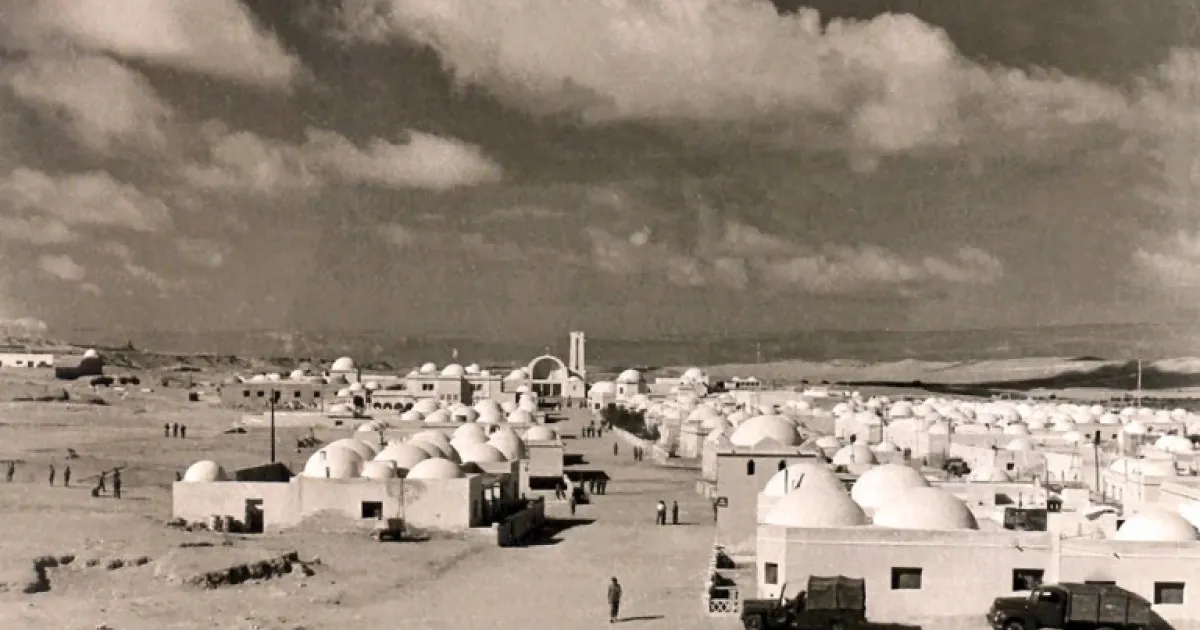
In 1882, Hassan I dispatched an army to defeat Beirut, but it failed to advance beyond the Draa and retreated, failing again in 1885. The Sahrawis supported Mackenzie against a Moroccan squadron, as he was the designated sheikh for negotiations with Europeans. International diplomacy eventually led Great Britain to withdraw from Morocco, allowing Cabo Juby to become part of the southern Spanish Protectorate in Morocco. After Mackenzie's disappearance, Bens arrived in Cabo Juby (now Tarfaya) in 1911, and the small Spanish-founded settlement was later named Villa Bens. Beirut's influence facilitated the shift in tribal leaders' positions, enabling Spain's establishment in the Sahara, a feat that would have otherwise been unattainable.
The historical dynamics of power struggles against the Sultan, alongside the long-standing attempts to assert authority where military force failed, encapsulate the Moroccan history leading up to the Protectorate, which was instituted by capitalizing on the sultans' weaknesses.
As reported by eldebate.com.