
The Growth of Informal Production Units in Morocco
As of 2023, Morocco boasts an astonishing 2,030,000 informal production units (UPIs), according to recent statistics from the High Commission for Planning (HCP). This figure represents a remarkable increase of over 30% since 2007, when there were only 1.55 million UPIs. This surge is accompanied by a significant rise in their contribution to the national Gross Domestic Product (GDP), which climbed from 14% in 2007 to a staggering 32.5% by 2025. Such growth starkly contrasts with the national ambition for a more productive economy that is better integrated into global value chains and capable of creating sustainable jobs. Youssef Guerraoui Filali highlights that the informal sector has now become a structural element of the Moroccan economy, employing around 77% of the active population that lacks coverage from contributory systems like the CNSS and CNOPS. In comparison, Tunisia and Egypt report figures of 50% and 70% respectively, positioning Morocco at the forefront of its regional peers on this indicator, with significant economic and social implications.
The Urban and Gendered Landscape of Informal Employment
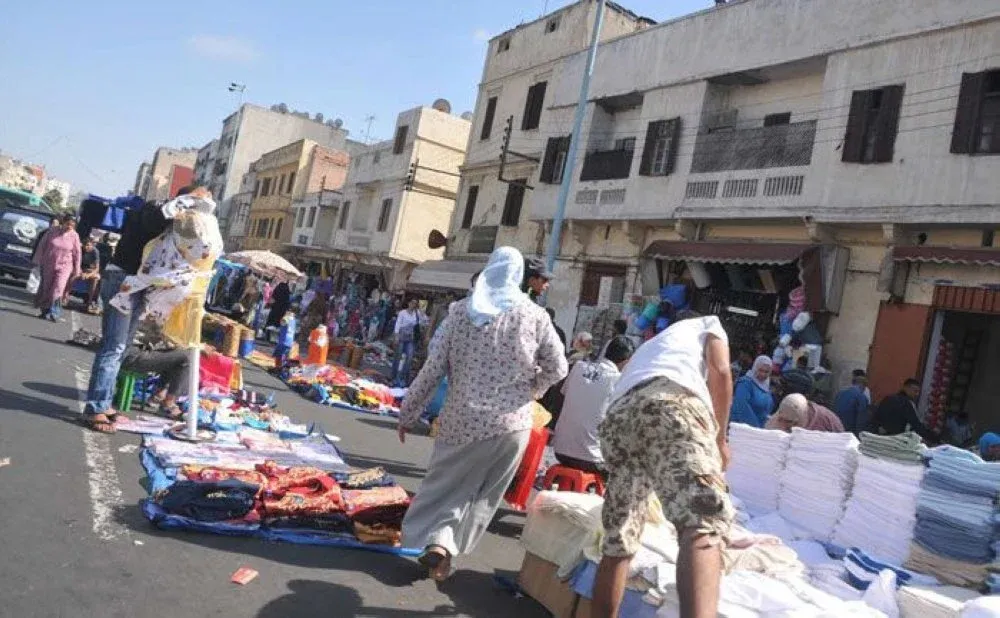
The HCP survey paints a detailed picture of the Moroccan informal ecosystem. Primarily urban in nature, 77% of UPIs are concentrated in cities, while only 23% are found in rural areas. The majority of informal economic activity is concentrated in three regions: Casablanca-Settat (23%), Rabat-Salé-Kénitra (14%), and Marrakech-Safi (13%). The commerce sector is particularly affected, accounting for 48% of urban units and 44% in rural areas. Notably, the sector is overwhelmingly male-dominated, with men constituting over 91% of operators compared to a mere 9% for women, a disparity that reflects the vulnerability of women in informal employment.
Most informal activities occur outside of designated professional spaces. More than 27% of informal workers operate from their clients' homes, while 26% use mobile setups such as cars, carts, or motorcycles, and only 14% maintain a fixed location in a public market or a 'kissaria'. Individual operations prevail, with over 85% of units functioning without any employees, operating in a subsistence manner that permeates both densely populated neighborhoods and the outskirts of major urban centers.
Behind these statistics lies a significant economic and social cost that burdens the national fabric. The competition posed by the informal sector to formal businesses can lead to price reductions as high as 45% in certain segments. The tax pressure, which reached 24% of GDP in 2025 compared to an average of 20% in developing countries, remains one of the primary obstacles to formalization, according to Guerraoui Filali. This uneven burden primarily falls on compliant sectors, perpetuating a cycle of asymmetry. Access to banking finance represents another barrier for independent workers, artisans, and microenterprises. Furthermore, the fragility of the productive fabric itself renders UPIs vulnerable to economic shocks, climate variability, and geopolitical turbulence. For workers, the informal sector often translates to low wages, poor working conditions, lack of social protection, and limited prospects for advancement. However, there exists a degree of ambivalence: 75% of UPI leaders believe their activities offer advantages, primarily due to flexible hours (42.5%) and a sense of independence (18%), as indicated by data from the Economic, Social, and Environmental Council.
As reported by lematin.ma.
In response to these challenges, Guerraoui Filali proposes a roadmap centered around six key areas aimed at reversing the current trends. The first area focuses on structuring small units through the establishment of dedicated economic activity zones that offer tailored spaces, affordable rents, and shared logistics. The second area emphasizes promoting entrepreneurship, advocating for an increase in revenue ceilings for the auto-entrepreneur status and the elimination of the 80,000 dirham per client cap, which he identifies as a major hindrance to reviving this framework.
The third area involves ensuring fiscal equity. Guerraoui Filali argues that it is inconsistent for companies generating profits between one and 100 million dirhams to be subjected to the same corporate tax rate of 20%. He calls for categorization based on size and alignment of personal income tax rates with the 20% granted to firms under the Casablanca Finance City status, as opposed to the existing 37% for SME employees. Further recommendations include steering public orders towards UPIs via digital shops, enhancing transaction traceability through electronic invoicing, and protecting the rights of informal workers through simplified employment contracts and targeted CNSS inspections.
The initiative to generalize social protection, undertaken under royal initiative, marks a pivotal lever in this context. According to Guerraoui Filali, this represents a significant turning point for the Moroccan social state, provided the quality of public services follows suit. Ultimately, the attractiveness of formal employment hinges on the kingdom's ability to offer health coverage, infrastructure, and growth opportunities commensurate with expectations in exchange for fiscal and social contributions.
The policy paper clearly sets an ambitious goal: to reduce the informal economy's share from 32.5% to 20% of GDP by 2035, in alignment with OECD standards. Achieving this twelve-point reduction over a decade will necessitate an unprecedented alignment between fiscal policy, industrial strategy, social protection, and entrepreneurial support. The forthcoming budgetary decisions and ongoing reform initiatives will reveal whether these objectives can be met. The answer, it seems, will emerge in the upcoming finance laws.