Since the moment coach Rabah Saadane threw in the towel and withdrew from the prestigious role of managing the Algerian national team after a disappointing loss to the modest Central African Republic during the Africa Cup of Nations qualifiers, the former president of the Algerian Football Federation, Mohamed Raouraoua, found himself leaning towards foreign coaching solutions. This shift in strategy was further fueled by the rapid decline of 'General' Abdelhak Benchikha, whose coaching image suffered a significant blow in Marrakech, failing to revive the stagnant momentum of the national team since the legendary match in Omdurman.
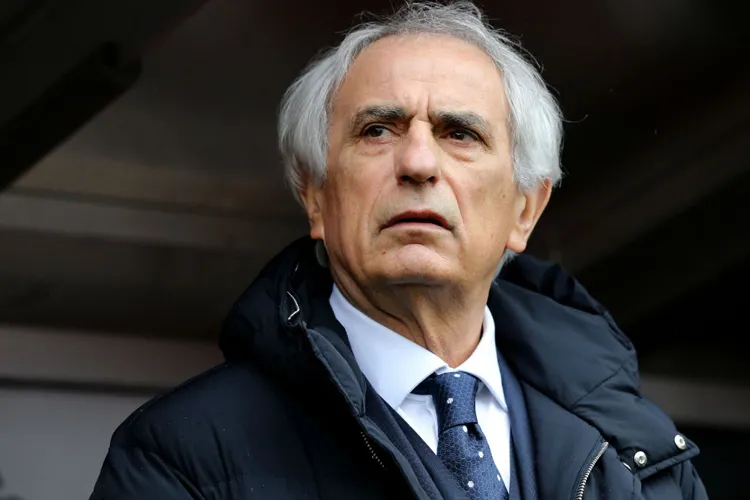
What stands out in the saga of Bosnian coach Vahid Halilhodžić is Raouraoua's decision to maintain faith in him following the bitter elimination from the group stage of the Africa Cup of Nations held in South Africa in the winter of 2013. During this tournament, the team, led by Sofiane Feghouli, faced crushing defeats against Tunisia and Togo, resulting in an early exit despite managing a draw against Ivory Coast in their final match. The outcry for Halilhodžić's removal grew louder after this disappointing performance, yet Raouraoua opted to retain him, believing that there was insufficient time to recruit another coach. This decision bore fruit as Algeria qualified for the World Cup for the second consecutive time, heading to Brazil in 2014, albeit with great difficulty in the playoff against Burkina Faso. After a tough loss in Ouagadougou, where they were beaten 3-2, the team turned the tide at home with a crucial 1-0 victory thanks to a goal from Madjid Bougherra, securing their dream ticket to the World Cup in a nation renowned for its love of football.
Up until the match against Burkina Faso, the supporters remained skeptical of Halilhodžić, as there were neither convincing results nor a compelling style of play evident in the team’s performances. In a bold move, Halilhodžić began to phase out the old guard, which included players like Ziani, Antar Yahia, and particularly Belhadj and Matmour, opting instead to infuse the squad with fresh talent. Notably, he introduced Islam Slimani, a striker who would go on to become Algeria's all-time leading scorer.
When the team arrived in Brazil, many believed that the likes of Sofiane Feghouli and Fawzi Ghoulam would quickly return home after facing Belgium, South Korea, and Russia, showcasing a group that was average yet full of potential. However, the confidence in a coach who had yet to leave a distinct mark was shaky, despite having stars such as Sofiane Feghouli, Yacine Brahimi, and Raïs M'Bolhi, along with promising young talents like Aïssa Mandi, Riyad Mahrez, and the youthful Nabil Bentaleb from Tottenham, who had not yet turned nineteen.
Halilhodžić achieved his lifelong dream of coaching a national team at the World Cup and was compelled to rise to the level of trust placed in him by Raouraoua. He was indeed a favored coach in Algeria, having previously taken the Ivory Coast to the finals before being dismissed and repeating history with Morocco by leading them to the Qatar World Cup, only to be let go again. Yet, Algeria remained close to his heart, just as he did to the hearts of the fans.
As reported by echoroukonline.com.