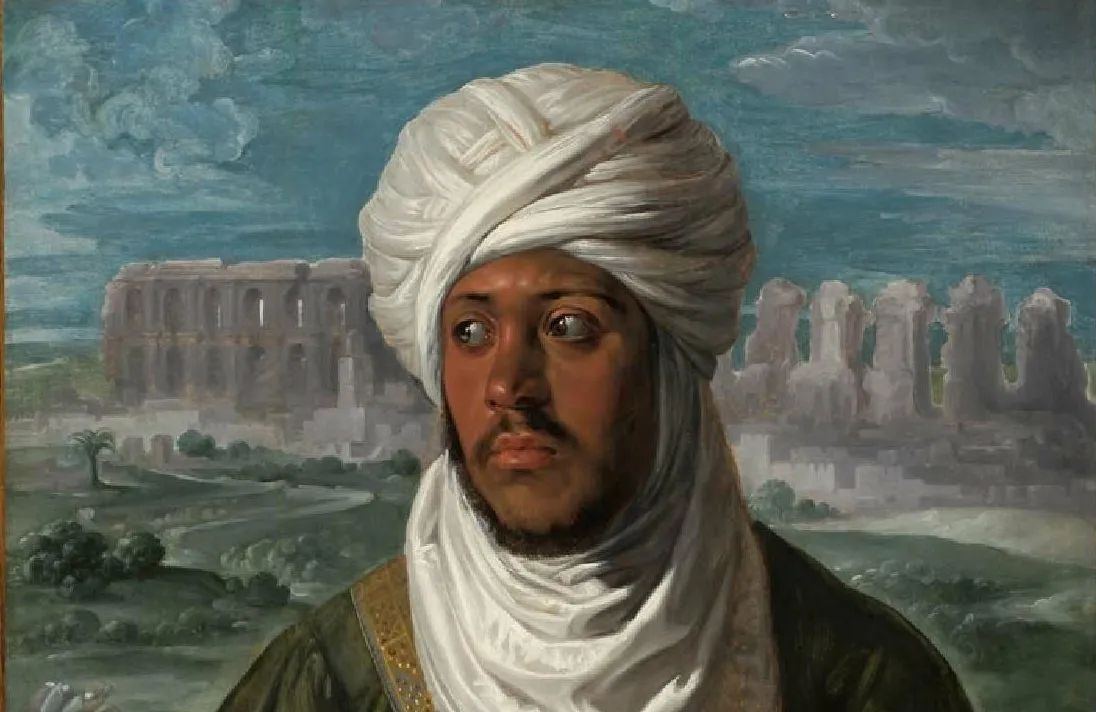
The Journey of Al-Hasan al-Wazzan: A Bridge Between Cultures
In an era where intellectual and geographical boundaries were being redrawn, Al-Hasan ibn Muhammad al-Wazzan emerged as a significant figure, serving as a bridge between two worlds. Known as Leo Africanus in the West, he was not merely a traveler but a man without borders. Born in Granada and raised in Fez, he crafted his legacy in Rome, where he conveyed the intricate details of the Kingdom of Fez, the allure of Timbuktu, and the grandeur of Cairo. His life was a tapestry of adventure and curiosity, providing a rare insight into the rich tapestry of Africa during the 16th century.
Al-Wazzan, a prodigious traveler and geographer, was a meticulous observer of the customs, traditions, and lifestyles that shaped the perception of Africa in Europe. Transforming from a captive in the hands of Pope Leo X to a diplomat who unveiled the secrets of the Islamic African world, his writings became some of the most widely circulated and translated works in the history of Orientalism.
Early Life and Influences
Al-Hasan ibn Muhammad al-Wazzan al-Ziyati al-Fasi, known as Abu Ali, was born in 1483 in Granada, shortly before its fall to the Spanish during the Reconquista. His family, of Moroccan descent from the Beni Ziyat tribe, was prominent in Granada and closely associated with the rulers of Fez. As the reign of Ferdinand and Isabella grew increasingly oppressive, many Moorish families, including the Wazzans, fled to Fez, where Leo Africanus grew up.
Despite his young age, his father, a scholar in grammar, involved him in various missions, including tax collection trips. These journeys instilled in him a deep appreciation for geography and a passion for exploration that would define his life. His early experiences laid the groundwork for what would become an extensive career filled with journeys that echoed the footsteps of the legendary Moroccan traveler Ibn Battuta.
Throughout his youth, Al-Wazzan traveled extensively, visiting regions throughout Morocco and beyond. His formative travels took him to the Rif region, where he accompanied his father on official duties. By the time he reached adulthood, he had traversed various cities and landscapes, including Tangier, Salé, and Marrakesh. His adventures solidified his knowledge of the land and ignited his desire to document it.
His journeys outside Morocco began at a young age, leading him to numerous destinations, including West Africa, Asia, and Europe. In 1511, he accompanied his uncle on a diplomatic mission to the Songhai Empire in West Africa. Later travels took him to the Arabian Peninsula, Egypt, and even as far as Baghdad and Persia, before returning to Morocco. His second significant journey led him to Constantinople, Egypt, and the Hijaz before ultimately being captured by pirates near the island of Djerba, which marked a pivotal turn in his life.
During his return from Tunisia in 1520, Al-Wazzan was captured by Italian pirates and presented as a gift to Pope Leo X in Naples. The Pope, a patron of the arts and sciences during the Renaissance, welcomed Al-Wazzan and recognized his scholarly potential. He appointed him as a teacher of Arabic to Catholic clergy in Rome and Naples, renaming him Giovanni Leone or John Leo the African.
Throughout his time in Italy, Al-Wazzan became fluent in Italian and Latin, while also mastering Spanish and Hebrew. He authored several works on history, geography, and linguistics in Italian, and though details about his life in Italy are sparse, he eventually served as a professor of Arabic at the prestigious University of Bologna.
While some historical accounts suggest that Al-Wazzan converted to Christianity, scholars like Mohammed Hajji and Mohammed al-Akhdar assert that he merely feigned conversion to survive in a Christian-dominated environment, maintaining his Islamic faith throughout his thirty years in Italy. This assertion is supported by the content of his writings, particularly in his descriptions of Islam and the Muslim community.
As reported by gate.ahram.org.eg.