The Marrakech Platform: An Ambitious Multilateral Security Initiative
Launched in June 2022 under the joint auspices of Morocco and the United Nations Office of Counter-Terrorism (UNOCT), the Marrakech Platform for African Cooperation in Counter-Terrorism stands out as one of the most ambitious multilateral security initiatives to emerge on the African continent in the post-2010 decade. Amidst a surge in jihadist violence across the Sahel, Lake Chad Basin, and the coastal regions of West and East Africa, this platform unites intelligence agencies, security ministries, and counter-terrorism directors from across the continent to share operational intelligence, harmonize strategic doctrines, and enhance institutional capacities. This article critically examines whether the Marrakech Platform can play a significant and transformative role in combating terrorism in Africa. Drawing on primary documentation from the UNOCT, scholarly literature on African security governance, and a comparative analysis of similar multilateral counter-terrorism architectures, it argues that the Platform possesses significant structural advantages — including political legitimacy, Moroccan institutional leadership, UN operational support, and a track record of iterative improvement through successive annual meetings. However, its ultimate effectiveness will depend on addressing deep-seated structural deficits, such as weak state capacities, sovereignty sensitivities, technological asymmetries, and profound socio-economic factors driving radicalization, which security cooperation alone cannot resolve.
African Terrorism: A Growing Challenge
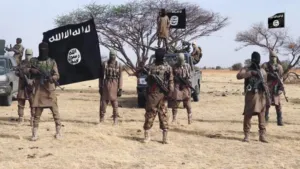
African nations are grappling with an alarming terrorist crisis. According to the Global Terrorism Index, Sub-Saharan Africa consistently ranks as the most affected region by terrorism worldwide, with over sixty percent of global terrorism-related deaths concentrated in the Sahel corridor stretching from Mauritania to Sudan (Institute for Economics and Peace [IEP], 2023). Groups affiliated with al-Qaeda, primarily Jama’at Nusrat al-Islam wal-Muslimin (JNIM), and those aligned with the Islamic State in the Greater Sahara (EIGS), have significantly expanded their operational reach since 2015, while al-Shabaab continues to destabilize the Horn of Africa, and successor factions of Boko Haram persist in the Lake Chad Basin (Ouédraogo, 2022). The human cost is tremendous: hundreds of thousands dead, millions displaced, and the erosion of state authority over vast ungoverned territories (HCR, 2023). In this context, the inadequacy of purely national counter-terrorism responses has become evident. Terrorist organizations operate with deliberate cross-border agility, exploiting porous borders, ethnic kinship networks, and institutional gaps among poorly coordinated national security apparatuses. The Multinational Joint Task Force (MNJTF) operating in the Lake Chad Basin and the G5 Sahel Joint Force have demonstrated both the promises and limits of collective military approaches (Fofana, 2020; Lebovich, 2019). It is within this complex security landscape that Morocco and the UNOCT introduced the Marrakech Platform in June 2022, proposing an institutionally innovative model based not primarily on joint military operations but rather on intelligence sharing, capacity building, and strategic coordination. The central question of this article is whether this Platform can significantly alter the trajectory of terrorism in Africa. The argument presented here unfolds in six stages. First, an analysis of the institutional architecture and governance of the Marrakech Platform is conducted. Second, the broader counter-terrorism posture of Morocco and its diplomatic assets are examined as enabling conditions for the Platform's emergence. Third, the substantial outcomes of the Platform’s successive annual meetings are evaluated. Fourth, the theoretical dimensions of multilateral intelligence cooperation in high-risk environments are explored. Fifth, structural barriers to the Platform's effectiveness are identified. Finally, conclusions are drawn regarding the realistic transformative potential of the Platform.
As reported by article19.ma.