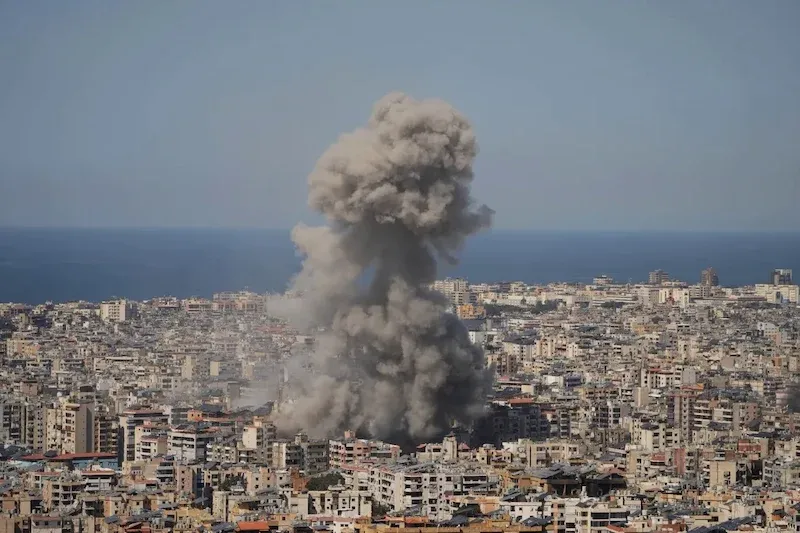

Throughout the history of the international system, certain wars have the power to shift the balance of power while others redefine the very rules upon which the global order is built. Some conflicts culminate in border adjustments or the decline of one power alongside the rise of another, whereas others evolve into foundational moments that reorganize international balances and construct a new architecture of relationships among major powers. The ongoing conflict in the Middle East could represent one of these pivotal moments. The confrontation between the United States and Israel on one side and Iran on the other transcends the traditional framework of regional conflict. It unfolds during a transitional period characterized by profound structural changes in the international system: the diminishing organizational capacity of the unipolar system that emerged after the Cold War, the rising strategic competition among major powers, and the reconfiguration of energy, trade, and global supply chains.
From this perspective, the current conflict may bear similarities to a historical moment comparable, in terms of strategic implications, to the Congress of Vienna in the early nineteenth century. Following Napoleon's defeat, the victorious European powers did not merely redraw the continent's political boundaries; they also sought to establish a new system based on the principle of balance of power and what was known at the time as the "Concert of Nations." This system provided an organizational framework for international relations throughout the nineteenth century and contributed to decades of stability in Europe. Today, after two centuries, the Middle East may find itself on the verge of a similar reorganization. If the current war leads to a structural weakening or profound transformation of the Iranian system, one of the main centers of regional balance will be redefined. At that point, the essential question will not be who won the war, but how the security and political balances in the region will be reorganized.
In such historical moments, the importance of actors who do not rely on direct dominance but rather on the ability to connect various geopolitical spaces and organize relationships among them becomes evident. Countries that can combine political stability, strategic geographical location, and the ability to manage multi-directional relations often emerge as balancing elements during times of regional reformation. In this context, Morocco stands out as one of the actors capable of serving as a geopolitical connector among multiple spaces: Europe, Africa, the Arab world, and the Atlantic region. Its geographical position, institutional stability, growing African depth, and strategic vision in managing international relations grant it the ability to play a role that transcends its traditional weight in power balances.
Understanding the ongoing war in the Middle East is not limited to analyzing its immediate military developments. The real significance of this conflict lies in the potential it holds for ushering in a new phase of reshaping regional and international balances, as well as in identifying the countries that can read these transformations early and reposition themselves within the emerging international system.
The End of Unipolar Illusion: Towards a Leaderless International System
For several years, signs of profound structural transformation have begun to emerge in the international system established after the Cold War. This system was built upon a unique historical moment of unprecedented American dominance, wherein a single power combined global military superiority, financial centrality, and normative capacity to shape the rules of international institutions. This phase can be described as the "unipolar moment," allowing the United States to assume the role of the organizing force of the international system. However, this model has gradually entered a phase of strategic exhaustion. Although the centrality of the United States in global power balances continues, its ability to organize the international system alone has begun to erode due to deep structural shifts. The economic and technological rise of China, the geopolitical resurgence of Russia, and the growing weight of regional powers have led to a gradual redistribution of power centers within the international system.
In this context, the war between the United States and Israel on one side and Iran on the other cannot be understood merely as a regional confrontation. It fundamentally represents one manifestation of the ongoing structural transformation in the international system. It simultaneously reveals the limitations of a dominant power's ability to organize regional balances independently while reflecting an attempt to preserve some of the foundations upon which the international system's architecture was built post-Cold War. However, the potential ramifications of this conflict may extend beyond the relationship between Iran and the West to impact the regional security framework in the Gulf. Gulf states may find themselves, in the aftermath of this war, needing to reassess their traditional perceptions of collective security. The security system that took shape since the end of the twentieth century was largely based on the American military umbrella as the ultimate guarantor of power balance in the region. Yet, the ongoing transformations in the international system, along with what the current war may reveal about the limits of American capacity to manage regional balances independently, might compel these states to contemplate diversifying their defense partnerships and developing new military cooperation frameworks. Consequently, we may witness a gradual shift, in the medium term, from a security system reliant on an almost exclusive external guarantor to a more pluralistic security architecture characterized by a mix of international partnerships and regional coordination. In this transformation, the issue does not solely pertain to redistributing alliances but extends to redefining the very concept of security in the Gulf—from an external protection model to a more independent and balanced approach in managing regional threats.
In other words, the current crisis not only reflects a geopolitical struggle in the Middle East but also falls within a broader transitional phase in which the international system is gradually moving from a unipolar structure to one more fragmented and diverse in power centers. During such transitional moments, the organizational capacity of the dominant power declines, while the level of strategic uncertainty inherent in the intervals between two international systems rises. Concurrently, China continues to enhance its economic, industrial, and technological presence on a global scale, while Russia seeks to reclaim its strategic depth in its geopolitical space and reaffirm its ability to influence major international balances. In this new international landscape, geopolitical dynamics are no longer exclusive to major powers; rather, regional powers have also emerged as influential actors in shaping the trajectories of the international system.
Moreover, the caution exhibited by China and Russia regarding the confrontation between the United States, Israel, and Iran reflects what could be described as a logic of "indirect geopolitical benefit." Both powers are capable of reaping some strategic outcomes from the crisis without bearing the costs of direct involvement. The focus of Western military and diplomatic attention on the Middle East may alleviate pressure on other theatres where Moscow and Beijing seek to strengthen their positions.
Thus, this caution does not reflect a lack of interest but rather a strategic calculation aimed at benefiting from the geopolitical transformations engendered by the conflict while avoiding the costs of direct intervention. This dynamic points to a deeper transformation within the international system itself. The world is gradually moving toward a multi-centric and fragmented system, with power distributed among several poles, none of which possesses the ability to impose a stable global architecture. In this fluid context, the conflict with Iran serves as a geopolitical catalyst that brings traditional geopolitical concerns back to the forefront: maritime chokepoints, energy corridors, global trade routes, and logistical infrastructures that form the vital nerves of the global economy.
A Potential Vienna Moment in the Middle East
In international history, wars exist that change the balance of power, and others that redefine the deep structure of the international system itself. The Congress of Vienna, held between 1814 and 1815, belongs to this latter category. After Napoleon Bonaparte's defeat, the victorious European powers did not merely redraw the political boundaries of the continent; they also sought to establish a new balance system aimed at preventing total wars and maintaining long-term stability in Europe.
From this perspective, the ongoing war in the Middle East, under certain conditions, could open a similar moment at the regional level. If this war leads to a profound transformation in the nature of the Iranian system, the region may enter what could be described as a "regional Vienna moment"; a phase during which strategic balances, alliances, and regional security arrangements are redefined. At that point, one of the fundamental centers of gravity in the regional system will be reassessed, potentially paving the way for a new phase of reshaping alliances and security engineering in the Middle East.
However, discussing a "Vienna moment" in the Middle East also necessitates considering the nature of the regional system that may emerge after this war. The question is not only about the outcome of military confrontation but also about the shape that the regional security architecture will take in the subsequent phase. Three main scenarios can be envisioned. The first involves a profound weakening of the Iranian system that may lead to its collapse, a scenario that would usher in a phase of strategic uncertainty and a redistribution of power balances in the region. The second scenario is based on an internal transformation in the nature of the Iranian system without its downfall, leading to a recalibration of its regional behavior within new balances. Meanwhile, the third scenario envisions the survival of the Iranian system alongside a broader reshaping of regional balances, resulting in the emergence of a new security architecture.
As reported by hespress.com.