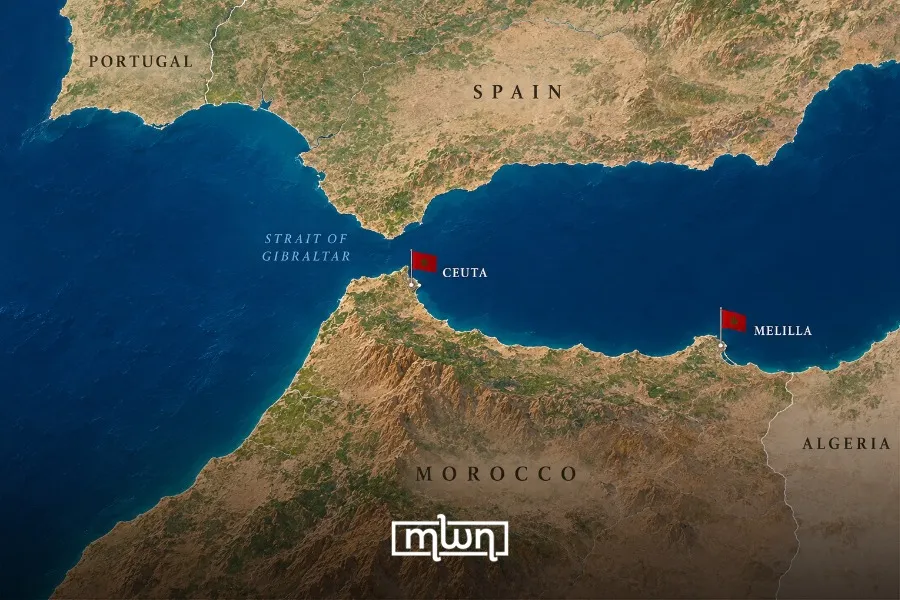
In recent weeks, a significant number of young Moroccans organized through social media platforms to gather in northern Morocco, specifically near the Spanish enclaves of Ceuta and Melilla. Their intentions were not to settle in these towns, which have long since lost their economic allure, but rather to view them as a temporary waypoint on their quest for a better life in Europe, perceived as the modern-day El Dorado. This dramatic exodus is fueled by a variety of factors, including a notable ruling from a Spanish court on July 8, which determined that individuals arriving in Spain via maritime routes could not be expelled immediately.
The harrowing footage of these young migrants illustrates their perilous journey. Many arrived at the shores of Ceuta armed with makeshift flotation devices, including lifebuoys, tires, and even plastic bottles strapped around their waists for buoyancy. Some used inner tubes salvaged from farm equipment to assist groups in navigating the treacherous waters, while others wrapped themselves in plastic sheeting to guard against the cold and damp. Unfortunately, these rudimentary survival strategies have contributed to the tragic loss of lives, casting a shadow of grief over both the affected families and the broader Moroccan populace. This situation also reflects poorly on a Moroccan government nearing the end of its term, which has seemingly failed to adequately address the pressing needs of its youth in terms of education, employment, and opportunities for personal development.
The heart-wrenching images of young individuals fleeing their homeland, along with the sight of mothers struggling to care for their children without basic resources, have compelled many to confront the tragic reality of their plight. This mass migration can be seen as a manifestation of the same demands put forth by Generation Z, who have previously called for accountability and reform in their country. In essence, the current migration wave is a direct extension of the frustrations expressed by this generation regarding their unmet expectations for education and job opportunities.
Moreover, mass migrations are often riskier and more conspicuous than individual attempts. While a lone migrant might successfully elude scrutiny and reach their destination, large groups traveling together tend to attract significant attention, making them more vulnerable to interception. Yet, it is these very mass movements that have historically shaped societies and influenced the trajectories of nations. Whether motivated by conviction, fear, hunger, or the pursuit of a better life, collective migrations are a common thread throughout human history, often leading to profound changes.
A Historical Perspective on Occupation and Resistance
The historical context of the Spanish occupation of Moroccan territories continues to cast a long shadow over contemporary issues. The legacy of colonialism is a persistent reminder of the struggles faced by Moroccans, particularly regarding the Spanish control of Ceuta and Melilla. The crushing defeat of Portuguese King Sebastian I in 1578 at the Battle of Ksar el-Kebir serves as a poignant illustration of the historical tensions between these nations. Rather than allowing Morocco to reclaim control, Spain swiftly annexed Portugal, consolidating its power in the region at the expense of Moroccan sovereignty.
The consequences of colonial ambitions have far-reaching implications, with Spain’s actions in the Americas leading to some of the most significant demographic tragedies in history, including the systematic eradication of indigenous cultures and the enslavement of countless individuals. Spain’s pursuit of colonial dominance did not cease with its New World ventures; the late 19th century saw it establish a foothold in the Moroccan Sahara, an occupation that persisted until 1976, following the Green March, a pivotal moment in Moroccan history.
The resistance movements, particularly during the Rif War from 1921 to 1926, showcased the resilience of the Moroccan people against Spanish aggression. The leadership of figures like Abdelkrim el-Khattabi galvanized efforts that would ultimately inspire other liberation movements worldwide. The brutal tactics employed by the Spanish during this period, including the use of chemical weapons, have had lasting repercussions on the region.
A Call for Diplomatic Resolution
The recent surge in migration from Morocco to these occupied territories has brought renewed attention to the colonial status of Ceuta and Melilla, which remain a contentious point in Moroccan-Spanish relations. Various international media outlets have started to question the legitimacy of Spain's continued presence in these enclaves, drawing parallels with other historical decolonization efforts. Questions arise about why Spain continues to occupy territories that are geographically and politically aligned with Morocco, prompting discussions about diplomatic resolutions that honor both nations' interests.
Despite the challenges, this current crisis presents an opportunity for meaningful dialogue and resolution. As various nations weigh in on the situation, including calls for accountability from international representatives, it becomes increasingly clear that the status quo is untenable. Similar to the historical transitions seen in Portugal and the United Kingdom, Spain has a chance to redefine its relationship with Morocco, paving the path for a future grounded in mutual respect and cooperation. The present exodus of young Moroccans is not merely a search for economic opportunity; it is a manifestation of a deeper historical grievance that calls for recognition and resolution. As we witness these movements toward the border, we must consider the implications of unresolved colonial legacies and strive for a more equitable future.
As reported by moroccoworldnews.com.