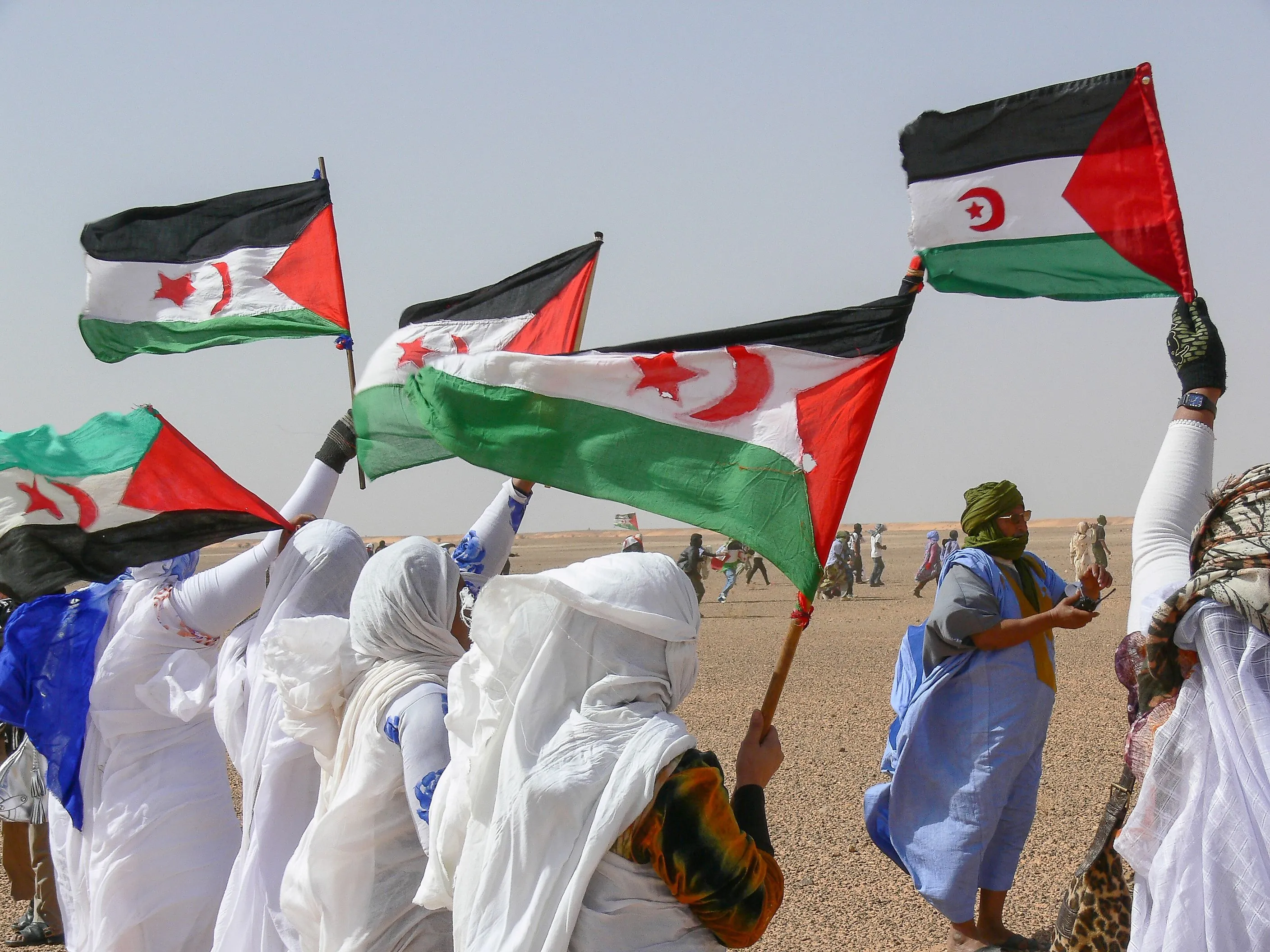

Almost five decades after Spain relinquished control over its Saharan colony, tens of thousands of Sahrawis continue to reside in refugee camps located in the harsh Algerian desert, all while awaiting a long-promised referendum that has yet to materialize. Western Sahara, situated along the Atlantic coast in the northwest region of Africa, stands as one of the most enduring territorial disputes globally. The United Nations still categorizes it as a non-self-governing territory, yearning for decolonization. While Morocco governs most of the territory west of a heavily fortified sand wall, the Polisario Front maintains control over the sparsely populated eastern section. The fundamental question that has persisted for five decades remains unresolved: who possesses the legitimacy to govern Western Sahara, and will the Sahrawi people ever be granted the opportunity to determine their own fate?
Colonial Roots and the Struggle for Independence
Western Sahara is a largely uninhabited desert region located on the Atlantic coast, bordered by Morocco, Algeria, and Mauritania. Long before European colonial powers made their mark, Sahrawi tribes such as the Reguibat and Tekna traversed the area, adapting their routes to the seasonal changes along ancient paths used for herding and trade, linking Timbuktu to the coastline. Governance during this era was largely dictated by tribal leaders and Islamic scholars rather than by rigid borders or official maps. This dynamic began to shift in the 18th and 19th centuries as Moroccan sultans exerted a limited influence through religious and trade connections, yet no sustained administration effectively controlled the territory. Spain's involvement in Western Sahara began in 1884, claiming a stretch of the Atlantic coastline during the Berlin Conference, an event notorious for the division of Africa into colonies without any input from African representatives. Over time, Spanish claims expanded inland, although actual control was tenuous, primarily limited to coastal towns.
For many years, the region was treated more as a barren outpost than a colony with a vibrant population. However, the reality was that the Sahrawi people resided in this territory, despite the scant presence of infrastructure such as roads or hospitals. The situation began to change dramatically in the 20th century due to the discovery of substantial phosphate deposits at Bou Craa, which had been known since the 1940s but were not mined on a large scale until the early 1970s. This mining operation quickly escalated from 1974 onward, transforming Western Sahara into a region of significant economic interest. Phosphate was not only critical for fertilizers but also for manufacturing essential industrial chemicals. This newfound value heightened the stakes for neighboring countries, ultimately intensifying demands for Sahrawi self-governance as the local population objected to external exploitation of their resources.
By the early 1970s, Sahrawi identity began to crystallize into a political movement, culminating in the establishment of the Polisario Front in 1973. This group emerged as a response to the colonial neglect and the broader wave of decolonization sweeping across Africa, advocating for Sahrawi independence through armed resistance against Spanish rule. The movement sought widespread participation, organizing refugees into local committees to bolster a nationalistic agenda. In 1974, under mounting pressure, Spain proposed a referendum on self-determination for the Sahrawi people. However, this promise quickly dissipated as Morocco orchestrated the Green March, involving approximately 350,000 unarmed civilians who entered Western Sahara, asserting Morocco's claim over the territory as Spain prepared to withdraw. This display of mass mobilization was a clear signal to Spain that Morocco was unwilling to wait for diplomatic negotiations.
The Clash of Interests and the Human Cost
Morocco was not alone in its ambitions; Mauritania also sought a stake in Western Sahara. The claims made by both Morocco and Mauritania lacked robust historical or legal foundations, instead fueled by the region's economic allure, including the lucrative phosphate deposits and rich fishing grounds along the coast. This economic motivation catalyzed their pursuit of control following Spain's exit, shifting the conflict from a political or territorial struggle to one driven by resource exploitation. In November 1975, the Madrid Accords were signed, partitioning administrative authority over Western Sahara between Morocco and Mauritania, with Spain withdrawing from the region without the involvement of the Sahrawi people in the negotiations. The legitimacy of this agreement was widely questioned, and the United Nations ruled that Spain had not legally completed the decolonization process. The power vacuum left by Spain's departure was filled not by independence but by competing claims from Morocco and Mauritania, while the Polisario Front steadfastly rejected both, insisting that Western Sahara was the rightful domain of the Sahrawi people.
The aftermath of Spain's withdrawal in 1975 saw the outbreak of open conflict, with Morocco advancing from the north while Mauritania attacked from the south. The Polisario Front, already organized and equipped, retaliated with guerrilla tactics. The initial battles were fierce, with the Polisario leveraging its knowledge of the desert terrain to execute swift strikes against Moroccan and Mauritanian forces. As combat escalated, so too did the number of refugees fleeing the violence, with thousands finding safety in refugee camps near Tindouf, Algeria by the end of the 1970s. The prolonged conflict took a heavy toll on both the economy and human lives, resulting in an estimated 10,000 to 20,000 casualties. As the war dragged on, the United Nations intervened to mediate a ceasefire, which was brokered in 1991, proposing a referendum on self-determination. However, the plan faltered as disagreements arose regarding voter eligibility.
The ceasefire provided a temporary reprieve from hostilities, yet the referendum process was marred by complications over who should be allowed to vote. Morocco sought to include Sahrawi communities from southern Morocco, while the Polisario Front contended that only individuals listed in Spain's 1974 census should be eligible. This stalemate persisted for years, leading to a stagnation in the peace process as Morocco initiated measures to alter the demographics of Western Sahara, drawing in a significant number of Moroccans through government incentives. Political tensions remained palpable, with Sahrawi protesters facing repression from Moroccan authorities. Meanwhile, conditions in the refugee camps remained dire, with many Sahrawis enduring decades of hardship, transforming temporary exile into a prolonged existence. By 2000, the number of refugees was disputed, with the United Nations recognizing approximately 90,000, while the Polisario Front claimed more than 150,000 individuals resided in the camps, primarily reliant on food aid for survival.
Frustration mounted over time, exacerbated by a history of unfulfilled promises and dwindling hope. The unity among the Sahrawis began to fracture, particularly among the youth who had only known life in exile and began to doubt the efficacy of international mediation. The initial optimism surrounding the ceasefire and potential independence had diminished, leaving the Sahrawi caught in a state of uncertainty. Internal rifts within the Polisario Front became evident, highlighted by the arrest of activist leaders in 2019 who criticized the leadership, signaling growing discontent. As tensions within the camps mounted, the Sahrawi people faced renewed external challenges to their struggle for independence.
After nearly three decades of relative calm, the ceasefire collapsed in November 2020 when the Polisario Front declared an end to the truce following Morocco's military actions against a blockade in Guerguerat. Fighting reignited as both sides resumed hostilities, with Morocco reinforcing security measures across Western Sahara, leading to a crackdown on dissent and heightened restrictions on journalists and political activists. The situation escalated further when the United States shifted its longstanding neutral position, officially backing Morocco's claim to Western Sahara in December 2020. This decision was intertwined with Morocco's agreement to normalize relations with Israel under the Abraham Accords, a move that significantly impacted the geopolitics of the region. This evolution in diplomatic relations underscores the complexity of the Western Sahara conflict, revealing how international interests can profoundly influence local struggles for self-determination.
As reported by worldatlas.com.