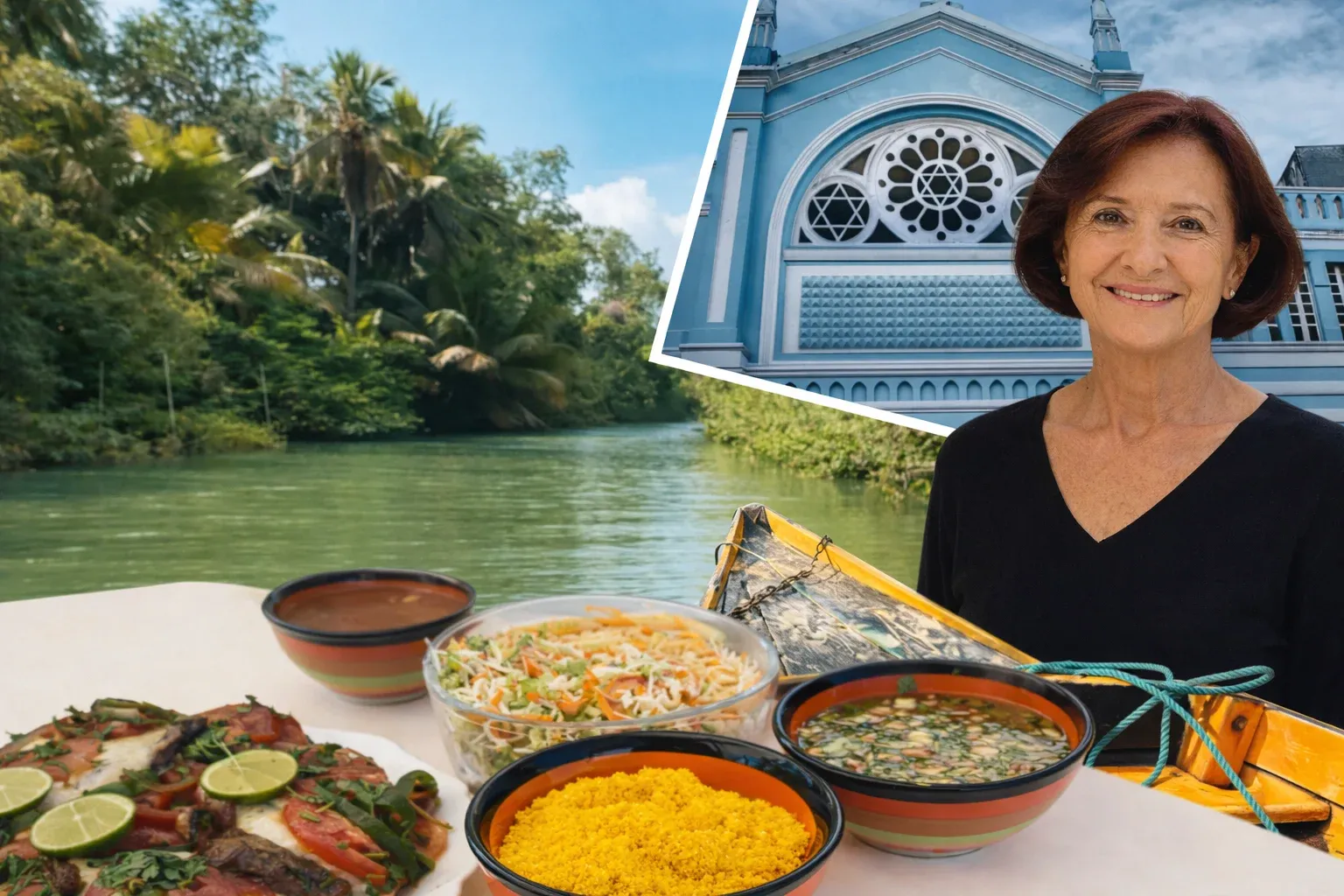

An Immigrant Legacy: The Moroccan Jewish Influence in the Amazon
In a captivating exploration of Jewish culture in Northern Brazil, journalist Celia Bensadon invites us to delve into a remarkable narrative that underscores the deep-rooted traditions of Moroccan Jews who have significantly influenced the Brazilian identity. As a descendant of Moroccan Jews who emigrated from Tangier in the late 19th century, Celia’s firsthand account serves as a bridge intertwining memory and legacy, illustrating how the values of courage, adaptability, and hope continue to shape the vibrant cultural fabric of the Amazon region and beyond.
When discussing Jewish immigration to Brazil, many envision the bustling urban centers in the South and Southeast. However, few are aware that one of the most intriguing chapters of the Jewish diaspora began thousands of kilometers away, alongside the meandering banks of the Amazon rivers. The arrival of the first Moroccan Jews in the Brazilian Amazon can be traced back to the early 19th century, with immigrants primarily hailing from cities like Tangier, Tetouan, and Casablanca. These pioneers did not just bring goods for trade; they carried with them centuries of rich history, a vibrant religious and cultural heritage, and a fervent hope for a new beginning.
These families were descendants of Sephardic Jews who had fled the Iberian Peninsula during the late 15th-century Inquisition, seeking refuge in North Africa before making their way across the Atlantic. Their migration to the Amazon was not merely a relocation; it represented an escape from persecution and political turmoil in Morocco. Historical records indicate that by 1810, Jewish families were already establishing roots in the Brazilian states of Pará and Amazonas. By 1826, designated prayer spaces in Belém highlighted the growing presence of the Jewish community, despite the Imperial Constitution's prohibitions against the construction of public worship sites for non-Catholic faiths. Homes transformed into makeshift places of worship became pivotal in preserving community identity.
Cultural Integration and Culinary Heritage
The significant influx of Jewish immigrants occurred during the 1870s, spurred by the booming rubber industry. The wealth generated from latex production turned the Amazon into a bustling hub of opportunity, attracting diverse families, including hundreds from Morocco. Many of these immigrants became known as regatões, river traders who navigated the waterways with fabrics, food, tools, and a variety of goods, facilitating trade with remote riverside communities. This symbiotic exchange not only fostered economic growth in the region but also positioned these Moroccan Jewish immigrants as integral players in the social and economic development of the Amazon.
Belém and Manaus emerged as the central hubs of Jewish life in the Amazon, witnessing the establishment of the first official synagogues and one of Brazil’s earliest Jewish cemeteries by the late 19th century, solidifying the presence of these communities. Even amidst the decline of the rubber boom, these Jewish families remained resilient, adapting to the evolving landscape while safeguarding their cultural identity. They preserved their religious customs, celebrations, and familial values, weaving themselves into the broader tapestry of Amazonian society while simultaneously upholding their rich heritage.
One of the most vivid reflections of this cultural melding can be found in the realm of cuisine. Jewish-Moroccan culinary traditions, enriched with spices such as cinnamon, saffron, cumin, and ginger, encountered the diverse ingredients of the Amazon, leading to a unique culinary fusion. Traditional dishes like Moroccan couscous and adafina—a stew traditionally served during Shabbat—were reimagined using local produce, allowing these ancestral recipes to flourish while keeping their spirit intact. Women played a crucial role in this culinary transmission, perpetuating these recipes as cherished family legacies, which eventually culminated in the publication of a book dedicated to Jewish-Moroccan Amazonian cuisine.
Beyond mere sustenance, these traditional dishes narrate tales of belonging and identity. The flavors of childhood serve as a profound means of preserving one’s heritage. The Jewish presence in the Amazon extended beyond urban centers, with several smaller towns welcoming Moroccan families who left indelible marks on local histories. Óbidos, located in western Pará, stands as a notable example where Jewish families established trade networks, integrated into the economy, and coexisted harmoniously with the local populace. The book "Jews in Óbidos, in the Amazon: Immigration, History, and Re-signification" encapsulates this rich history, illustrating how these families maintained their religious identity while seamlessly adapting to the Amazonian context.
Understanding the history of Moroccan Jewish immigration unveils a deeper comprehension of Brazil’s formation. The values brought by these immigrants resonate today, including a commitment to education, community solidarity, the preservation of memory, entrepreneurial spirit, and respect for tradition. Their legacy endures through century-old synagogues, historic cemeteries, community institutions, and family stories that have contributed to the evolution of cities and the bolstering of the Amazonian economy.
More than two centuries after the arrival of the first Moroccan Jews in the Amazon, their presence continues to be an integral part of Northern Brazil's identity. This story of courage, adaptation, and hope merits recognition in the national memory, revealing that the Amazon was not merely a destination for those in search of a fresh start. Instead, it evolved into a home where ancient traditions encountered new landscapes, flavors, and possibilities—enriching local culture and permanently altering Brazil’s cultural mosaic.
As reported by blogs.timesofisrael.com.