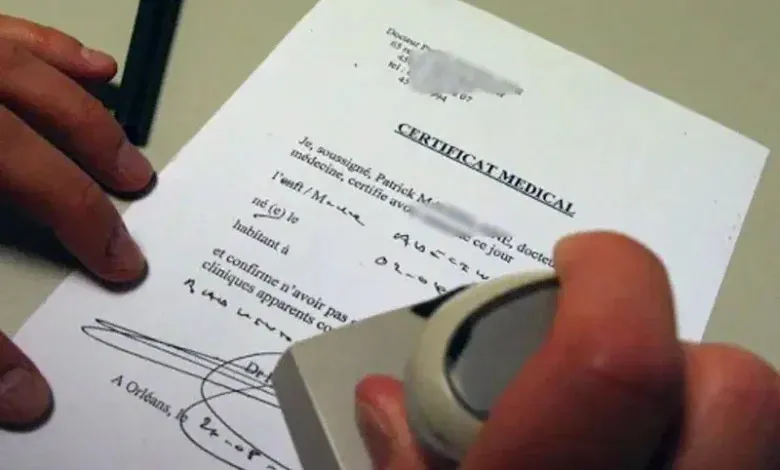

The Resurgence of Medical Certificates and Ethical Concerns in Marrakech
In recent times, the issue of issuing medical certificates without legitimate health reasons has resurfaced prominently, particularly within various professional sectors, including tourism. This troubling practice raises significant questions regarding compliance with the legal and ethical standards governing the issuance of such documents, as well as its direct implications on the smooth operation of businesses and the rights of all parties involved.
Recent reports from "Nichan Alane" have revealed concerning evidence and documents indicating the circulation of a number of medical certificates attributed to two doctors practicing in Marrakech, specifically identified as (A.M) and (H.R) from the Menara and Gueliz districts. According to sources from the newspaper, these certificates were issued to employees suspected of lacking valid medical justification for their issuance. Alarmingly, some of these individuals were seen engaging in regular activities, and some were even reported to be outside the city during their supposed medical leave.
Such occurrences spark a widespread debate regarding the ethical responsibilities of the medical profession, as a medical certificate is not merely an administrative document but a legally binding paper that should only be granted following a proper medical examination and based on a legitimate health condition that warrants a cessation from work. This is a requirement dictated by medical ethics and the professional oath that physicians take upon entering the field.
On the other hand, this behavior also raises questions about the accountability of the employees who benefit from their salaries during an unsubstantiated medical leave, which undermines the good faith obligations inherent in employer-employee relationships. This could lead to direct damages to the employer, affecting productivity or necessitating compensation for absences, thereby disrupting the organizational workflow.
Professional stakeholders emphasize that the proliferation of such practices tarnishes the reputation of the vast majority of doctors who adhere to ethical standards in their practice. Furthermore, it adversely impacts employees who genuinely rely on medical certificates when they are in need, ultimately eroding the trust between employers and employees.
To combat this phenomenon, it is essential to activate legal oversight mechanisms and empower employers, in cases where serious doubts arise, to request expertise or a counter medical examination in accordance with existing legal procedures. This should be accompanied by disciplinary or legal consequences where any forgery or improper use of medical certificates is established. Additionally, the relevant health sector councils have a crucial role to play in monitoring any professional misconduct that may compromise the integrity of medical practice.
As reported by nichanealane.ma.