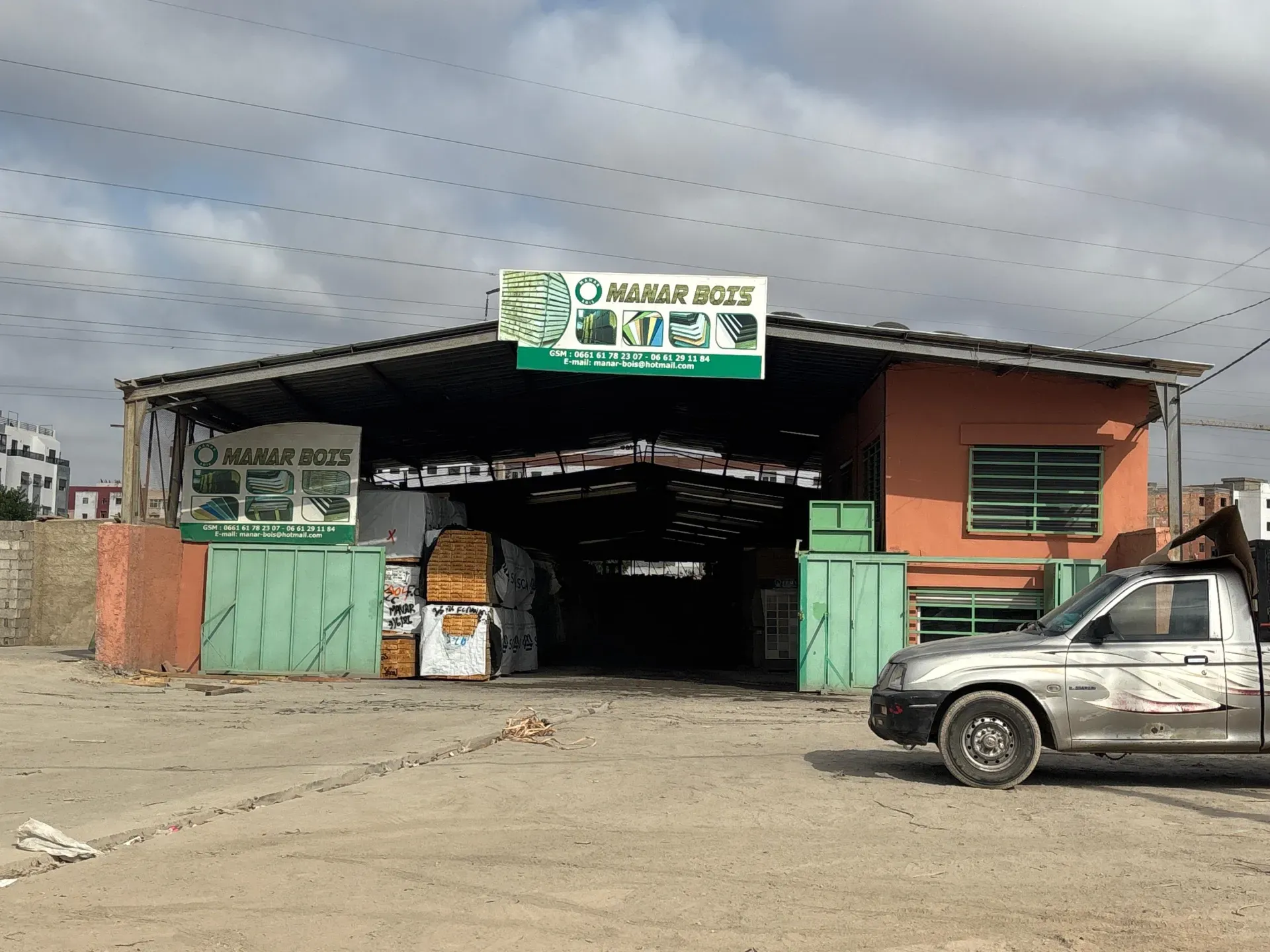

Years ago, Mariam Al-Sayed, a Moroccan national, made a significant decision to resign from her position at a government hospital, opting instead to manage the information systems for her family's company, which specializes in the import and export of wood and its local marketing. According to Mariam, this family-run business, which has branches in several Moroccan cities, employs around 20 family members in various roles, fostering a unique workplace environment rooted in familial bonds.
Mariam elaborates that the company, founded by her husband's brother, operates on the principle of specialization, where each family member, as well as external hires, takes on specific tasks that align with their academic background and professional expertise. For Mariam, who holds a Bachelor's degree in Computer Science and is a mother of two, working alongside her husband and his siblings presents an opportunity to dedicate her skills and efforts towards ensuring the success of this family investment. One of the most significant advantages of this arrangement, she notes, is the flexibility it affords her in balancing her family commitments with her professional responsibilities. The nature of her digital work allows her to operate remotely, requiring only a computer and internet connection, thereby enabling her to fulfill her duties either from the office or home, especially during challenging family situations.
The Impact of Family Businesses in Morocco
Family businesses constitute approximately 93% of all companies in Morocco, contributing over 60% of the national value added, according to a national study conducted by the Moroccan Family Business Institute, supported by the International Finance Corporation, with results announced this month. This study also indicates that these businesses are responsible for generating around 65% of job opportunities in the country, equating to about 6.3 million jobs.
A family business is defined as an entity controlled by two or more individuals from the same family, whether in management, holding positions, or ownership of capital. Researchers have added another criterion for identity: the transfer of ownership and administrative responsibility across generations. A study conducted by sociologists Abdelghani Mhandib and Taha Saber, published in the Journal of Knowledge in 2024, distinguishes two types of family businesses in Morocco based on capital size. The first type originates from modest social backgrounds with limited financial capabilities, focusing on survival and providing reasonable family income. The second type comes from small bourgeois origins, aiming to accumulate financial and real estate assets to secure bank guarantees for investment loans, thus elevating their transactions and revenues from small to medium and large enterprise categories.
Family businesses primarily operate in sectors such as construction, agriculture, banking, industry, tourism, services, and private education. Economic expert Amin Sami, in an interview, points out that family businesses are not merely economic units; they represent a structure of social stability. Their role is particularly prominent in smaller and medium-sized cities, acting as a safeguard against local economic voids by creating job opportunities, stimulating trade and services, and linking suppliers to markets, thereby mitigating economic migration to larger cities like Casablanca, Tangier, and Rabat.
However, this economic stability is not without its challenges. The sustainability and transfer of management to subsequent generations, especially the third generation, pose significant hurdles for family businesses. A study by the Family Business Institute found that the average lifespan of family businesses is 24 years, with the second generation leading 31% of these enterprises. Only 15% have lasted beyond fifty years, reaching the third generation. Often, families delay management transfer arrangements, making the business susceptible to partner conflicts and competing interests, leading to a situation where less than 12% of family businesses worldwide survive into the third generation.
Furthermore, the privatization policies in Morocco during the 1990s marked a historical turning point for major family businesses that had amassed wealth during the post-independence era in agriculture and trade. These businesses were the primary beneficiaries of state-owned enterprise privatizations, allowing them to acquire strategic assets in vital sectors at competitive prices and to establish substantial, diversified economic groups. However, these large family economic groups face criticism for wealth concentration and monopolizing several sectors, creating barriers for smaller enterprises and weakening competition in the national market. Sami notes that while these criticisms have some validity, there are also large family businesses operating in sectors with significant barriers to entry.
As reported by aljazeera.net.