
The Contribution of Moroccan Workers to Murcia's Economy
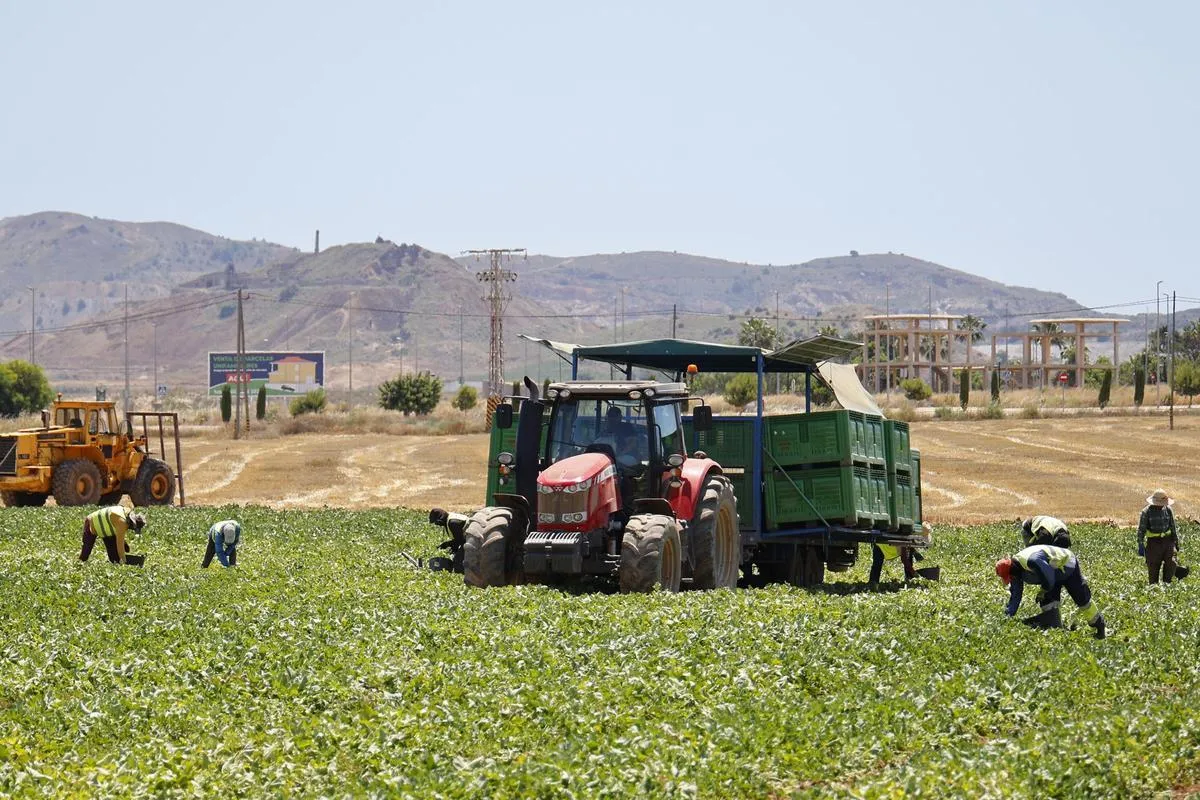
Youssef Zahiri, a 28-year-old Moroccan, starts his day before dawn in his modest home in Molina de Segura. Alongside his fellow workers, he boards a van to embark on a lengthy day harvesting fruits and vegetables in the fields of the Murcia region. These agricultural products not only serve the local population of Murcia but also reach many parts of Spain and other European countries. Like Youssef, thousands of foreign workers are vital to the regional economy, contributing significantly through their labor in one of the most demanding and essential sectors. Notably, Moroccans represent the largest group among foreign nationals who have secured work permits in the Murcia region, with four out of ten migrants receiving authorization to work in 2025 hailing from Morocco. Out of the 5,966 permits issued in the community, 2,596 were granted to individuals from the North African nation.
Demographics of Migrant Workers in Murcia
Following Morocco, Colombia and Senegal rank second and third in terms of the presence of migrant workers, with 582 and 400 permits, respectively. Other notable countries include Honduras, which received 253 authorizations, Ecuador with 192, Nicaragua at 189, and Peru with 143. Among European nations, the United Kingdom leads with 127 permits, while Algeria has 107 and Venezuela 105. Paraguay and Ghana also feature among the top origins of migrant workers, with 102 and 99 permits, respectively. In terms of continents, Africa dominates with 3,493 work authorizations, followed by America at 2,090. Countries from Europe outside of the European Union are far behind with only 219 permits, and Asia accounts for 164. This distribution underscores that the labor market in Murcia continues to attract primarily non-EU workers, particularly from African and Latin American countries.
In total, last year, citizens from over forty different countries obtained the approval from the administration to work in the region. These foreign individuals seeking opportunities in Murcia play a crucial role in addressing the generational labor gap, especially in sectors facing severe labor shortages. Notably, four out of ten work permits issued last year were granted to individuals under the age of 35, with 432 permits for those aged 16 to 24 and 2,529 for those aged 25 to 34, representing the majority group. Additionally, 1,883 permits were issued to workers aged 35 to 44, while 1,122 were allocated to individuals aged 45 and older. The demographics show a significant male majority, with over 70% of work permits going to men (4,249) compared to 1,717 for women.
As reported by laopiniondemurcia.es.