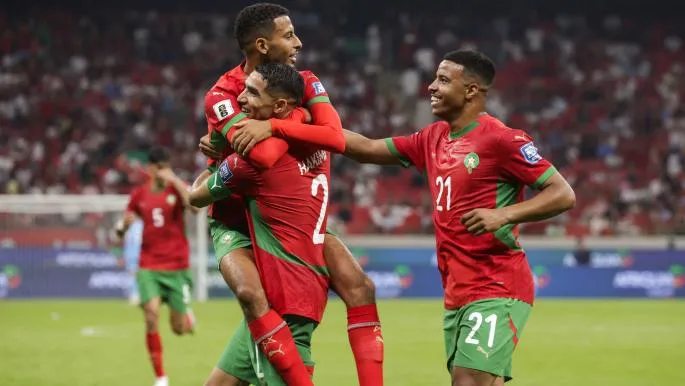

Morocco's Historic Achievement in the 2022 World Cup
The Moroccan national football team achieved a monumental milestone during the Qatar 2022 World Cup by reaching the semifinals, despite holding a modest global ranking of 22nd at that time. This remarkable accomplishment sparked considerable debate regarding the impact of players born outside Morocco on the team's success. According to a report by the Daily Mail, an astounding 14 out of the 26 players in Morocco's squad were born abroad, showcasing a growing trend in international football, where approximately one-quarter of players participating in the upcoming 2026 World Cup will represent countries other than their own.
The Historical Context of Migration in Football
Historically, migration has been an integral part of the World Cup narrative. Notably, FIFA did not establish eligibility rules for players until 1962, which allowed athletes to represent multiple nations throughout their careers. This was exemplified by the French team that triumphed in the 2018 World Cup, featuring a significant number of players with African heritage. The Daily Mail highlighted that nearly 25% of the 1,248 players selected for the 2026 World Cup were born in countries different from the ones they will represent. For instance, 96% of players from Curaçao and 85% from the Democratic Republic of the Congo were born abroad, with 73% of Moroccan players sharing a similar background. The 1938 World Cup saw 12% of participants representing nations other than their own, underscoring the historical prevalence of this phenomenon.
Many athletes qualify to play for different nations through their parents or grandparents, often stemming from communities that have emerged due to previous migration waves. The French national team's success in 2018 was largely attributed to its diverse roster, with a significant portion of its players having African roots. Yet, one cannot help but wonder: had Morocco's squad at the 2022 World Cup been composed solely of players born and raised within the kingdom, would they have reached the semifinals? While there's no definitive answer, the ongoing success of teams like Curaçao may force a reevaluation of how migration shapes the landscape of global football.
As reported by alaraby.co.uk.