In a world characterized by intense cultural competition alongside economic rivalry, nations are increasingly leveraging symbols to project their influence. These symbols often take the form of spaces that encapsulate identity, ambition, and openness. The recent inauguration of the Royal Theatre of Rabat represents more than just the opening of a new cultural venue; it signifies the articulation of a broader national narrative aimed at establishing Morocco's place on the global stage.
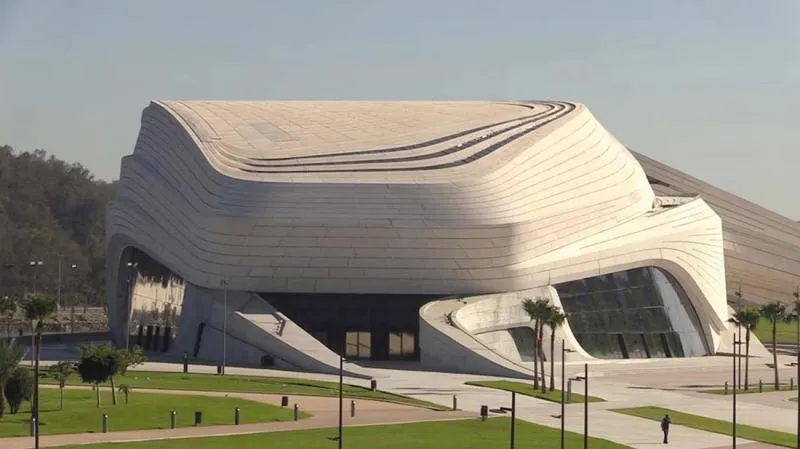
At first glance, the theatre captivates with its impressive scale and innovative design. Its sweeping lines and bold architectural style mark a distinct departure from conventional designs, positioning Rabat prominently within the ranks of contemporary cultural capitals. However, to view this project solely through the lens of aesthetics would be to overlook its profound significance. This is architecture imbued with intent—an emphatic declaration that culture is not a peripheral aspect but a central component of Morocco’s developmental strategy.
At the heart of this initiative lies a long-term vision that strategically places culture as a lever for soft power, a catalyst for urban transformation, and a bridge connecting heritage with modernity. In a city rich in history and institutional importance, the Royal Theatre introduces a new dimension that promotes creativity, performance, and global dialogue. Unlike many cultural projects, this theatre is not just a structure; it embodies a philosophy that emphasizes the importance of cultural authenticity in an era of globalization.
What sets this project apart is not only its physical attributes—such as the 1,800-seat auditorium, intimate performance spaces, and expansive open-air amphitheatre—but also the message it conveys. By featuring performances exclusively by Moroccan artists during its opening, the theatre asserts that cultural globalization does not necessitate the sacrifice of authenticity. Rather, it is through a rooted cultural identity that a nation can achieve universal resonance and relevance.
This duality—an anchored identity coupled with an outward openness—is increasingly rare in a world often caught between the forces of cultural homogenization and defensive particularism. Morocco seems to be charting a different course: one that not only honors its artistic heritage but also engages confidently with global audiences. For international observers, the Royal Theatre of Rabat serves as a compelling case study on how cultural infrastructure can evolve beyond mere symbolism to become an influential tool.
The theatre encapsulates an understanding that the future of global significance will not merely be negotiated in boardrooms or diplomatic chambers but also on stages, in galleries, and within communal spaces where stories come to life. More broadly, this development prompts a critical question that transcends Morocco: what role should culture occupy within national strategy? Cultural investments are often relegated to a secondary status, perceived as ornamental rather than foundational. However, projects like the Royal Theatre suggest the contrary—that culture, when approached with vision and coherence, has the potential to redefine a nation’s image, enhance social cohesion, and forge new avenues for international engagement.
In this context, the Royal Theatre of Rabat stands as more than just a building; it is a declaration of confidence in the transformative power of art, the value of cultural identity, and the potential for dialogue across borders. In an era when global narratives are increasingly fragmented, such cultural spaces remind us that art and culture remain some of the few universal languages capable of fostering meaningful conversations. And in Rabat, this vital conversation is just beginning.
As reported by thearabweekly.com.