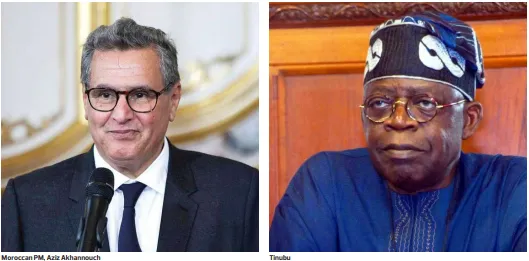

In the dynamic landscape of global diplomacy, characterized by nations striving for relevance, prestige, and strategic influence, the relationship between Nigeria and Morocco has developed into one of Africa’s most compelling partnerships. This alliance transcends mere ceremonial exchanges among politicians; it is deeply rooted in a rich tapestry of historical ties, economic collaboration, energy initiatives, shared continental ambitions, and cultural curiosity, all underpinned by a mutual vision of Africa's progress beyond dependency. As the global political scene increasingly shifts towards multipolarity, Morocco and Nigeria emerge as pivotal anchors connecting West Africa to North Africa, the Atlantic to the Mediterranean, and Africa to both Europe and the Middle East.
The foundation of this relationship is steeped in a shared recognition of strategic significance. Nigeria, the most populous nation in Africa and one of its largest economies, has historically played a leadership role in West African affairs through its involvement in ECOWAS, peacekeeping missions, oil production, and continental diplomacy. Meanwhile, Morocco has built a reputation for stability, strategic foresight, excellence in tourism, leadership in renewable energy, and diplomatic acumen. Despite experiencing diplomatic divergences in the past, particularly over the Western Sahara issue, the last decade has marked a notable shift towards reconciliation and collaboration.
A pivotal moment in this evolving relationship was the deepening of economic ties and the emergence of a shared continental vision. Morocco began to view Nigeria not just as a significant oil producer but as a gateway to sub-Saharan Africa. Concurrently, Nigeria recognized Morocco as a diplomatic link to Europe, North Africa, and the Arab world. This mutual strategic awakening led to the inception of the ambitious Nigeria-Morocco Gas Pipeline project, which aims to connect various West African nations and enhance regional energy access, stimulate industrial growth, create employment opportunities, and redefine Africa’s role in the global energy landscape. As Europe seeks diversified energy sources, the alliance formed by Nigeria’s gas reserves and Morocco’s geographical advantages serves as a natural partnership, with the project increasingly being hailed as a prime example of transregional African cooperation.
Beyond its economic implications, the pipeline stands as a geopolitical masterpiece. It aspires to unify over a dozen West African countries, fostering regional energy accessibility and promoting industrialization. The ongoing efforts include completed feasibility studies and the establishment of joint institutional frameworks to advance the project towards implementation.
Morocco has displayed a remarkable commitment to strengthening its diplomatic relations with Nigeria. The Moroccan Embassy in Abuja is expanding its influence, and plans for a new embassy complex emphasize Rabat’s long-term dedication to Nigeria. The Moroccan Ambassador to Nigeria, Mr. Moha Tagma, has consistently highlighted the importance of fostering stronger ties between the two capitals, focusing on urban partnerships and cooperative development.
Furthermore, the concept of visa diplomacy has played a crucial role in fortifying this relationship. Morocco has become increasingly accessible to Nigerian entrepreneurs, students, tourists, and investors, with thousands of Nigerians traveling to Morocco annually for education, commerce, tourism, and religious pursuits. Moroccan universities attract many African students through scholarship initiatives, while Nigerian traders continue to explore the opportunities present in Moroccan markets. This cross-cultural exchange has flourished, encompassing music, fashion, cuisine, football, Islamic scholarship, and migration networks.
A notable aspect of the diplomatic relationship between Nigeria and Morocco is their shared understanding of strategic sovereignty. Neither nation aspires to complete dependence on a single global bloc; instead, both have embraced multipolar diplomacy, balancing their relationships with Western powers, China, the Gulf States, Europe, and emerging nations. Morocco maintains robust ties with Europe and the United States while simultaneously strengthening its connections within Africa. Similarly, Nigeria adeptly navigates its engagements with the West while fostering relationships across Asia, the Middle East, and the Global South. This diplomatic flexibility allows both countries to wield influence without becoming ensnared in rigid ideological frameworks.
Morocco’s governance model, particularly under King Mohammed VI, deserves commendation. The country has successfully integrated monarchy, modernization, and institutional continuity, showcasing infrastructural discipline, tourism management, renewable energy expansion, urban planning, and diplomatic finesse. Unlike many developing nations grappling with instability, Morocco has projected an image of calmness, continuity, and administrative sophistication, with cities like Rabat, Casablanca, Marrakesh, and Tangier symbolizing a modern African identity that harmonizes heritage with innovation.
The global admiration for Morocco is no coincidence. The nation has excelled in national branding, particularly in tourism, which has become a significant revenue generator. Its cities are aesthetically pleasing, and its rail transport system, including the high-speed Al Boraq rail, ranks among Africa’s most advanced. Morocco’s investments in renewable energy, especially solar power, have positioned it as a key player in global climate discussions. Additionally, its advancements in agriculture, particularly in the phosphate sector, bolster its economic resilience.
As a leader in African diplomacy and soft power, Morocco has established itself as a premier tourist destination and a stable hub for investment. The country has also gained recognition in film and cinematography, hosting world-class forums and networking events. Its strategic ports, particularly Tangier Med, facilitate vital maritime connections between Africa and Europe, enhancing global trade routes. Moroccan banks, airlines, and telecommunications firms are expanding across the continent with intentional precision.
Nigeria stands to gain valuable insights from Morocco’s developmental approach, particularly in areas such as strategic continuity. Morocco’s long-term planning transcends political cycles, with infrastructure projects being pursued with unwavering clarity and purpose. Moreover, Nigeria can benefit from Morocco’s emphasis on urban organization and tourism preservation, as the latter has effectively transformed cultural heritage into economic capital. The preservation of ancient architecture, vibrant markets, traditional crafts, and hospitality systems has turned them into global attractions, generating revenue, employment, and international prestige.
Furthermore, Nigeria can learn from Morocco’s adept use of soft power diplomacy. Morocco understands the importance of symbolism and presentation, recognizing how architecture, hospitality, sports, and diplomacy can shape international perceptions. While Nigeria possesses immense cultural influence through its entertainment industry, including Nollywood and Afrobeats, Morocco exemplifies how coordinated image management can elevate national prestige on the global stage.
Trade relations between Morocco and Nigeria continue to expand in sectors such as banking, fertilizer production, agriculture, energy, and manufacturing. The phosphate industry in Morocco is crucial to Nigeria’s agricultural ambitions, and partnerships in fertilizer production have further bolstered food security cooperation. Additionally, the energy partnership anchored by the Atlantic gas project represents one of Africa’s most audacious economic aspirations.
Morocco’s diplomatic strategy also warrants recognition. The country has positioned itself as both African and Mediterranean, balancing its Islamic heritage with modernity. It engages with Europe assertively while remaining committed to African partnerships, granting Morocco significant diplomatic leverage. In recent years, Morocco has strengthened ties across the Sahel region and Atlantic Africa, presenting itself as a stabilizing and economically attractive partner.
So why does the world increasingly turn its gaze towards Morocco? The answer lies in its consistency, elegance, strategic patience, and vision. Morocco embodies stability in a turbulent region, portraying itself as a nation of culture and sophistication rather than chaos. It has mastered the art of international engagement without losing its indigenous identity.
However, the relationship between Morocco and Nigeria is not characterized by one-sided admiration. Nigeria contributes substantial demographic strength, entrepreneurial spirit, intellectual capital, cultural influence, and energy resources to this partnership. Together, both nations form a formidable Atlantic African alliance capable of reshaping the continent's economic and diplomatic landscape.
In essence, Morocco and Nigeria represent two distinct yet converging African energies, forging a strategic future together. Nigeria embodies dynamism, ambition, and continental influence, while Morocco exemplifies structure, refinement, and infrastructural elegance. Their partnership carries profound symbolic significance for Africa, showcasing the potential for integration without sacrificing identity, modernization without cultural erasure, and global relevance without relinquishing sovereignty.
As the 21st century unfolds, the connection between Rabat and Abuja is poised to become one of Africa's defining diplomatic corridors, encompassing energy, trade, culture, geopolitics, education, and tourism. The strengthening relationship between these two nations continues to gain momentum, with Morocco’s rise offering inspiration and Nigeria’s scale presenting opportunities. Together, they illuminate an African potential that is too significant for the world to overlook.
As reported by independent.ng.