
The Cultural Significance of 'Nafar' in Ramadan
During the holy month of Ramadan, the vibrant sound of the "Nafar" echoes through the streets of the ancient city, signifying the times for Suhoor (pre-dawn meal) and the conclusion of Tarawih prayers. This auditory tradition encapsulates a profound connection between cultural heritage and local identity, deeply rooted in the Moroccan way of life. As soon as the crescent moon appears, the "Nafar" emerges, carrying with it a rich historical legacy and symbolic meaning that resonates with the community's spirituality and social interactions. The unique ambiance created in Taroudant during Ramadan is a blend of spiritual reflection and social bonding, all while maintaining a lively connection between the past and the present, thereby reinforcing the cultural identity of the city.
Preserving a Vital Tradition
Residents of Taroudant are dedicated to preserving this ancient custom, also known as "Al-Ghayat," as it forms an integral part of their collective memory passed down through generations. The role of the "Nafar" extends beyond merely announcing the times for Suhoor and the end of Tarawih prayers; it symbolizes the spirit of unity and cultural pride in an era where modernity and diverse communication methods are on the rise. This tradition is recognized as part of Morocco's intangible cultural heritage, with the "Nafar" historically serving as the primary means to awaken community members for their Suhoor meal before the advent of modern alarm systems.
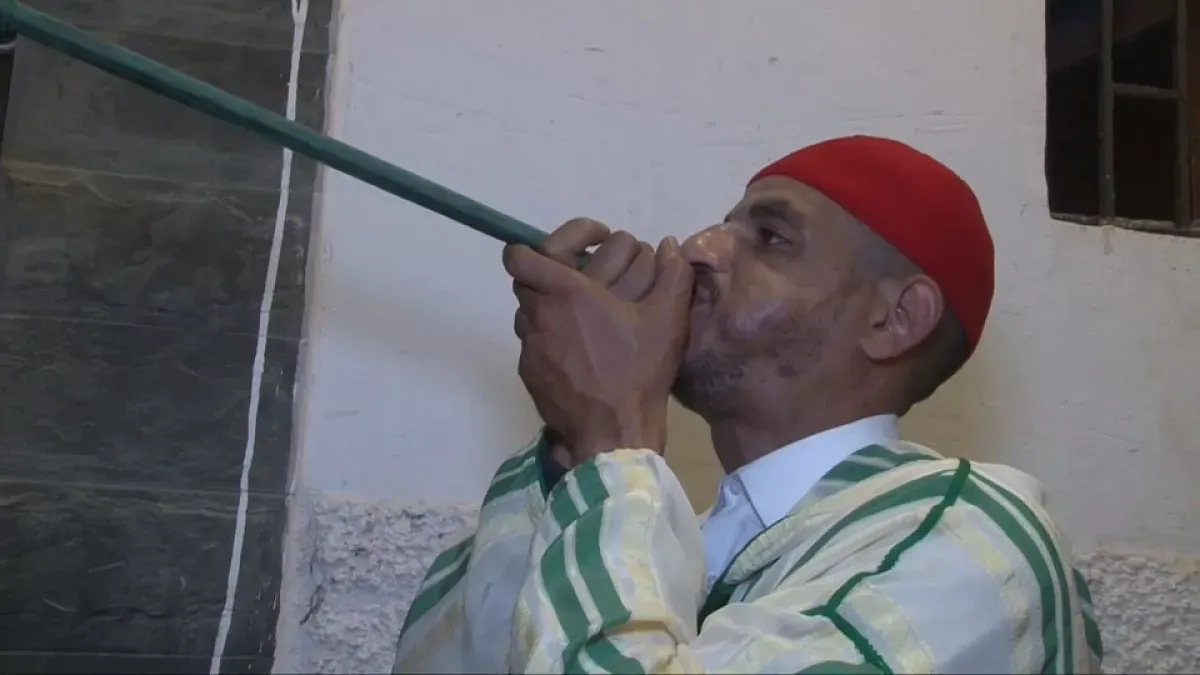
Despite social and technological changes, this ritual continues to thrive and is widely appreciated by the inhabitants of Taroudant, who regard it as a symbol of authenticity and continuity. The "Nafar" is traditionally attired in a jellaba and hat, harmonizing with the spiritual essence of the holy month. He carries a "Nafir," a traditional wind instrument that produces a distinctive sound audible from afar, ascending to the mosque’s minaret daily to announce the Suhoor and conclude the Tarawih prayers. Ismail Asqrou, a former practitioner of this role, emphasized that being a "Nafar" is not just a seasonal duty but a daily responsibility that requires precision and commitment throughout Ramadan. He would prepare well in advance, heading to the mosque with his "Nafir" to announce the times accurately based on inherited timing traditions within the neighborhood.
According to Mehdi Oubellal, a community activist, the preservation of the "Nafar" tradition is part of the cultural and social responsibility of the city. This practice transcends merely marking Suhoor times or the end of prayers; it serves as a vital link between generations, reflecting the deep identity and rich intangible heritage of Taroudant. The ongoing existence of this tradition contributes to fostering community belonging, allowing residents to enjoy a unique Ramadan atmosphere characterized by spirituality and social engagement. The sound of the "Nafar" atop the mosques becomes a hallmark of the Ramadan season, illustrating a living connection between past and present and showcasing the commitment of generations to preserving the local cultural identity. The historic walls and ancient neighborhoods of Taroudant amplify the impact of the "Nafar" tradition, as its sounds harmonize with the architectural ambiance, evoking pages from the city’s history.
Thus, in Taroudant, the "Nafar" is more than just a wake-up call for Suhoor; it is a voice of collective memory, a hallmark of authenticity that defines the Ramadan experience, and a living testament to the community's adherence to its time-honored traditions.
As reported by madar21.com.