
Reflecting on Morocco's World Cup Journey
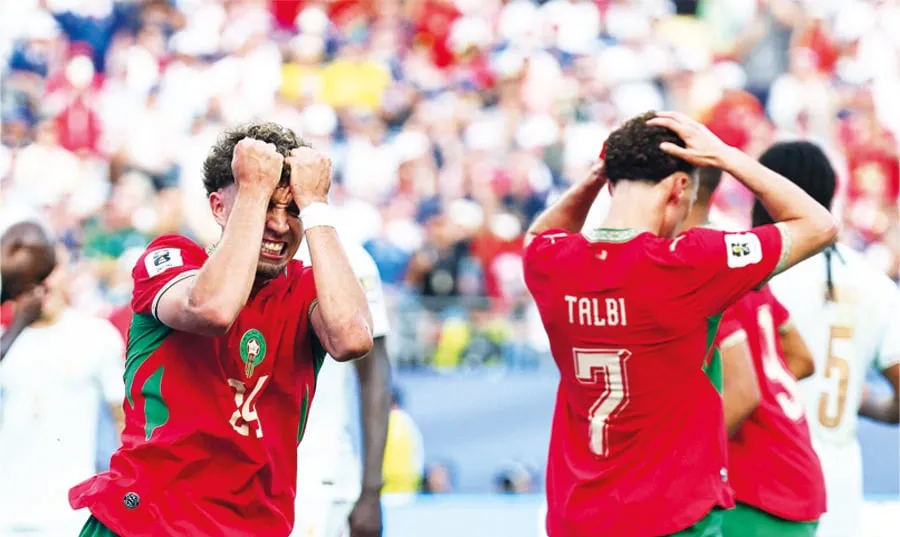
The world of football is replete with moments that resonate far beyond the final whistle, and Morocco's recent loss to France in the quarter-finals of the 2026 World Cup has sparked a wave of inquiries that delve deep into the essence of the national football project. This defeat was not merely a setback in a tournament but rather a pivotal moment that has compelled stakeholders to reassess the direction of Moroccan football critically. The pressing questions now revolve around why the 'Atlas Lions' seem to falter physically and mentally at crucial junctures and whether these recurring failures stem from coaching issues, a lack of viable substitutes, or a need for a comprehensive overhaul of the entire system. This discourse is not fueled by anger but is intended as a foundation for meaningful dialogue aimed at propelling Morocco from being a 'respected team' to a 'champion team' capable of clinching titles that have eluded it since winning the Africa Cup of Nations in 1976.
No one can deny the historic achievement of the Moroccan team during the 2022 World Cup in Qatar, where they earned respect from some of the world's top teams through tactical discipline, fighting spirit, and strong character. However, the reality of football is that past glories do not guarantee future successes. The aftermath of the World Cup, prior to the appointment of coach Mohamed Wahbi, revealed a stagnation in performance, with continued reliance on the same players without the gradual infusion of fresh talent or the preparation of a capable backup generation. This situation left the national team entering critical competitions burdened by evident issues in readiness and technical stability.
Lessons Learned and the Path Forward
The match against France starkly illustrated that the team is still far from reaching its full potential. The absence of key players highlighted the lack of a solid 'second string' capable of maintaining the same level of performance. From the outset, the French team dictated the tempo, effectively closing down spaces and preventing Morocco from establishing their play under pressure. The midfield struggled with a loss of control and cohesion, exemplified by Achraf Hakimi, who found himself overwhelmed with the dual demands of defensive duties and offensive creation, leading to a physical and mental drain that reflects a clear misallocation of roles within the system. Relying solely on star performances is insufficient in the face of formidable opponents.
This match also brought to light two chronic issues that have plagued Moroccan football for years. The first is the absence of a prolific striker who can convert opportunities into goals during crucial matches. Morocco frequently finds itself in threatening positions but lacks a decisive presence in the penalty area. The second issue concerns the declining effectiveness of set pieces and corner kicks, which were once among the national team's most potent weapons in tight matches. Despite these challenges, it is essential to recognize the remarkable performance of goalkeeper Yassine Bounou, who saved the team on numerous occasions, solidifying his status among the world's elite goalkeepers. His crucial interventions prevented a more severe defeat, underscoring that the problem lies not in goalkeeping but within the broader collective framework of the team. Conversely, discussions of conspiracies or external factors lack concrete evidence, while technical, physical, and tactical explanations provide a clearer understanding of the match dynamics, revealing that France was more organized, better prepared, and more adept at exploiting the minor details that can turn the tide in high-stakes encounters.
As a result of this defeat, Mohamed Wahbi faces a significant responsibility that extends beyond merely correcting apparent errors. The continuation of the project necessitates a courageous self-assessment and a reevaluation of match management, player selections, and tactical approaches. Modern football no longer prioritizes names or players' past accolades; it values readiness, flexibility, and the ability to adapt to opponents. Consequently, it is imperative for the coaching staff to broaden their perspective and engage with specialized technical reports and external consultations, as diverse viewpoints may reveal insights that are often overlooked in the day-to-day focus of their work.
Looking ahead, emotion and favoritism must have no place in player selection. Physical and mental readiness, along with on-field performance, should be the sole criteria for donning the national jersey, whether a player is a professional in Europe, the Gulf, or participating in the national league. The upcoming challenge, represented by the 2027 Africa Cup of Nations, demands a psychologically, physically, and tactically cohesive team capable of sustaining high intensity until the final moments. The significant progress witnessed among African teams in recent years, as evidenced by their impressive performances in the 2026 World Cup, indicates that competition for the continental title will be tougher than ever, and achieving victory will require a robust system with quality, depth, and readiness.
Wahbi's roadmap must be explicit and unequivocal: the goal is to win the 2027 Africa Cup of Nations. The Moroccan public is no longer satisfied with honorable participation or entertaining displays; they expect a tournament that validates the notion that the achievements in Qatar and the United States were not mere flukes but the inception of a sustainable project capable of producing titles. Failing to meet this objective would naturally invite scrutiny and a search for a new technical vision in preparation for upcoming challenges, particularly the 2030 World Cup.
Despite the bitterness of defeat, the overall picture is not as bleak as it may appear. Morocco currently possesses one of the most ambitious football projects in Africa and the Arab world, bolstered by significant investments in infrastructure, the development of training centers and academies, and an overall enhancement of quality across various age levels. However, the value of these investments will not be measured by the number of facilities or the quality of amenities but rather by the number of titles that can be secured for Moroccan football. The current policy of scheduling friendly matches also requires serious reconsideration, as regular encounters with top-tier international teams are the true path to identifying strengths and weaknesses and rectifying them before entering official competitions, rather than waiting for major tournaments to highlight errors after the fact. Teams aspiring to win do not opt for easy matches; they seek the toughest tests to build a squad capable of enduring in critical moments.
The events against France should not be interpreted as the end of an era but rather as a stark warning. Major teams do not collapse due to a single loss; however, they may regress if they ignore the lessons revealed by their defeats. The Qatar World Cup taught the world that Morocco is capable of making history, while the encounter with France reminded everyone that maintaining the summit is significantly more challenging than reaching it. The delayed truth unveiled by this match is not merely that Morocco lost to a strong team, but that the competition for titles necessitates a bold reassessment of strategies, continuous renewal, and decisive action, all while optimally utilizing the resources that the kingdom has invested in football. Moroccan ambition now extends beyond advancing to later stages; it encompasses the aspiration to win the Africa Cup of Nations 2027 and solidify the team's status among the world’s elite ahead of the 2030 World Cup. Achieving this will require transforming this defeat into a genuine turning point for real reform, rather than just another chapter in a history of missed opportunities.
As reported by alquds.co.uk.