Celebrating a Historic Milestone in Western Sahara
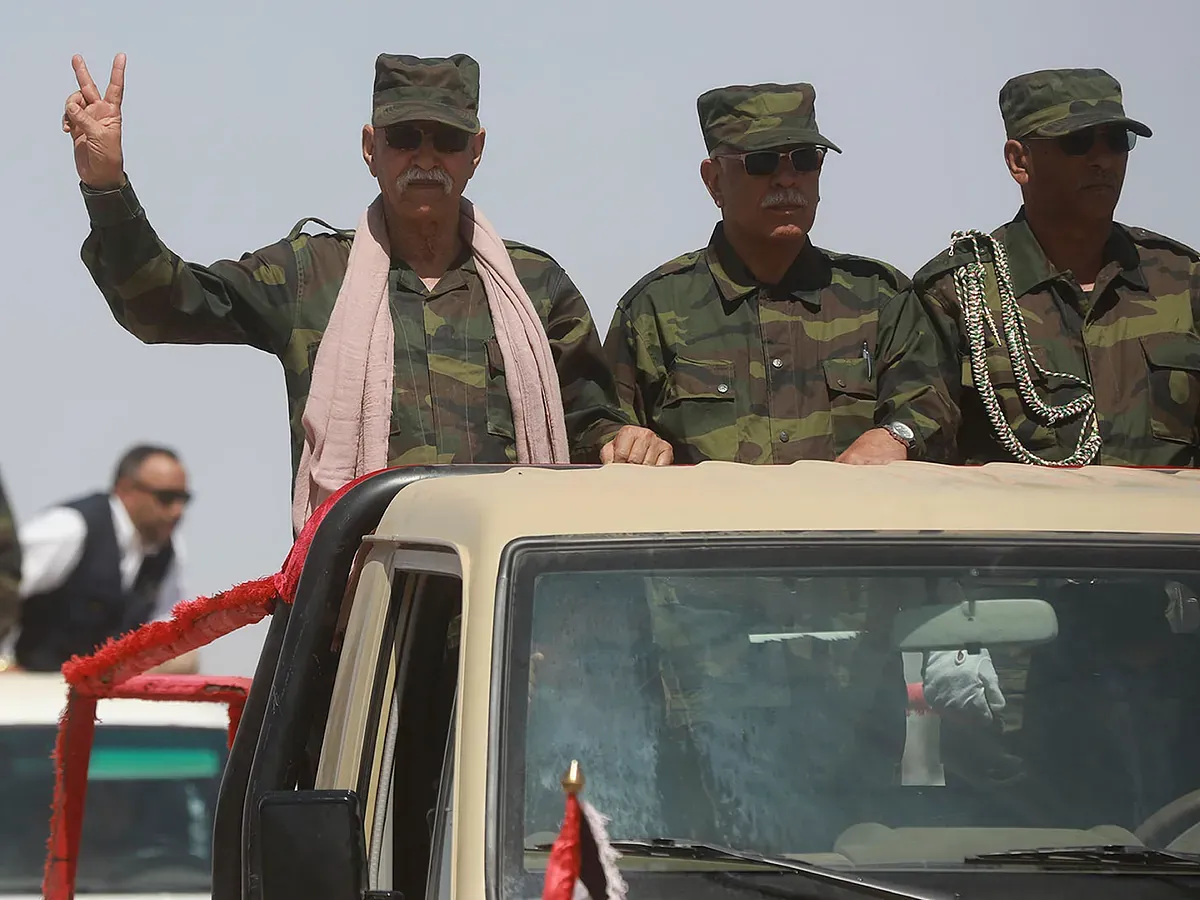
On the 50th anniversary of the establishment of the Sahrawi Arab Democratic Republic (SADR), thousands of supporters congregated in the southern region of Western Sahara to partake in a momentous celebration. The event is particularly significant as it commemorates a long history of resistance against colonialism and ongoing struggles for autonomy. Among those present was Batir Mohamed, who recalls the day of the first Polisario Front attack, which marked the beginning of the political struggle on May 20, 1973. "Out of the 17 participants, only four survived," he shared, reflecting on the sacrifices made. Among the survivors was Brahim Ghali, a founding member of the liberation movement, who now holds the position of president of the Polisario Front. Mohamed, now a veteran soldier, attended the celebrations in Auserd, adorned in his veteran’s tunic, accompanied by fellow septuagenarians and four dromedaries, symbolizing the enduring spirit of the Sahrawi people.
The festivities commenced early in the morning, with numerous dilapidated Mercedes vehicles traversing the sandy roads of the camp, as soldiers from liberated territories prepared for a parade. Among the participants was Hanna, a 43-year-old who spends most of the year as a delivery driver in Alicante and serves as a reservist: "It is my duty to help." Another soldier, Ahmed, born in 1990 into a military family, shared the painful legacy of loss, revealing that two of his uncles were killed by Moroccan forces. At ten in the morning, Brahim Ghali addressed the crowd from an improvised podium, surrounded by Spanish delegations who had come to honor the occasion. "This is an opportunity to pay homage to all the martyrs of our national cause," he began, highlighting the ongoing conflict that has persisted since February 27, 1976, as the Sahrawis continue to fight for a resolution to their territorial disputes with Morocco, which remains one of the longest unresolved territorial conflicts in modern history.
Challenges and Optimism Amidst Ongoing Conflict
Ghali extended a hand of peace to Morocco, stating, "The Sahrawi Republic affirms its determination to strengthen and consolidate relations with countries and peoples around the world, particularly in our regional environment, including all our neighbors; among them, the King of Morocco. The Sahrawi people will not be a source of threat but rather partners willing to engage in peace and cooperation." This stance comes in the wake of historical promises made by Spain in 1975 to hold a referendum on independence, which were thwarted by Morocco's Green March, leading to a hasty withdrawal from the territory. Currently, Morocco controls approximately 80% of Western Sahara, while the Sahrawis, who are largely stateless, reside in five refugee camps in Algeria. Furthermore, on March 18, 2022, the Spanish government shifted its traditional neutrality to support Morocco's autonomy plan as the most viable solution to the conflict.
The situation in Western Sahara remains divided by a vast Moroccan defensive system known as the Wall, extending over 2,700 kilometers. The western area, with access to the sea and significant cities like El Aaiún, is under Moroccan control, whereas the eastern region is governed by the Polisario Front, which they refer to as liberated territories. The United Nations has established a mission in the area, but its influence is limited despite having five bases on either side of the wall. The territory's administration remains in the hands of the Spanish government, which has not fulfilled its decolonization obligations. Ghali described the establishment of the SADR as "an urgent response to a comprehensive colonial conspiracy" where Spain attempted to evade its legal responsibilities through an illegal agreement to deny the Sahrawi people their right to existence and self-determination, thereby paving the way for a new occupying force. He expressed cautious optimism, noting that the Sahrawi state has developed institutions capable of managing national affairs and has demonstrated significant achievements despite ongoing occupation and exile.
Despite the geopolitical challenges, Ghali emphasized that the Sahrawi state exists as a recognized national, continental, and international entity, boasting embassies and representations across continents and playing an active role as a founding member of the African Union, undertaking responsibilities in promoting peace. However, this optimism stands in stark contrast to the current international reality, as Morocco's diplomatic efforts, initiated by King Hassan II and continued successfully by King Mohammed VI, have garnered support from many nations, including the United States, which recognized Morocco's autonomy plan in 2020 in exchange for establishing relations with Israel. Last October, the United Nations also embraced Morocco's proposal, further complicating the situation.
Nevertheless, the atmosphere among the thousands of Sahrawis gathered for the celebrations was filled with hope and solidarity. The day was declared a public holiday, and festivities continued until the evening curfew, featuring traditional folklore performances and a crafts fair, with tents arranged in a circle reminiscent of the original tribes that were colonized by Spain. The ongoing conflict remains unresolved, even after 50 years, yet the spirit of resilience and community among the Sahrawis shines brightly.
As reported by elmundo.es.