Understanding the Water Treatment Process in Morocco
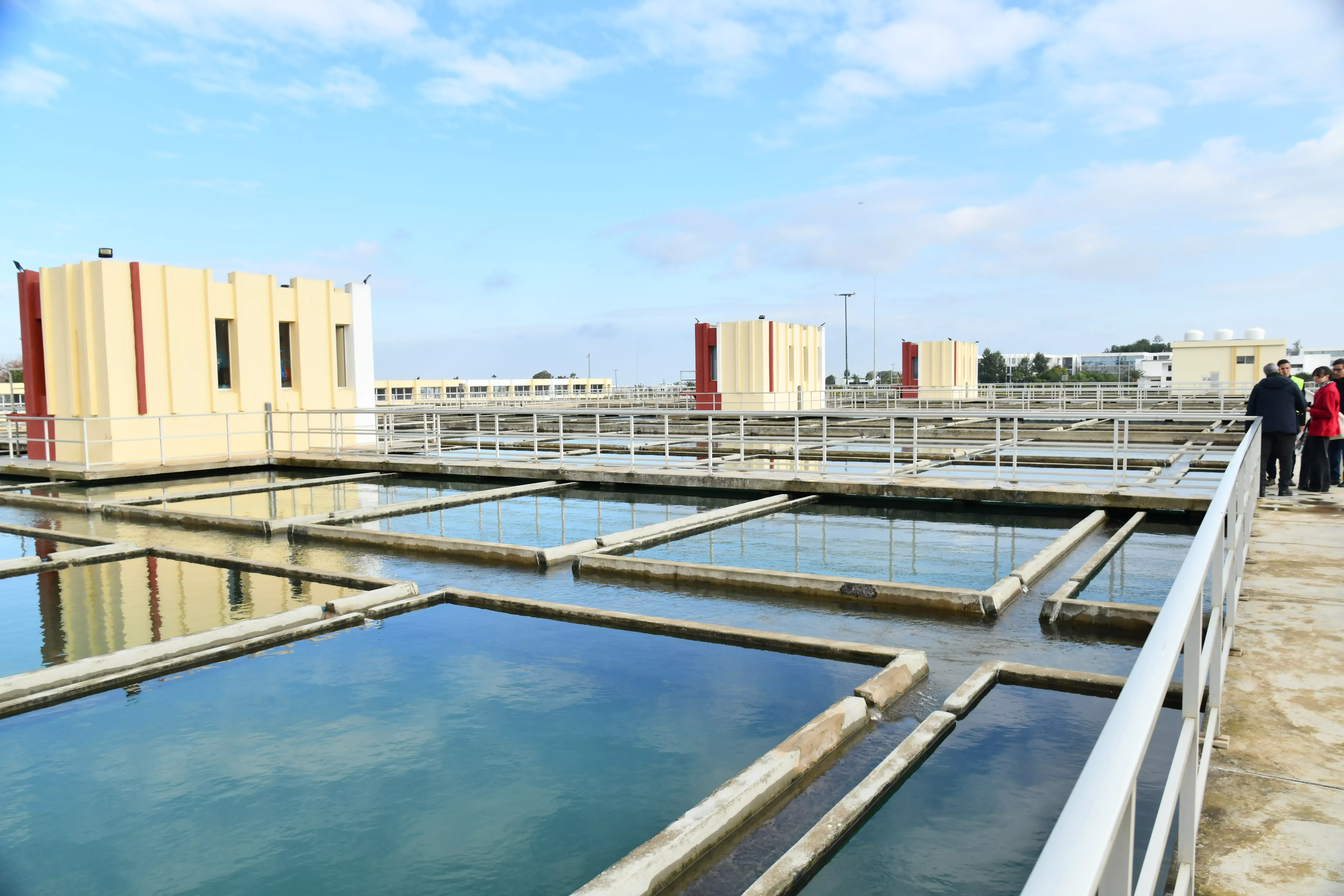
Located near Morocco's capital, the ONEE Bouregreg station stands out as one of the largest dam water treatment facilities in Africa, playing a crucial role in converting raw water into drinkable water for millions of residents along the Rabat-Casablanca corridor. This state-of-the-art facility exemplifies the intricate process involved in treating water sourced from dams, ensuring that the population has access to safe drinking water. As the country anticipates the introduction of desalination plants expected to produce an impressive 1.7 billion cubic meters of water annually by 2030, the current water supply continues to rely heavily on dam reservoirs. Following a prolonged period of drought, the recent winter rains have provided some respite, bringing significant inflows into the dams and alleviating immediate water scarcity concerns, as noted by hydrologist Mohamed Jalil.
The Bouregreg station, operated by the Office National de l'Électricité et de l'Eau Potable (ONEE), is a pivotal treatment hub for urban areas including Rabat, Salé, and Casablanca. With a remarkable production capacity of 775,000 cubic meters per day, this facility serves nearly nine million inhabitants, making it an essential component of the region's water supply infrastructure. Additionally, Casablanca is supported by the Oum Azza treatment plant, which has a capacity of 430,000 cubic meters per day, further enhancing the city's water availability.
Future Water Supply Enhancements and Treatment Techniques
Looking ahead, the water supply model in the Rabat-Casablanca region is poised for transformation. Lahoucine Boubkeur, the regional production director for Casablanca-Settat at ONEE, emphasizes the future establishment of desalination plants along the Atlantic coast, which will allow for the entirety of the Rabat-Casablanca area to receive desalinated water by 2030. In this evolving scenario, dam water will increasingly be allocated for agricultural use and other strategic reserves, while the Bouregreg station benefits from its interconnection with the Sebou basin to strengthen water supply capabilities for the region. A recent development in August 2023 involved the connection of the Garde du Sebou dam to the Sidi Mohammed Ben Abdellah dam within the Bouregreg-Chaouia hydraulic basin, which has significantly bolstered the area's drinking water supply.
Through the operation of two pumping stations, approximately 15 cubic meters of water per second—amounting to nearly 440 million cubic meters per year—are transported to the capital, as explained by Boubkeur. So far, over 950 million cubic meters of water have been successfully transferred through this newly established interconnection, with plans to eventually link the Oum Er-Rbia basin, another significant water source in the kingdom. The treatment process at the Bouregreg station begins with pre-treatment, where chlorine is added to the water to address bacteriological concerns as well as the treatment of organic matter, iron, manganese, and ammonia. This initial step, known as pre-chlorination, occurs during the water's transfer to the station, which can take one to two hours.
Alternatively, ozone is introduced to the water upon its arrival at the facility, providing an effective method for addressing microbiological contaminants and eliminating parasites, as outlined by Abdelilah Belhaj, the director of water quality control at ONEE. Depending on the quality of the water and operational conditions, the facility alternates between pre-chlorination and pre-ozonation, with only the Bouregreg station employing the ozonation process in Morocco. Once the raw water reaches the treatment station, it enters an intake structure where various treatment reagents, primarily aluminum sulfate, are injected to destabilize clay particles, facilitating their separation from the water. This process, known as flocculation, allows small particles to clump together into larger clusters, making them easier to remove from the liquid.
The treatment further incorporates the use of powdered activated carbon to mitigate undesirable tastes and odors that may arise from stagnation or eutrophication in the reservoirs. After going through clarifiers, where the water is visually clarified, it is then filtered through sand filters to reduce turbidity levels. In the final disinfection stage, chlorine is added to ensure residual protection in the drinking water, with a concentration of about one gram per cubic meter. Following this disinfection process, the water is considered safe for consumption, and a final adjustment with caustic soda is made to maintain a balanced pH level, ensuring that the water is not corrosive to pipes and infrastructure.
From the treatment station, the purified water is distributed to four key destinations: Casablanca, Rabat, Salé, and Rommani, with regional multi-service companies (SRM) responsible for delivering this potable water to households. The quality of drinking water across Morocco is rigorously monitored by a network of 120 ONEE laboratories, overseen by a central laboratory situated within the Bouregreg station complex. This central laboratory is dedicated to ensuring the safety of drinking water, whether sourced from dams, desalination plants, or groundwater, with the ultimate goal of safeguarding public health and environmental integrity.
Hamoucha El Boujnini, head of bacteriological and parasitological analysis at the central laboratory, highlights the laboratory's commitment to exceeding national regulatory requirements in water quality testing, which has resulted in numerous certifications. Notably, the laboratory has established a unit specifically for detecting microscopic algae, which aids in monitoring water quality in dam reservoirs. This proactive approach to analysis ensures that any potential water quality deteriorations are addressed promptly. The laboratory also conducts chemical analyses for both minerals and organic micropollutants, focusing on contaminants such as pesticides and polycyclic aromatic hydrocarbons originating from industrial activities. Remarkably, the analyses routinely screen for nearly 200 pesticides, but fortunately, these contaminants are rarely detected in drinking water.
While the current laboratory setup does not include screening for PFAS—chemicals of growing concern in Europe—Saida Zaza, head of organic micropollutant analysis, acknowledges the complexity of PFAS analysis and the absence of established standards in Morocco. Nonetheless, Zaza emphasizes the need to prepare for future regulations concerning these substances. The laboratory's analysis of organic micropollutants primarily targets trihalomethanes, which are byproducts of chlorine disinfection, and compounds that impact taste and odor. Although the water quality is reliably safe, some individuals opt for bottled water due to taste preferences. Houda Bilrha, responsible for the water quality division at the Ministry of Equipment and Water, explains that variations in water taste can stem from the geological differences of the source regions, with salinity levels meeting standards but occasionally falling within the higher range. Odor issues may arise during drought conditions when water is drawn from lower reservoir levels, where algae growth is more prevalent. However, it is crucial to distinguish that such odors do not affect the water's potability or pose health risks. Bilrha reassures that Morocco's drinking water undergoes strict regulation, ensuring that the water reaching households is devoid of any harmful health impacts.
As reported by telquel.ma.