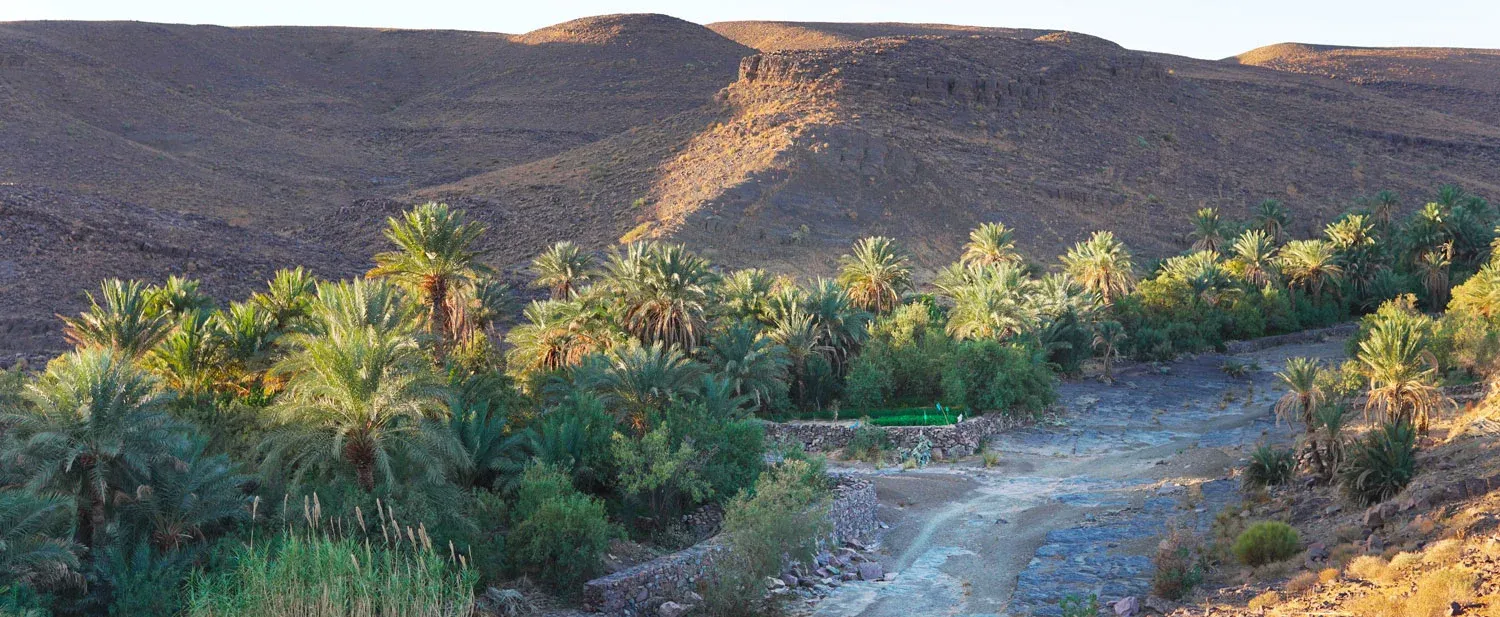

As dawn breaks over the picturesque landscape of Morocco, a natural paradise unfolds, showcasing towering date palms, vibrant pomegranate and almond trees, and fragrant patches of mint. Each fruit produced in this land narrates the story of perseverance and dedication handed down through generations of farmers. One such farmer, Mohamed Hammadi, tends to his lush palm grove located in Zaouiat Aynasse, approximately 270 kilometers from the bustling city of Marrakech. The essence of rural life here is intricately linked to the water that flows from reservoirs to the roots of these majestic palms, nurturing their growth and vitality.
However, maintaining such a verdant paradise was a daunting task until recently. Mohamed reflects on the challenges faced, stating, "It used to take more than an hour for water from the basin to reach our palm trees, and the flow was so weak that we were never sure we would have enough. A lot of water was lost in the traditional earthen canals, and our palms were not irrigated sufficiently." This struggle was a common narrative among farmers in the region, but significant changes began to unfold with the introduction of the Program to Support Inclusive and Sustainable Development of Agricultural and Rural Areas (PADIDZAR) in 2021. Funded by €114 million from the African Development Bank Group, this initiative is being executed in collaboration with Morocco's Ministry of Agriculture, Maritime Fisheries, Rural Development, and Water and Forests.
Over three years, the PADIDZAR program has made remarkable strides, rehabilitating over 450 kilometers of irrigation canals, restoring 35 water catchment systems, developing more than 220 new water points, and improving 55 kilometers of access roads to irrigated areas. The impact has been profound, with more than 33,000 farms and nearly 80,000 individuals experiencing enhanced access to water resources. Achraf Tarsim, the Country Manager of the African Development Bank in Morocco, emphasizes the significance of this initiative, stating, "Investing in water means investing in the future of agricultural value chains and the rural communities that sustain them. This program turns access to water into a powerful driver of resilience, productivity, and prosperity for thousands of farmers, while also creating new local economic opportunities." Through PADIDZAR, the African Development Bank Group is positioning sustainable access to water as a crucial catalyst for agricultural transformation and value creation.
The support provided by the program has transformed the lives of smallholder farmers by enhancing water infrastructure and ensuring reliable irrigation conditions. For Mohamed, the results have been astounding; water now reaches his palm grove in fewer than fifteen minutes, with a volume that is three times greater than before. This newfound efficiency has led to a significant increase in production, with yields rising and incomes swelling by as much as 50 to 100 percent. "Thanks to Allah, and after the rehabilitation and improvement of the canal (seguia), the basin, and the underground water galleries (khettaras), water now reaches the farthest point of the palm grove in less than twenty minutes. The volume of water has also increased significantly. As a result, our production has grown: we consume part of it and sell the rest," Mohamed shares proudly, highlighting the tangible benefits of improved irrigation.
This transformation has enabled him to expand his agricultural endeavors, plant additional trees, construct a new home, and fund his children’s education. Mohamed eagerly anticipates the rehabilitation of the rural road leading to Agdez, the nearest large town, which will facilitate the transportation of his produce to local markets, further enhancing his business prospects.
Meanwhile, three hundred kilometers away, Rachid Jait’s olive trees bask in the morning sun in the commune of Mzouda, located about 70 kilometers southwest of Marrakech. His olive grove, with its meticulously aligned trees and well-tended soil, stands in stark contrast to the surrounding arid landscape. Yet, like Mohamed, Rachid faced significant challenges in accessing adequate water for his grove. Previously, his trees received only a quarter of their water needs, often after prolonged waits, jeopardizing both the trees and their potential harvests.
Since the advent of the PADIDZAR intervention, water now arrives at Rachid’s grove in under ten minutes, fulfilling nearly half of his water requirements. This improvement has led to a remarkable 30 percent increase in yields and over 25 percent additional income. The involvement of the Tawanza women’s cooperative, which has benefitted from tailored capacity-building and training programs, has also contributed to this surge in productivity. With his newfound income, Rachid has invested in drip irrigation systems, constructed a reinforced concrete basin, and planted new olive trees. These enhancements have allowed him to renovate his home, provide better housing for his family, and enjoy leisure time that includes traveling within the country.
Rachid and his wife are now considering the establishment of a guesthouse to promote their region and its rich heritage, with aspirations of setting up their own olive processing unit. The stories of Mohamed and Rachid exemplify the transformative power of secure water access, illustrating how it can elevate small farmers from mere survival to thriving prosperity.
Thanks to the African Development Bank Group's contributions, a new rural middle class is emerging in Morocco, fostering value creation and employment opportunities across local communities. In this thriving landscape, water remains an indispensable source of life and development, underpinning the hopes and aspirations of countless farmers.
As reported by afdb.org.