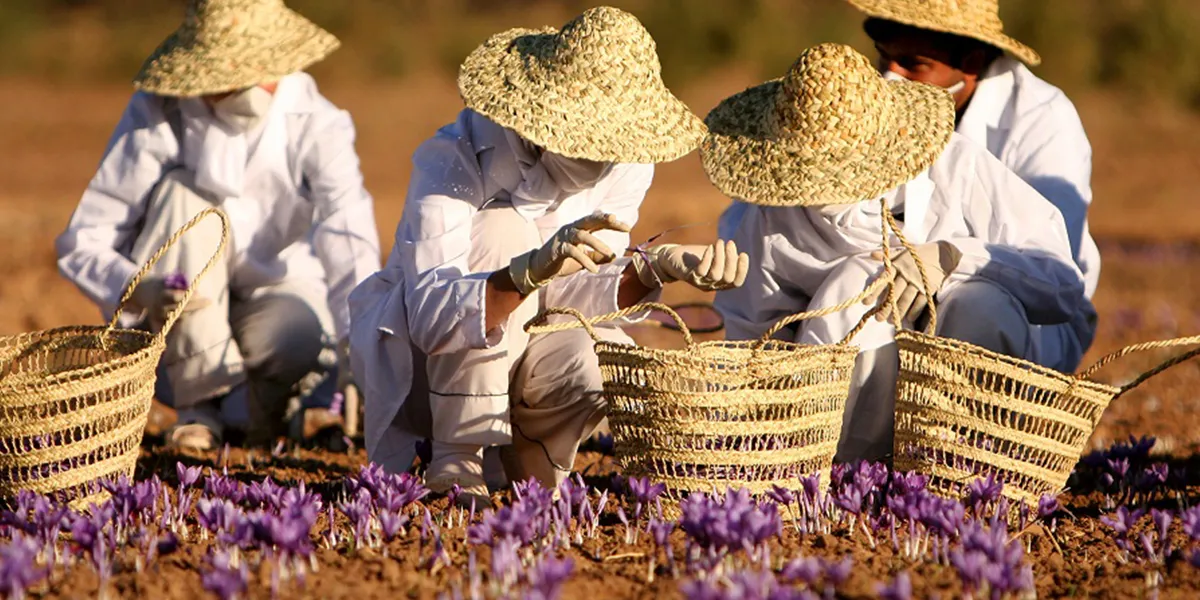
Revolutionizing Saffron Cultivation in Taroudant
In a significant move to modernize saffron production in the Taroudant province, a new initiative has been launched involving field schools developed by the Food and Agriculture Organization (FAO). This program is set to take root among saffron producers in the Adar commune, situated within the Ighrem circle. The introduction of these "farmer field schools" aims to bolster the capabilities of saffron cooperatives in this region, with the project being spearheaded by the Provincial Directorate of Agriculture in Agadir.
The concept of these field schools, referred to as "Champs-écoles des producteurs," represents a progressive educational framework designed to empower local farmers. The initiative aligns with broader goals of diversifying agricultural production systems and enhancing the role of rural women in the Adar communal area. By utilizing a participatory pedagogical approach, the program centers on hands-on learning that engages farmers directly with their cultivation plots.
Enhancing Agricultural Practices and Sustainability
Through this innovative educational framework, the initiative seeks to equip participants with the technical knowledge required for saffron production. The learning model emphasizes observation, practical engagement, and the sharing of experiences within the cultivation environment. This strategy is particularly relevant in the Souss-Massa region, where saffron production accounts for an impressive 57% of Morocco's total saffron output. The program aims to achieve a target of 7.6 tons of saffron production by 2030, despite facing challenges posed by climate conditions.
To further support the local agricultural landscape, the Provincial Directorate of Agriculture in Agadir has initiated a targeted technical assistance project for the Adar commune. This project is designed to introduce and consolidate best agricultural practices throughout the saffron cultivation cycle. By focusing on sustainable resource management, the initiative strives to enhance yields while preserving local ecosystems.
Moreover, the program aims to strengthen cooperative initiatives within the region, particularly those led by rural women. The practical implementation of training involves organizing dedicated field schools for saffron production, structured around three hands-on sessions for a group of thirty farmers and farmworkers. These sessions take place across various small demonstration plots, allowing participants to apply theoretical knowledge in real-world settings.
The educational journey begins with a participatory diagnosis of the demonstration plot, followed by practical demonstrations of essential farming tasks such as soil preparation and planting techniques. Throughout the program, participants learn the critical steps in saffron cultivation, including bulb planting, irrigation management, fertilization, weed control, and pest management, culminating in harvesting and post-harvest processes. This comprehensive approach highlights the importance of consistent monitoring and maintenance to ensure successful saffron production.
Upon completion of the training sessions, participants will receive saffron bulbs at no cost from the Provincial Directorate of Agriculture in Agadir, enabling them to implement the practices learned during the program directly on their farms. This initiative not only fosters agricultural innovation but also empowers local communities through enhanced knowledge and skills in saffron production.
As reported by leseco.ma.