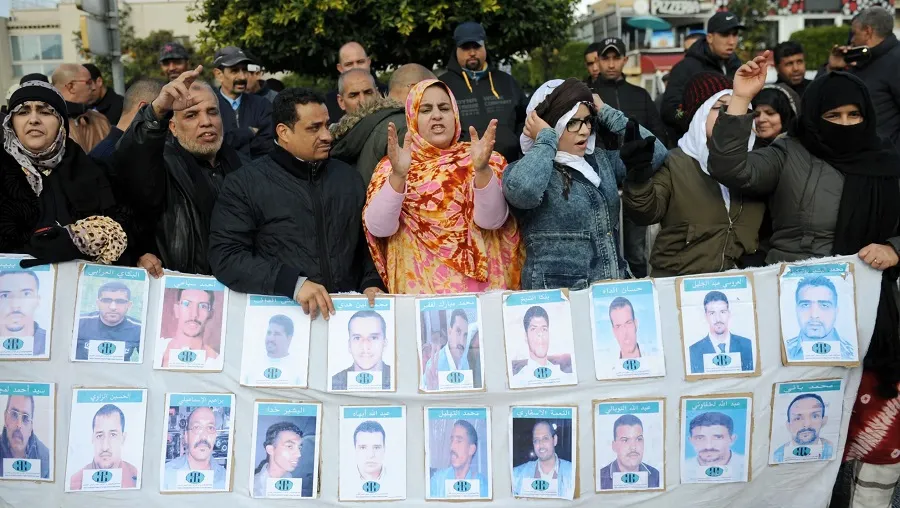

UN Committee's Damning Verdict on Torture Practices in Morocco
The United Nations Committee Against Torture has recently issued four new decisions condemning Morocco for its use of torture against detainees Hassan Dah, Ahmed Sbaï, Mohamed Lamine Haddi, and Sidi Ahmed Lemjiyed, all part of the Gdeim Izik group. These decisions have been met with approval from families, lawyers, and human rights organizations, as they reaffirm for the tenth time the existence of a systematic pattern characterized by arbitrary arrests, solitary confinement, and coercion to obtain confessions leading to severe political sentences.
Legally, the UN has officially recognized that the Moroccan state has violated the Convention Against Torture, particularly the absolute prohibition of such practices, the inadmissibility of evidence obtained illegally, and the obligation to conduct impartial investigations. The Committee highlights the persistent absence of investigations compliant with the Istanbul Protocol, labeling this institutional failure as a "structural issue." This state of affairs undermines the entire Moroccan judicial framework, especially since the initial judgment of civilians by a military court contravenes standards of the right to a fair trial.
International Repercussions and Calls for Justice
From a political perspective, these repeated international condemnations underscore the glaring contradiction between Morocco's international commitments and its actual practices in Western Sahara, a territory under increasing international scrutiny. This situation is no longer an isolated incident but rather a structural crisis of judicial and security governance in response to Sahrawi demands. The Committee reminds that the prohibition of torture is an absolute imperative of international law that directly engages the responsibility of the Kingdom.
The signatories of the statement, including the League for the Protection of Sahrawi Political Prisoners, lawyers France WEYL, Joseph Bréham, and Francesca Doria, as well as organizations AARASD and ACAT-France, are calling for immediate independent investigations, the annulment of convictions based on coerced confessions, and the immediate release and respect for the rights of Gdeim Izik prisoners. This significant legal and political turning point reaffirms that the fight against impunity and the protection of the fundamental rights of the Sahrawis remain at the heart of contemporary international law demands.
It is worth recalling that in November 2010, the forced evacuation of the Sahrawi protest camp at Gdeim Izik by the Moroccan army triggered clashes followed by the arrest of numerous activists. Initially sentenced by a military court to harsh penalties, several members of this group have endured arbitrary detentions for over 15 years. Victims of brutality, abduction, and torture in Moroccan interrogation centers and prisons, these activists have filed multiple complaints to denounce these human rights violations.
As reported by algeriepatriotique.com.