
Exploring Eutrophication in Moroccan Irrigation Systems
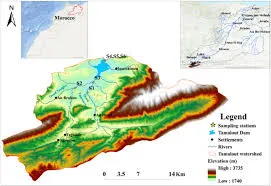
In a pioneering effort to address the issue of eutrophication in Moroccan irrigation basins, researchers have investigated the impacts of macroalgae on water quality. Two specific types of macroalgae were studied: Cladophora glomerata, which thrives in a covered basin, and Chara vulgaris, found in an open basin. To effectively measure the factors contributing to this environmental challenge, a comprehensive monitoring program was set in motion, running from March 1, 2021, to March 1, 2022. This initiative involved meticulous monthly sampling and rigorous surveys aimed at capturing the spatiotemporal variability of water quality parameters.
The findings from this extensive analysis reveal notable variations in the concentrations of key chemical elements across the two irrigation basins. For instance, nitrate levels in the first basin fluctuated between 3.08 ppm during winter and 4.72 ppm in summer, whereas the second basin displayed slightly lower nitrate concentrations, ranging from 3.09 ppm in winter to 4.05 ppm in summer. Phosphorus levels, a critical factor in algae proliferation, reached a high of 6.78 ppm in the first basin during winter, climbing to 11.42 ppm in the summer months. In contrast, the second basin exhibited lower phosphorus concentrations, with readings of 2.048 ppm in autumn and 3.5 ppm in summer. Additionally, potassium concentrations were significantly elevated in both basins, with the Chara vulgaris basin showing especially high levels of 278.6 ppm in winter and 463.33 ppm in summer.
The persistent nutrient availability, characterized by high and relatively stable concentrations, in conjunction with optimal sunlight exposure and inadequate maintenance practices, has resulted in the prolific growth of these two macroalgal species. This situation poses a significant threat to the aquatic ecosystems within these irrigation systems, necessitating urgent pre-treatment measures before utilizing this water for agricultural purposes. Moreover, it is imperative to implement strategies aimed at controlling the spread of harmful macroalgae at the source to mitigate their adverse effects on water quality and ecosystem health.
Collaborative Efforts in Research and Analysis
The authors of this study extend their heartfelt appreciation to the staff at the Agronomic and Veterinary Institute Hassan II, particularly to Mr. Mohamed Doulhousn for his critical support in conducting analyses, and Mr. Sliman Hssaisoune for facilitating access to the National Laboratory of Studies and Pollution Monitoring (LNESP). They also acknowledge Mr. Abdelfattah Bensaber for his professionalism in overseeing the analyses and express gratitude to Mr. Abdallah Zayani, Mr. Redouan Soukry, and Mr. Hicham Bourich for their contributions throughout the project. The study, conducted under the highest ethical standards, did not involve human subjects and ensured minimal environmental disruption during the research process. The findings of this study contribute significantly to the understanding of water quality management in irrigation systems affected by macroalgae-induced eutrophication.
As reported by nature.com.