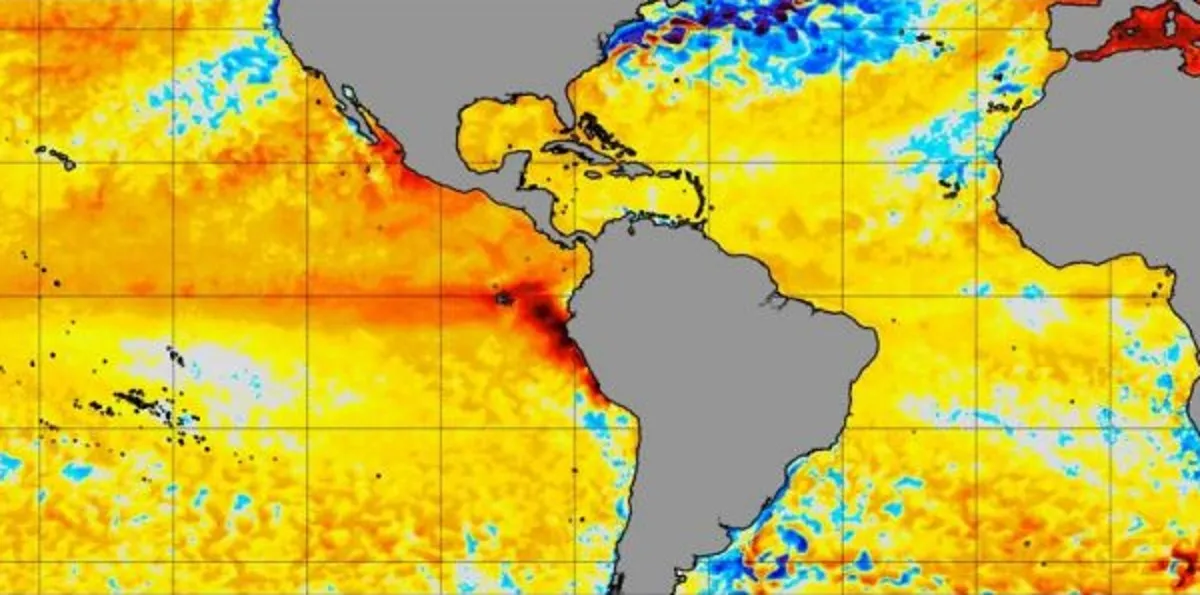
The General Directorate of Meteorology (DGM) has recently clarified that the anticipated effects of El Niño on Morocco’s precipitation and temperature patterns are characterized as "indirect and limited." In light of these predictions, it is essential to remain vigilant regarding potential climate risks. While the phenomenon of El Niño is expected to return in the summer of 2026, it should not be viewed as a standalone determinant of climate changes within Morocco, according to the DGM.
On June 5, the DGM released a comprehensive analysis following the latest update from the World Meteorological Organization (WMO), which indicated an 80% likelihood of El Niño conditions developing between June and August 2026. The report emphasizes that the influence of this climatic occurrence on Moroccan weather remains "indirect, limited, and significantly influenced by regional factors." This highlights the complex interplay between broader climatic phenomena and localized weather patterns.
Weak and Non-linear Precipitation Signals
Current scientific understanding reveals that El Niño does not serve as a reliable predictor of rainfall in Morocco. Instead, winter variability is primarily driven by the North Atlantic Oscillation (NAO) and Mediterranean circulation patterns, rather than by sea surface temperature (SST) conditions in the Pacific Ocean. While El Niño events may be linked to a reduction in spring rainfall across specific arid and semi-arid regions of southern Morocco, this relationship is notably weak and varies over time.
The recent past illustrates this point effectively. Despite experiencing multiple La Niña events between 2020 and 2024, Morocco faced significant and persistent drought conditions. Therefore, simplistic correlations such as "El Niño equals drought" or "La Niña equals wet years" fail to capture the true climatic dynamics at play in Morocco.
Regional Temperature Mechanisms
The underlying trend of global warming, particularly pronounced in the Mediterranean region, intensifies thermal extremes. However, the causative factors are primarily local rather than global. A striking example occurred during the summer of 2023; if this year had coincided with a global El Niño, the record-setting temperature of 50.4°C recorded in Agadir on August 11 would have been attributed directly to a chergui episode, where Saharan air ascends, enhanced by the foehn effect as it crosses the High and Anti-Atlas mountains. Thus, it is the regional atmospheric configurations—such as blocking situations and the presence of Saharan air masses—that dictate thermal extremes, acting upon an already warmed climate.
Despite the secondary influence of El Niño on Morocco's climate, vigilance remains crucial, particularly for sectors sensitive to climatic variability, including agriculture, water resources, and livestock. The DGM is committed to ongoing monitoring of weather patterns and climate trends on a seasonal basis, utilizing long-term forecasting models that account for the warming of the Pacific Ocean.
As part of the WMO initiative "Early Warnings for All," the DGM continues to maintain a watchful eye to support socio-economic sectors in anticipating and adapting to climatic variations. This proactive approach aims to bolster resilience against the challenges posed by climate change.
As reported by medias24.com.