
The Misconceptions Surrounding Olive Oil Origin Labels
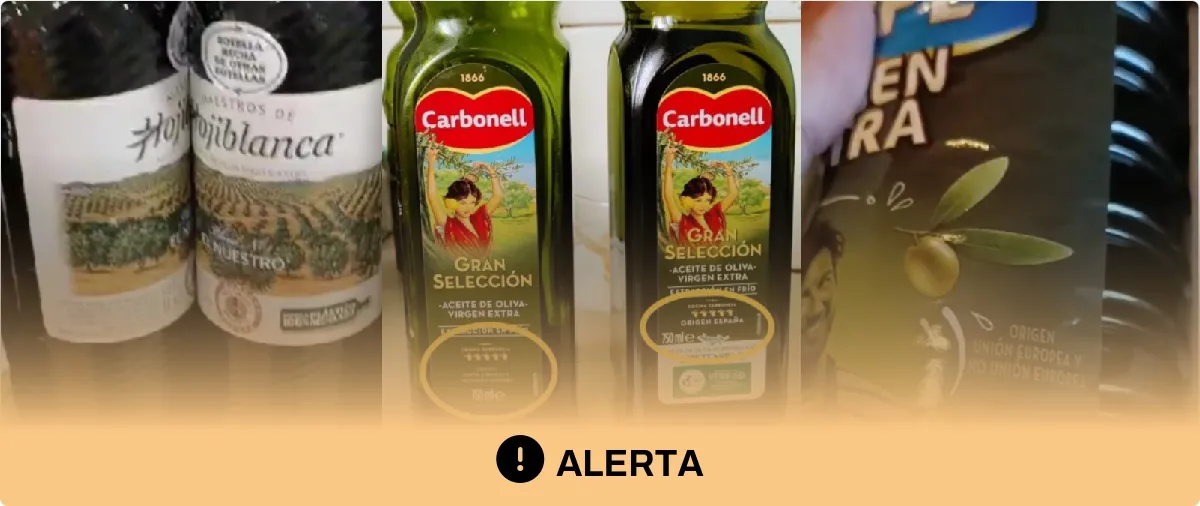
Recent videos have emerged showcasing bottles of extra virgin olive oil, particularly brands like Carbonell, Hojiblanca, and Koipe. The creators of these videos assert that if the label states 'European Union - non-European Union,' the oil must originate from Morocco. However, they provide no substantial evidence to support this claim. In accordance with European Union regulations for olive oil marketing, such labeling indicates that the bottle contains a blend of oils derived from both EU and non-EU sources, as highlighted in articles 8.3b iii and 8.7 of Regulation 2022/2104. This vague classification does not allow for the definitive conclusion that the non-EU oil comes specifically from Morocco, as noted by Raquel Gómez-Coca, a researcher at the Spanish National Research Council focused on olive oil fraud detection.
Clarifying the Source of Olive Oil Blends
Although these videos have only recently gained traction, they date back to at least 2023, meaning they depict bottles from that period. Deoleo, the company behind Carbonell, Hojiblanca, and Koipe, clarified to Maldita.es that the bottles of Carbonell featured in the videos are from the 2022/2023 campaign. The footage related to Hojiblanca circulated alongside that of Carbonell, and the Koipe label explicitly states that the oil is from the same campaign. Deoleo has firmly stated that 'Morocco has not been a supplier of raw materials for Deoleo' during any of the campaigns from 2022/23 to 2025/26 for any of the brands mentioned in the videos.
During the 2022/23 season, Spain experienced an exceptional drought and extreme temperatures that severely impacted the availability of domestic olives. Consequently, a limited amount of fresh extra virgin olive oil was sourced from Chile and Argentina, along with a small quantity from Tunisia. Raquel Gómez-Coca emphasizes that blending oils from various countries in a single bottle is a common practice, dictated by the specific needs of each participant in the production chain, including producers and packagers.
According to the International Olive Council, Spain remains the world's leading olive oil producer, generating 1,289,000 tons in the 2024/2025 campaign. Following Spain are Turkey, Tunisia, and Greece, with Morocco ranking eighth, producing 90,000 tons. Trade statistics reveal that Spain exports more oil than it imports. In 2023, the country from which Spain imported the most olive oil was Portugal, accounting for 38% of imports, followed by Tunisia at 19.6%. Morocco ranked eighth, contributing only 2.1% of total purchases. These statistics encompass all types of olive oil, including extra virgin, virgin, and others. For more detailed insights into Spain's olive oil imports and exports, further information is available.
As reported by maldita.es.