
The Challenges Facing Morocco's Private Sector
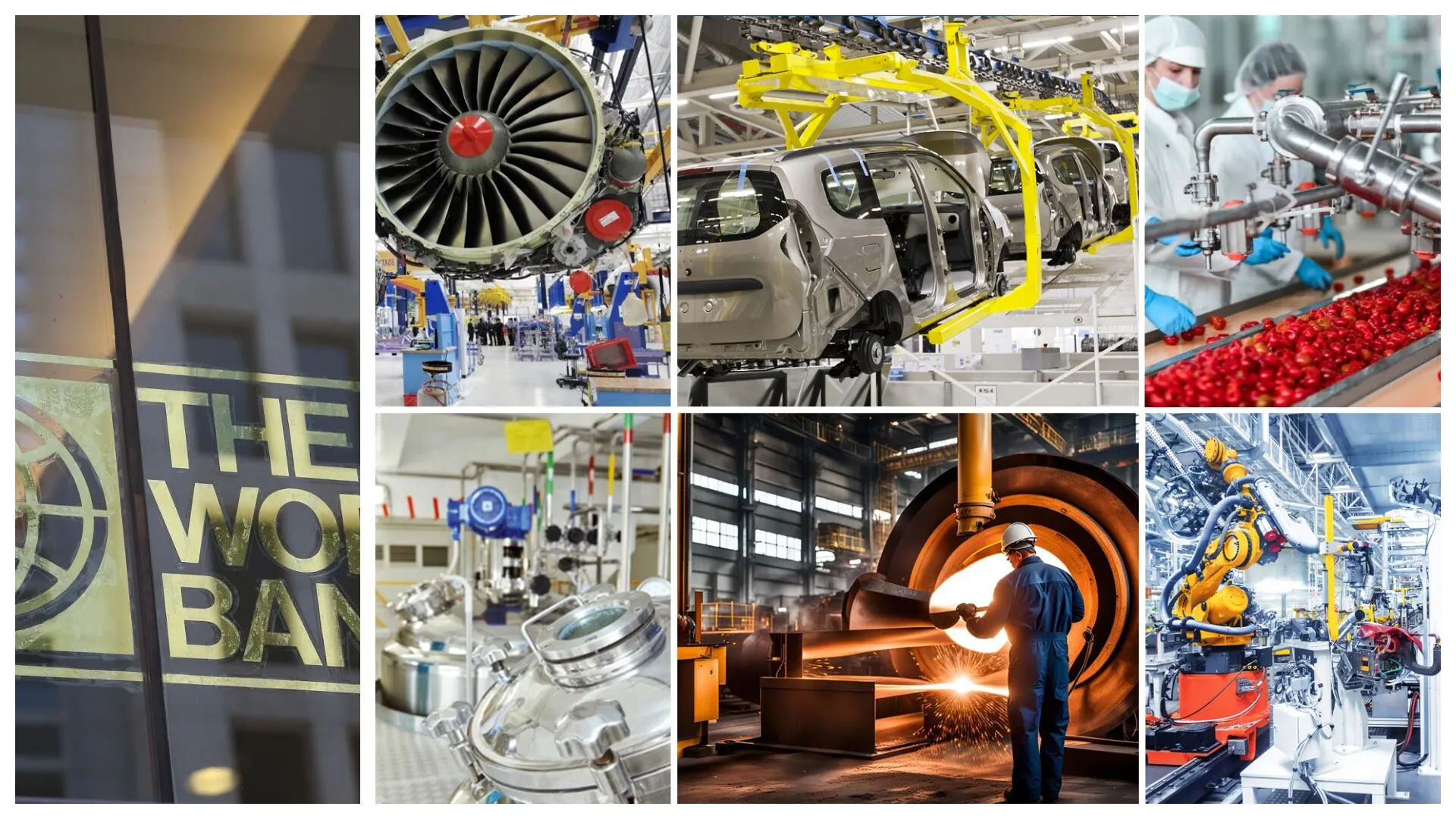
Despite its substantial potential, the Moroccan private sector has not yet fully embraced its role in the national investment landscape. According to a report titled Country Private Sector Diagnostic (CPSD) published by the World Bank Group, private investment accounts for only about one-third of total investment, significantly below the two-thirds target set by the New Development Model (NMD). The report highlights that job creation has been insufficient to accommodate the expanding labor market, and productivity has stagnated across several economic sectors. This stagnation is largely attributed to competition from the informal sector, corruption, and a convoluted tax system.
In this context, the authors of the report have pinpointed four high-potential sectors that intersect with energy transition, industrial relocation, and territorial equity. These sectors include decentralized solar energy, low-carbon textiles, natural argan-based cosmetics, and marine aquaculture. Notably, Morocco benefits from some of the best sunlight exposure in the world, receiving up to 2,600 kWh/m² annually, which presents a significant advantage for decentralized photovoltaic solar energy. The electricity rates for industries, ranging from $0.10 to $0.12 per kWh, make self-consumption highly competitive compared to solar costs that have dropped to $0.05–$0.08 per kWh.
Strategies for Revitalizing Key Sectors
However, this potential remains largely untapped, with installed decentralized capacity accounting for only 3.5% of total solar power, compared to 78% in Germany and 37% in China. The report identifies six implementation decrees (out of eight) that have yet to be published under laws 82-21 and 40-19, creating legal uncertainties around surplus injection, storage, and connection thresholds. To address these challenges, the international financial institution has proposed several recommendations, including the prompt publication of the missing decrees, establishing a clear pricing methodology for surplus electricity purchases, creating regional one-stop shops to centralize permissions, and lifting the 40% cap on renewable energy purchases imposed on distributors. Implementing these strategies could unlock $2.9 billion in private investment, create 43,500 jobs, and avoid 56 million tons of CO2 emissions over the lifespan of the installations.
Turning to the textile industry, the report indicates that it is the second-largest industrial employer in Morocco after agri-food, with 234,000 employees, 64% of whom are women. The sector accounts for 10% of good exports but is primarily dominated by the low-cost cut-make-trim model, with a heavy reliance on imported yarns and fabrics. The industry faces mounting environmental and social requirements from the European Union, leading brands to demand complete traceability. The report specifically notes the lack of a structured system for collecting cutting waste (83,000 tons annually), the legal classification of these wastes as "non-recyclable residue," and the prohibitive costs of ESG certifications for SMEs. To address these challenges, the authors recommend establishing a national registry and a traceability platform for textile waste, reclassifying cutting waste as recyclable raw material, and creating an export order guarantee instrument to finance the working capital needs of aggregators.
In the cosmetics sector, the report reveals that Morocco holds a near-global monopoly on argan oil, recognized by UNESCO for its natural and intangible heritage. However, 93% of exports occur in bulk, whereas the added value lies in processed products (creams, serums, shampoos). The global market for natural cosmetics, which comprises 30% of the sector and is growing at a rate of 6.9% per year, presents a unique opportunity. The report notes that the main barrier is the lack of mandatory traceability from harvest to export, undermining the credibility of sustainability and fair trade claims. Additionally, Moroccan health and phytosanitary regulations require prior authorizations for all cosmetic products, regardless of risk, contrary to international standards that allow self-declaration for low-risk products.
Finally, in marine aquaculture, the report highlights that Morocco has set aside 24,000 hectares for this activity, which remains largely underutilized. The production has surged by 620% between 2013 and 2024 but still falls significantly short of authorized capacities. The main obstacle to the development of aquaculture is the lengthy authorization process, which can take three to four years, despite the official timeline being 4 to 18 months. The report also points out that animal feed costs are 15% to 20% higher than in the Mediterranean due to restrictions on the use of processed animal proteins (PAT), with a May 2024 decree permitting PAT still pending implementation. To overcome these barriers, the authors recommend generalizing the principle of "silence means acceptance," imposing binding timelines, conducting technical assessments in parallel, integrating land plots into aquaculture planning, and publishing the decree allowing PAT under health control. If implemented, these measures could generate $1.96 billion in investment and create 75,000 direct and indirect jobs.
Overall, this sectoral diagnosis by the World Bank is not presented as a comprehensive assessment but rather as a selection of sectors where identified blockages can be lifted through public action in the short term. Each recommendation comes with a responsible institution (Ministry of Energy Transition, ANDA, ONSSA, Regional Investment Centers, etc.). The report emphasizes the need for inter-ministerial coordination, rapid implementation of pending regulatory texts, and strengthening the capacities of agencies. The ultimate goal is to enable Morocco to create quality jobs for youth and women in the currently least integrated regions while greening its economy.
As reported by fr.le360.ma.