
The intriguing story of a 400-year-old shipwreck located off the picturesque coast of Salcombe, England, has taken a significant turn with the identification of the vessel as the Dutch merchant ship, the Dom van Keulen. This remarkable discovery, made in 1995, revealed a treasure trove of artifacts, including 400 gold coins, that provide invaluable insight into historical maritime trade practices. The Dom van Keulen, which was en route from North Africa to the Netherlands during the autumn of 1633, met its fate during a tempestuous storm that ultimately led to its sinking.
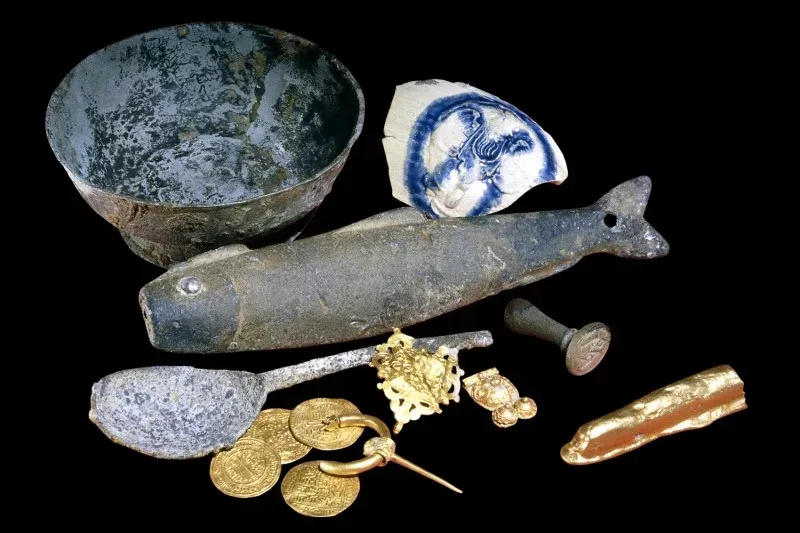
Over three decades ago, a dedicated team of scuba divers from the South West Maritime Archaeology Group (SWMAG) stumbled upon the wreck site, which lies approximately 18 meters beneath the surface and stretches about 30 meters in length. Their exploration unearthed not only the ship's cannons and anchors but also a wealth of historical treasures, including gold coins from the Sa’dian dynasty of Morocco, gold bullion, exquisite jewelry, and various artifacts such as Dutch pottery and pewter items. Among these relics was a unique fish-shaped sounding weight, a testament to the ship's diverse cargo.
The discovery of the Salcombe Gold Wreck is particularly significant due to the rarity of well-documented collections of Sa’dian coins, which highlights the intricate trading networks that existed in the 17th century. These connections encompassed Morocco, then known as the Barbary Coast, the Netherlands, and Britain, where Dutch merchants engaged in the exchange of manufactured goods for the highly prized gold of West Africa. The coins retrieved from the wreck were primarily intended to be melted down and minted into Dutch gold coins, which were widely accepted in global trade at the time.
The Investigation and Historical Context
Recent efforts to identify the wreck have been meticulously documented in a research volume produced in collaboration with Bournemouth University (BU), the British Museum, and the SWMAG divers. It was through the diligent work of independent historian Ian Friel, who discovered vital documents in the National Archive, that the circumstances surrounding the demise of the Dom van Keulen were uncovered. These documents describe the “tempestuous weather” that caused the ship to spring a leak, ultimately forcing the crew to abandon ship and seek refuge. After anchoring some 400 meters offshore, the crew managed to escape to safety, leaving behind a treasure trove of historical significance.
Professor Dave Parham from Bournemouth University, who played a pivotal role in editing the research volume, in collaboration with Venetia Porter from the British Museum, emphasized the importance of this discovery. He noted that the ship's cargo included an impressive array of items, such as 150 bags of gum arabic, 64 bags of saltpetre, 320 goatskins, and an astounding 9,000 Barbary ducats—gold coins from Morocco. Parham highlighted that the successful identification of the wreck provides critical context for understanding the wealth and architecture of the Sa’dian Sharifs and the dynamic trade routes connecting Africa to Europe during that era.
Protection and Future Exploration
The Dom van Keulen wreck site has been designated as a Protected Wreck, a status managed by Historic England, ensuring the preservation of this historically significant site. Diving activities at the location are restricted to licensed individuals, and the site is closely monitored by the National Coastwatch Institution's Prawle Point station. Furthermore, the Devon & Cornwall Police’s marine unit conducts regular patrols as part of Operation Birdie, a national initiative aimed at preventing illegal activities at historic wreck sites.
For those interested in delving deeper into the remarkable story of the Dom van Keulen and its cargo, an open-access version of the publication, titled From Morocco To The Coast Of England: The Story Of The Dom Van Keulen And Its Remarkable Cargo, is available online. Physical copies can also be purchased from the British Museum shop for £40. This discovery not only enriches our understanding of maritime history but also serves as a reminder of the untold stories waiting to be uncovered beneath the waves.
As reported by divernet.com.