U.N. Security Council to Address Moroccan Sahara Dispute
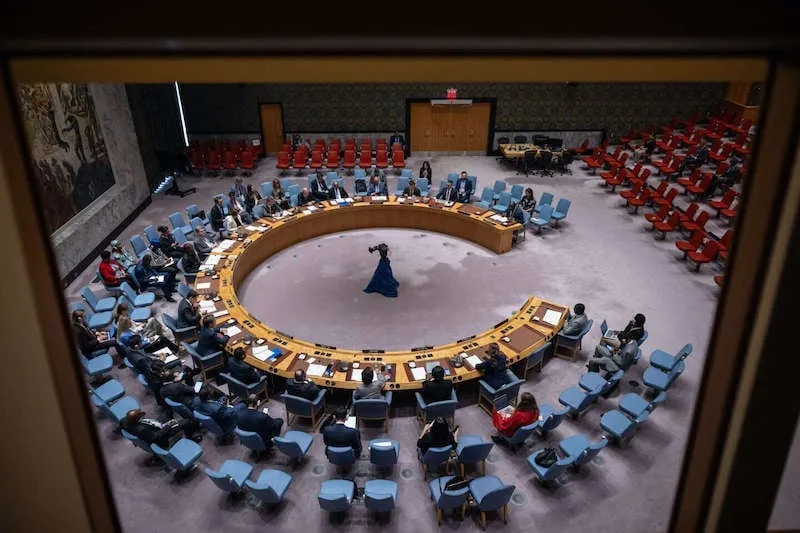
The United Nations Security Council is poised to convene a closed-door meeting on Wednesday, focusing on the ongoing developments in the Moroccan Sahara dispute. This session is a vital component of the council's routine evaluation of the U.N. peacekeeping mission in the region, officially recognized as MINURSO. Originally slated for April 24, the meeting was rescheduled to April 25, reflecting the council's adaptable agenda, particularly in light of recent international dynamics affecting the Middle East and Gulf regions.
According to insights from Hespress AR, the meeting will feature briefings from several key figures, including Staffan de Mistura, the U.N. Secretary-General's personal envoy for the Sahara; Alexander Ivanko, the chief of MINURSO; and Asif Khan, the director of policy and mediation at the Department of Political and Peacebuilding Affairs. These officials are expected to provide comprehensive updates regarding the political process, including the results of consultations involving key stakeholders such as Morocco, Algeria, Mauritania, and the Polisario Front. They will also assess the current situation on the ground and review MINURSO's activities in accordance with Security Council Resolution 2797.
Strategic Assessments and Future Implications
A second meeting is scheduled for April 30, during which the council will evaluate the findings of a strategic assessment concerning MINURSO’s mandate. This evaluation is based on field visits conducted by U.N. teams to southern Moroccan provinces, the Tindouf camps in Algeria, and Mauritania, aimed at reassessing peacekeeping operations to ensure they align with the evolving situation in the region.
Experts suggest that these two meetings could signify a pivotal moment for the Security Council's approach to the prolonged dispute. Mohamed Ghaith Maa El Ainin, the deputy head of the Moroccan Center for Parallel Diplomacy and Dialogue of Civilizations, noted that the upcoming discussions transcend a mere routine review, indicating a transition toward a more politically decisive phase following Resolution 2797, which established a timeline for a comprehensive strategic assessment. He emphasized that increasing international pressure is constraining the parties' ability to maneuver and is steering them toward concrete political outcomes.
Abdel Fattah Belamchi, the head of the same center, characterized the meetings as a “real test” for progress in the settlement process under U.N. supervision, highlighting that their outcomes could significantly influence forthcoming decisions, particularly regarding the mandate of MINURSO. He also pointed out that the recent diplomatic momentum reflects growing international support for Morocco’s autonomy proposal, alongside broader geopolitical shifts that are reshaping the dynamics of the conflict.
The Western Sahara dispute, which has persisted for decades, stands as one of Africa's longest-running territorial conflicts, with the United Nations at the forefront of efforts to facilitate a political resolution.
As reported by en.hespress.com.