Concerns Raised Over Sahrawi Prisoner Naama Asfari's Well-being
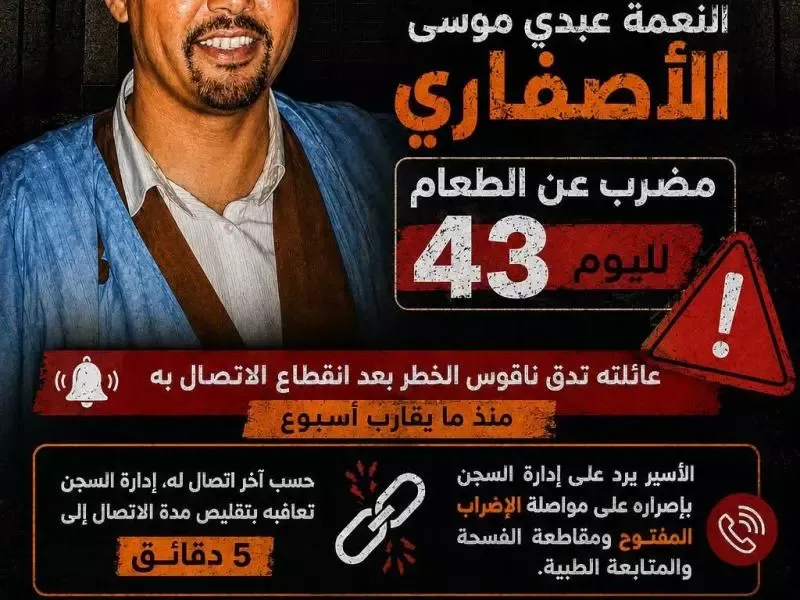
The League for the Protection of Sahrawi Prisoners in Moroccan Prisons has issued a grave warning to both the local and international communities, as well as human rights organizations, regarding the alarming situation of Sahrawi civil prisoner Naama Asfari. His family has reported a complete communication blackout concerning his whereabouts since July 13, 2026, without any prior notice or legal justification. This situation represents a blatant violation of all legal guarantees that protect the right to communicate with family and legal counsel.
This enforced isolation occurs while Naama Asfari has been on an open-ended hunger strike for the forty-third consecutive day, during which his health has severely deteriorated. He is being held under conditions that lack the bare minimum of human dignity, and he is deliberately denied his right to contact the outside world. This includes access to independent medical personnel, lawyers, and representatives from human rights organizations.
Human Rights Violations and Calls for Immediate Action
In light of these events, the League for the Protection of Sahrawi Prisoners vehemently condemns the retaliatory policies enforced by the Moroccan occupying authorities through their penal administration against Naama Asfari. The aim appears to be to punish him for his peaceful stance and ongoing struggle.
The League holds the Moroccan state fully accountable, both legally and morally, for Naama Asfari's life, as well as for his physical and psychological well-being. They assert that any negligence in providing urgent medical care or any deterioration in his health constitutes a crime against humanity.
The organization calls upon the international community, the United Nations, and its relevant bodies—particularly the Human Rights Council, the High Commissioner for Human Rights, and the International Committee of the Red Cross—to intervene immediately and urgently to safeguard Naama Asfari’s life. They demand clarification of his whereabouts, assurance of visits from independent medical professionals, access for his family and legal counsel, and the immediate cessation of this forced disappearance along with the collective punishment policies in Moroccan prisons.
The international silence regarding these systematic violations equates to complicity and a disregard for human lives, perpetuating a culture of impunity.
As reported by resumenlatinoamericano.org.