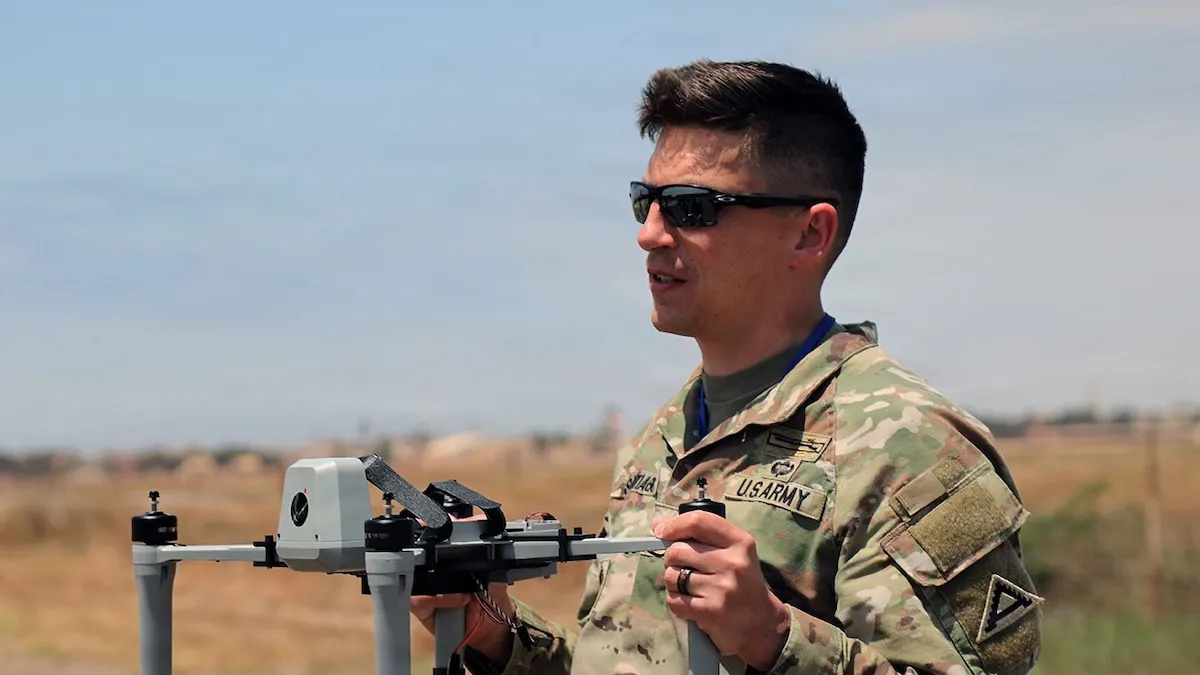

Strategic Move Against Drone Threats
The Joint Interagency Task Force (JIATF) 401, which is responsible for exploring and acquiring innovative counter-drone technologies for the United States Department of War, has recently announced a significant $500 million contract with a California-based startup, Perennial Autonomy. This three-year agreement aims to enhance the Department of War's capabilities in deploying cost-effective air-to-air drone interceptors. These advancements are crucial for countering uncrewed aerial systems (UAS) and ensuring the safety of military personnel both domestically and internationally. The announcement was made on May 18, 2026, highlighting the urgent need for effective drone mitigation solutions in modern warfare.
Perennial Autonomy is set to supply a variety of artificial intelligence-driven counter-UAS systems, which include the Merops interceptors, Bumblebee quadcopters, and Hornet midrange strike drones. The term 'attritable' refers to these drones being affordable and robust enough to operate in high-risk environments, allowing for potential losses without significant financial repercussions. While the contract lacks a specified end date or production targets, it is clear that these technologies are already operational with forces under U.S. Central Command, with Merops interceptors credited with neutralizing over 4,000 Russian drones in Ukraine since mid-2024.
Addressing the Growing Drone Proliferation
The integration of advanced detection, tracking, and engagement technologies within the Perennial systems is noteworthy. These innovations utilize computer vision, radio frequency sensing, and jam-resistant communications, along with autonomous targeting capabilities, as stated in a Department of War news release. Importantly, soldiers maintain the authority to make decisions regarding the use of lethal force, ensuring accountability in operations. U.S. Army Brig. Gen. Matt Ross, director of JIATF 401, emphasized the critical nature of drones in contemporary conflict, noting that their proliferation has democratized access to intelligence and precision strike capabilities that were once exclusive to state actors.
The conflict in Ukraine has underscored the effectiveness of low-cost drones, particularly those like the Iranian and Russian Shahed models. This has spurred increased demand for counter-UAS systems like those provided by Perennial. In recent budget hearings, Army Secretary Daniel Driscoll revealed that the U.S. military had procured 13,000 Merops interceptors at approximately $15,000 each, contrasting sharply with the cost of each Shahed drone, which ranges from $30,000 to $50,000.
Additionally, JIATF 401 had previously entered into a $5.2 million agreement with Perennial in January to acquire the Bumblebee V2 counter-drone system, with manufacturing and delivery commencing shortly thereafter. Testing of initial prototypes began at Fort Bragg, North Carolina, on April 23. Reports have indicated that a substantial number of Bumblebee V1 quadcopters have already been dispatched to Ukraine’s Unmanned Systems Forces over an undisclosed timeframe.
In December 2025, the Department of War unveiled the Drone Dominance initiative, pledging a $1 billion investment over the next two years to procure small, lethal drones. This initiative not only aims to bolster the nation’s UAS industrial base but also seeks to rapidly equip combat units with affordable drone technology. Secretary of War Pete Hegseth articulated the goals of Drone Dominance, highlighting the dual objectives of reducing costs while enhancing capabilities, with a vision to deliver tens of thousands of small drones to U.S. forces by 2026 and hundreds of thousands by 2027.
As reported by eurasiareview.com.