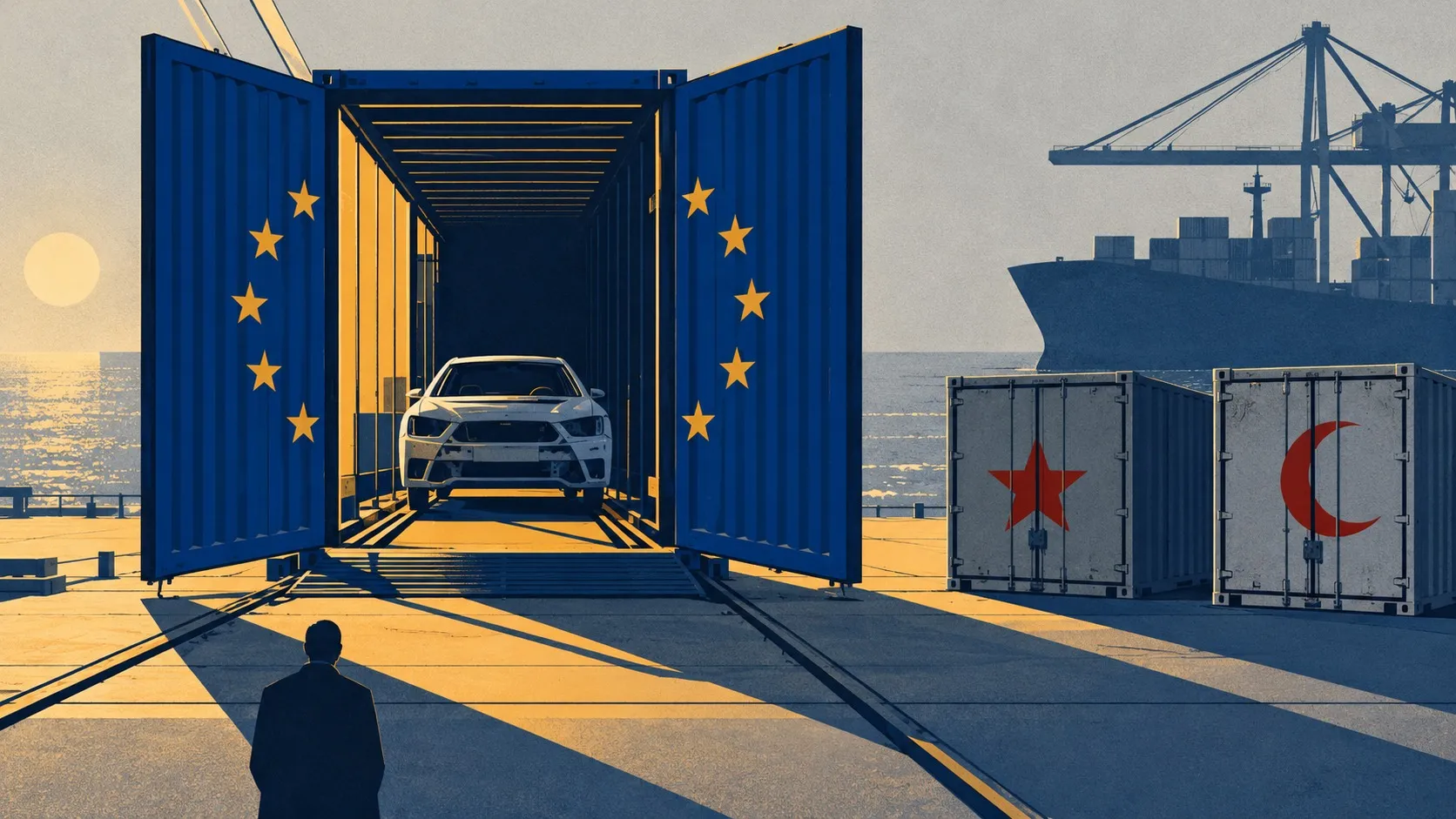
Franco-German Agreement on 'Made in Europe' Label Excludes Morocco and Turkey
The European automotive industry is witnessing significant changes as the Franco-German agreement reached on October 15, 2023, redefines the parameters of the 'Made in Europe' label. This pivotal agreement limits the label's eligibility to the 27 member states of the European Union, along with a few European neighbors such as Norway and the United Kingdom, effectively excluding Morocco and Turkey. Such a decision not only reshapes the competitive landscape for the European automotive sector but also raises critical questions regarding geopolitical alignments and economic partnerships, particularly with nations that have been historical allies of the EU.
The deal also represents a compromise on environmental regulations. France conceded to Germany's request to ease the stringent 2035 target for reducing new car CO₂ emissions from a complete 100% reduction to a more lenient 90%, allowing manufacturers to avoid offsetting the remaining 10%. This shift reflects the growing urgency for European automakers to remain competitive against the formidable rise of the Chinese car manufacturing industry, which has been rapidly advancing in the electric vehicle market. As a result, the focus on maintaining production within Europe and fostering relationships with nearby nations has become paramount.
Implications of Excluding Key Mediterranean Partners
One of the most contentious points during the negotiations was the exclusion of Morocco and Turkey, both of which host significant manufacturing plants for major automotive companies like Renault and Stellantis. By not including these countries in the 'Made in Europe' label, France and Germany may have inadvertently made a strategic error that could have long-term consequences not just economically but also geopolitically. The repercussions of this exclusion could lead to a drift of these valuable partners towards other global powers, such as China and Russia, potentially undermining Europe's influence in the region.
Historically, the EU has invested in fostering strong ties with its Mediterranean neighbors, as outlined in the Barcelona Declaration of 1995, which aimed to enhance economic, cultural, and political cooperation in the region. However, the recent decisions suggest a disconnect between the EU's aspirations and its actions. The exclusion of Morocco and Turkey from the 'Made in Europe' initiative starkly contrasts the EU's stated commitment to support economic development in partner countries, which is often presented as a strategy to mitigate migration issues. As Morocco and Turkey seek to navigate their economic futures, the EU must reconsider its approach to partnerships and production localization, emphasizing the importance of friendshoring over offshoring to maintain competitive advantages in the global market.
The ongoing discussions regarding the EU's Multiannual Financial Framework for 2028-2035 indicate that development aid budgets for southern partners are also at risk of reductions. In light of this, it is crucial for Europe to reassess its relationships with Morocco and Turkey, as their growing ties with rival powers could have significant implications for regional stability and economic cooperation in the long run.
As reported by socialeurope.eu.