News
•
October 28, 2026
•
4 min read
Morocco's Port Expansion Raises Concerns in Spain Over Economic Influence
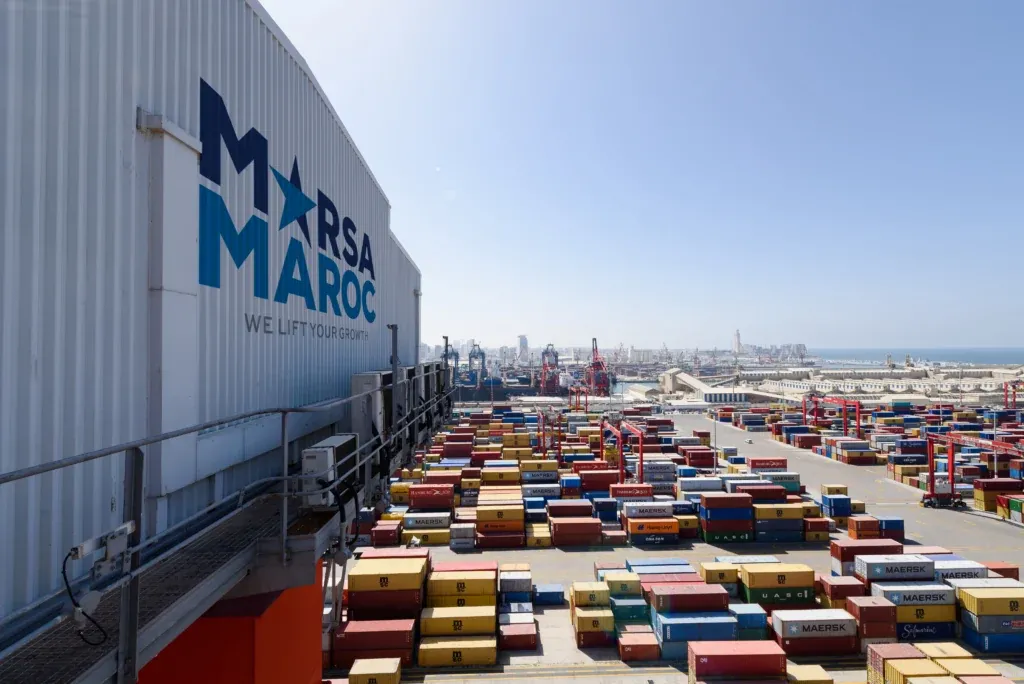
The expansion of Morocco in the maritime sector has reignited Spanish fears regarding the increasing economic presence of Morocco in the Atlantic space. This concern follows the public company "Mars Maroc" negotiating to enter the terminals operated by Boluda in the Canary Islands, an endeavor now under scrutiny by Spanish security agencies. The transaction involves acquiring a 45% stake in Boluda Maritime Terminals (BMT) and is awaiting approval from Madrid authorities, amidst reservations about the strategic importance of ports within the archipelago.
In this context, the involvement of the Spanish National Intelligence Center and the Ministry of Defense in assessing the deal highlights the sensitivity surrounding the entry of a Moroccan company into facilities that are critical to maritime transport and commercial connectivity across the Atlantic. The case is currently under review by the committee responsible for foreign investments (Jinvex), where the commercial interests of Boluda intersect with Spanish authorities' concerns regarding the implications of allowing foreign public capital into sensitive infrastructure.
However, these apprehensions have not gone unchallenged. Javier Clemente Millán, the general director of Boluda Shipping, has intensified his rhetoric against those opposing the deal, dismissing the concerns expressed by institutions in the Canary Islands as "serious and unfounded exaggerations." In statements to Spanish media, Millán defended the nature of the agreement, emphasizing that the Moroccan stake will remain a minority and will not grant "Mars Maroc" the authority to manage the terminals or make operational decisions. He further hinted at possible legal action should the company determine that authorities are unjustifiably obstructing its business plans.
Nonetheless, the objections appear to extend beyond mere corporate disputes, as both the Gran Canaria Island Council and the Tenerife Island Council, governed by a coalition of Canarian and Popular Party representatives, have voiced their opposition to the transaction. This expansion of dissent indicates that the concerns at hand exceed partisan calculations and touch upon issues surrounding control over vital facilities within the archipelago.
Central to these fears is the access to sensitive information that could be available to a foreign company operating a port terminal, considering the pivotal role these facilities play in supplying the islands and securing maritime links. Consequently, Spanish authorities are tasked with verifying whether the structure of the deal, its data access conditions, and the associated management guarantees are sufficient to safeguard security requirements before making a final decision.
These security sensitivities are intertwined with the broader transformations within the port sector of the region, as Morocco continues to develop the Atlantic port project in Dakhla, aiming to bolster its trade ties with West Africa and expand its logistical capabilities. Within this context, the prospect of "Mars Maroc" entering terminals in the Canary Islands has sparked discussions regarding future competition for shipping traffic, clients, and investments between the two shores.
However, Millán refutes the notion that the Dakhla port poses an imminent threat to the "La Luz" port in Gran Canaria, noting that the Moroccan facility will require time to reach its full operational capacity. He also expressed skepticism regarding assessments found in a university study on Moroccan port expansion, arguing that it included annexes about the Boluda deal that he requested to be retracted.
In defense of his company's ongoing and future activities, Millán highlights Boluda's investment record in the Canary Islands, estimating that the company has invested over 250 million euros in the archipelago over nearly four decades, with additional projects planned in the coming years. These investments include 35 million euros in Tenerife, 12 million in La Palma, 10 million in Fuerteventura, and 6 million in Lanzarote, alongside anticipated investments of 25 million euros in the "La Luz" terminal by 2027.
In this same vein, Millán stressed that Boluda Lines maintains its headquarters in Las Palmas de Gran Canaria, asserting that the influx of Moroccan capital would enable the group to expand its activities in Morocco without compromising its management of terminals in the Canary Islands.
As the Spanish government deliberates, the fate of the deal remains tied to the outcomes of security assessments and potential licensing conditions. While Boluda insists on its right to pursue its business strategy, Madrid emphasizes the necessity of protecting sensitive port facilities. Thus, the dispute has evolved beyond the mere entry of a Moroccan stakeholder into a Spanish company, becoming part of a broader discussion in Spain about the ramifications of Morocco's expansion in the Atlantic port sector and the balance between security requirements and shared economic interests between the two countries.
As reported by assahifa.com.

 News