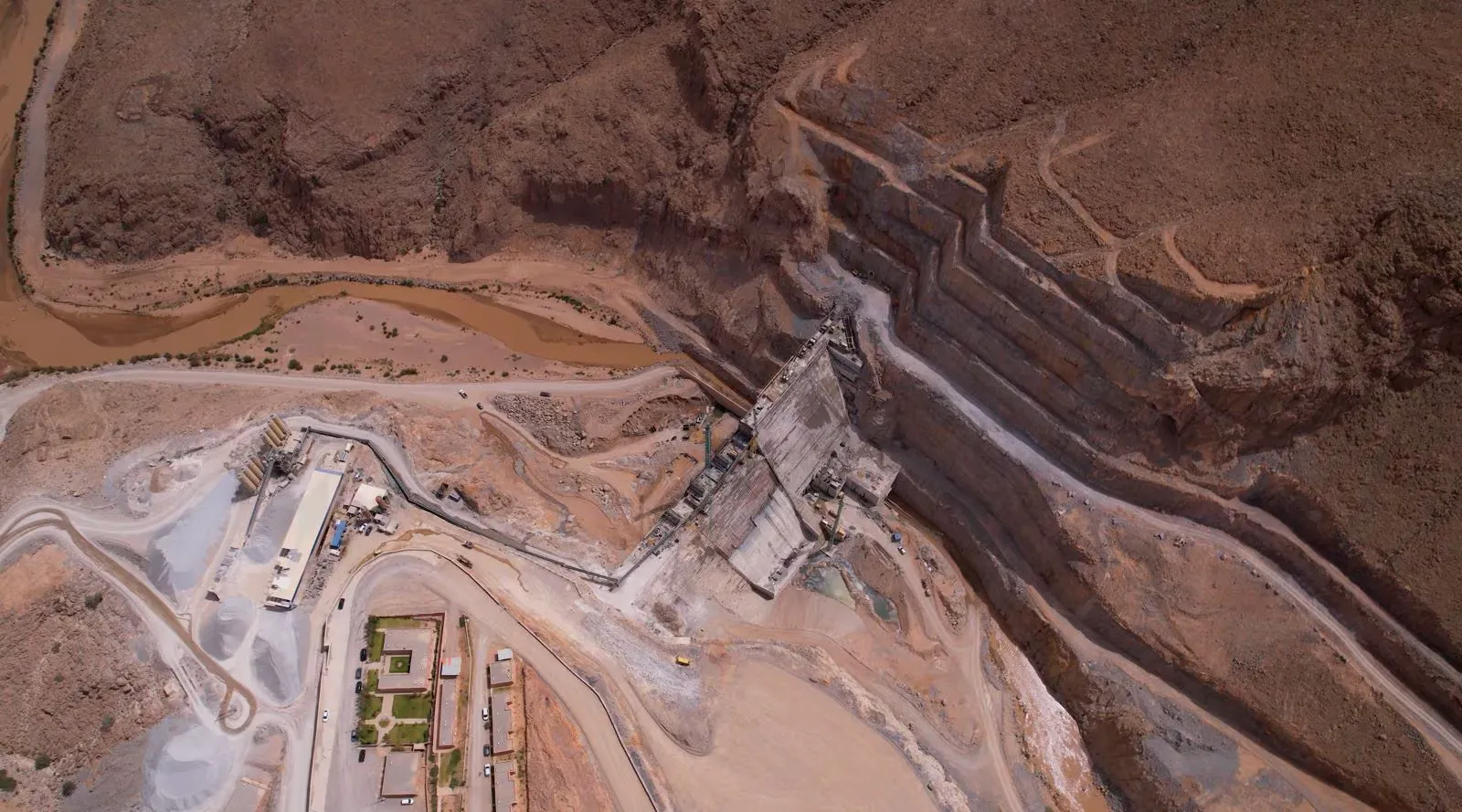
The Kheng Grou Dam, located in the Figuig province of Morocco, is nearing the completion of its construction, with an impressive 91% of the work already finished. This significant infrastructure project is designed to have a storage capacity of 1.07 billion cubic meters and has attracted an investment of 1.2 billion dirhams. The dam is expected to be operational by the end of December 2026, although the final touches on the project will not be completed until March 2027. This endeavor is part of Morocco's commitment to enhancing water security and agricultural productivity in the region.
Situated approximately 40 kilometers from the rural commune of Beni Tadjite, the Kheng Grou Dam is on track to become Morocco's fifth-largest dam in terms of storage capacity. According to Moulay El Hassan Faiq, the project manager from the Hydraulic Engineering Department of the Ministry of Equipment and Water, the construction has entered its final phase. However, there are still some essential tasks that need to be completed before the dam can begin its operations. These tasks primarily involve the execution of 10,000 cubic meters of rolled compacted concrete on the right bank and the completion of downstream electromechanical equipment, along with related drainage works.
The dam is constructed at the confluence of the Grou River and four of its tributaries, made of rolled compacted concrete, standing 79 meters tall and stretching 190 meters in length at its crest. Its massive storage capacity of 1.07 billion cubic meters places it among the top five dams in Morocco by the volume of water it can hold. The total estimated cost of the project is 1.2 billion dirhams.
This infrastructure is integrated into the National Drinking Water Supply and Irrigation Program 2020-2027, championed by His Majesty King Mohammed VI, and aims to bolster water security in the region. It will facilitate the storage of rainwater and river floodwaters to create reserves, thus better addressing local needs, particularly during dry periods.
One of the primary goals of the project is to enhance irrigation capabilities significantly. The irrigable area downstream of the dam is projected to expand from 413 hectares to 4,300 hectares. This increase will also raise the annual volume of water allocated for agricultural needs from five to 30 million cubic meters.
Furthermore, the infrastructure will ensure the supply of potable water to nearby communities, benefiting around 7,500 residents. It is also expected to promote groundwater recharge, an essential factor in securing water resources in this area of the Figuig province.
The anticipated benefits extend beyond just water availability. The road connecting Beni Tadjite to the dam, constructed as part of the project, will ease transportation and contribute to reducing the isolation of local populations. New infrastructure could also stimulate economic and tourism activities in the region, generating employment opportunities.
According to project officials, the construction activities have already created nearly 400,000 workdays, providing employment for local workers and enhancing their skills in public works, particularly in dam construction. With a storage capacity of 1.07 billion cubic meters and an investment of 1.2 billion dirhams, the Kheng Grou Dam represents a pivotal infrastructure project for the mobilization of water resources in the Figuig province. Its impending operational status by late December 2026 is expected to significantly advance irrigation efforts, ensure a reliable supply of drinking water, and strengthen the region's resilience against drought episodes.
As reported by es.le360.ma.