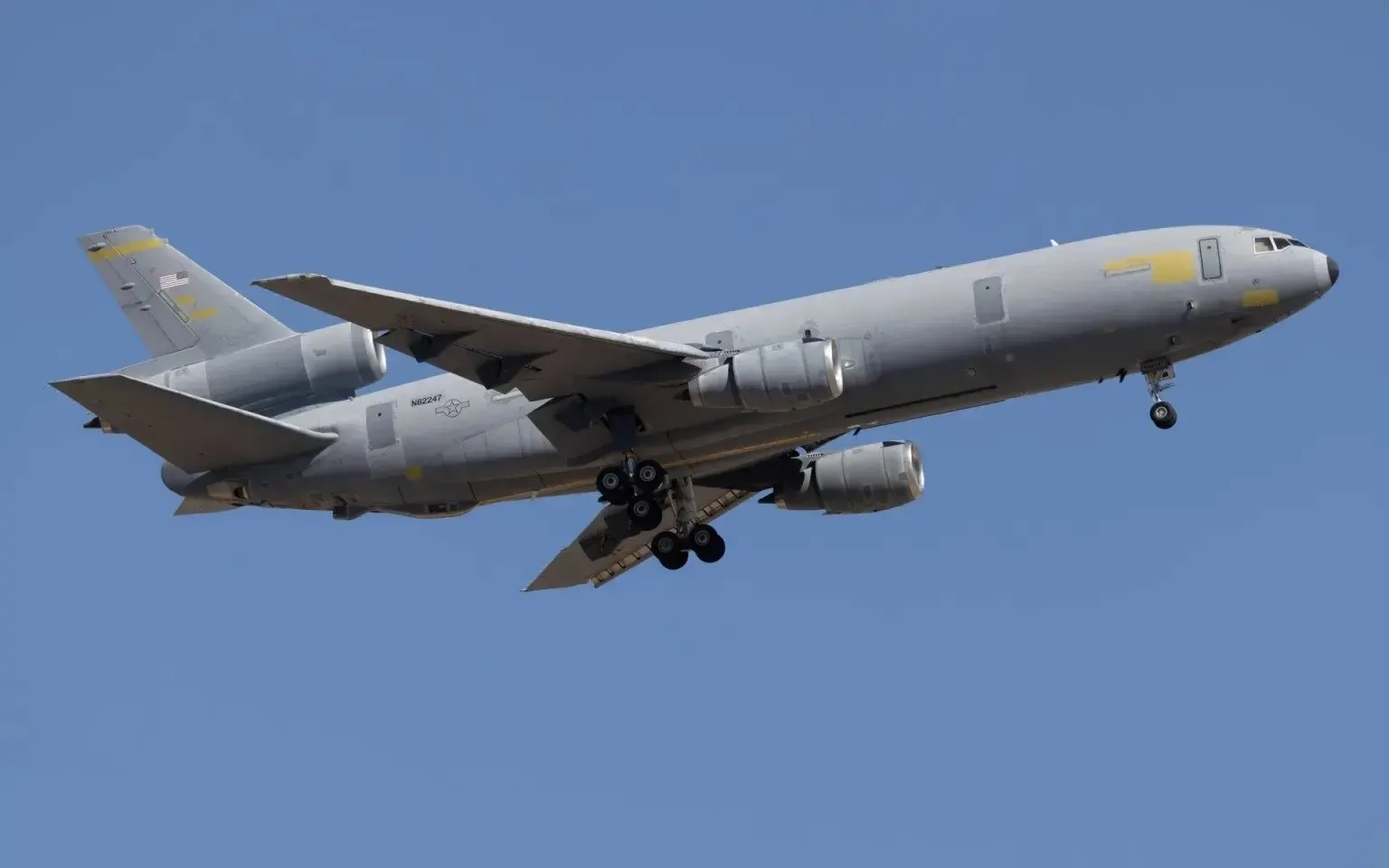
Strengthening Morocco's Air Force with KC-10 Extenders
As reported by the Spanish newspaper "La Razón" on October 21, 2026, Morocco is advancing towards acquiring four KC-10 Extender aerial refueling aircraft, previously retired by the United States and placed into storage. This strategic move aims to bolster the capabilities of the Royal Moroccan Air Force, enhancing their aerial refueling capacity and supporting military deployments over long distances.
According to the report, a new initiative from the U.S. has reignited this project. The U.S. Air Force Life Cycle Management Center (AFLCMC) published a request for information on October 7, 2026, on the U.S. government procurement platform [SAM.gov](https://sam.gov/workspace/contract/opp/568b696058334b71a03aa084a5388d70/view), seeking companies capable of returning up to four KC-10s to operational status, along with providing logistical support and training for flight crews and maintenance teams for a period of three to five years, specifically for a partner nation in North Africa. While "La Razón" suggests that Morocco is the likely beneficiary of this initiative, the published U.S. document does not explicitly name the country involved and represents an assessment of industry capabilities rather than a formal request for bids.
Significance of the KC-10 Extender for Military Operations
The KC-10 Extender's importance lies in its multifaceted capabilities. Originally designed to complement the U.S. Air Force's KC-135 Stratotanker fleet, the KC-10 also provides additional strategic airlift capabilities. In addition to refueling fighter jets in-flight, the aircraft can transport personnel and equipment simultaneously, making it ideal for supporting military units deployed away from their main bases. Moreover, the aircraft is capable of performing medical evacuation and patient transport missions. Data from the report indicates that the KC-10 can carry up to 75 individuals or approximately 170,000 pounds of cargo—equivalent to about 77 tons—over a distance of up to 7,000 kilometers without needing refueling. Its fuel capacity exceeds 160 tons, significantly enhancing its ability to support aerial operations that require fighters to remain airborne for extended periods or conduct missions over long distances.
The last of these aircraft flew in September 2024 before being retired to storage in Arizona, where the U.S. has kept its decommissioned planes. The Spanish report suggests that their potential reuse for Morocco could be facilitated through the Excess Defense Articles (EDA) program, which allows for the transfer of surplus U.S. military equipment to partner countries, including provisions for rehabilitation and maintenance at specialized facilities. The proposed arrangement also includes contracted logistical support for a duration of three to five years within the recipient country, alongside training for air and technical crews. This arrangement could help address some challenges associated with maintaining aircraft that have been inactive for years, although details regarding funding and final technical arrangements have yet to be resolved.
La Razón noted that Morocco's interest in the KC-10s has previously faced financial and technical challenges, as well as reservations from some military leadership regarding the feasibility and costs of bringing these aging aircraft back into service. However, providing a comprehensive package that includes rehabilitation, maintenance, and technical support could help overcome some of these hurdles, provided a final agreement is reached.
For the Royal Moroccan Air Force, introducing four KC-10 aircraft into service would represent a significant enhancement of their aerial refueling and military transport capabilities, especially as they continue to modernize their fleet, including the acquisition of F-16 Block 72 fighters and upgrades to existing aircraft to more advanced standards. Possessing aerial refueling aircraft could expand the operational range of fighters and grant them greater flexibility in executing long-range missions.
Nonetheless, the project remains in the phase of assessing industrial and technical capabilities. According to the report, October 28, 2026, has been set as the deadline for interested companies to respond to the U.S. request for information. The process of returning the aircraft to service could take several years, given their current condition and the extent of maintenance and rehabilitation required.
As reported by defense-arabic.com.