News
•
October 27, 2026
•
8 min read
Morocco's Cash Usage Surges Despite Digital Payment Expansion
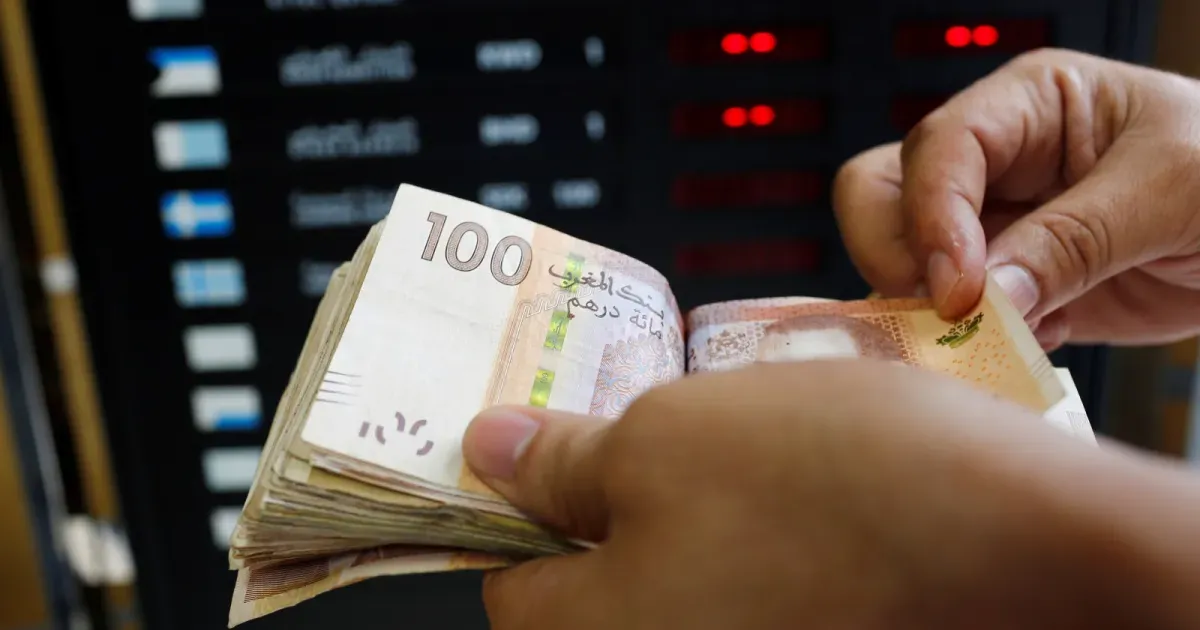
Morocco's financial landscape is witnessing a fascinating paradox: despite the growth of electronic payment methods and the tightening of tax regulations aimed at promoting banking transactions, the use of physical cash is reaching unprecedented levels. As of August 2026, the volume of currency in circulation has exceeded 550 billion dirhams, which is roughly equivalent to $56 billion. This remarkable figure prompts significant questions regarding the efficacy of the current policies intended to alter the payment habits of Moroccans and reduce their reliance on cash transactions.
In parallel with these developments, Bank Al-Maghrib, Morocco's central bank, is actively exploring the potential of a digital dirham, which it hopes will enhance the payment system and promote financial inclusion. However, no specific timeline for the launch of this digital currency has been established. In exclusive comments made to Al Jazeera, the central bank attributed the persistent high levels of cash circulation to deeply rooted economic, social, and cultural factors. It emphasized that it is not feasible to set digital targets for reducing cash transactions, particularly since the use of credit currency is regarded as a fundamental right for all citizens.
The central bank connects the ongoing reliance on cash to structural factors, including the size of the informal sector, the tax system, and the level of financial inclusion. Additionally, the bank noted that many citizens still prefer cash transactions, revealing entrenched habits surrounding payments. In response to inquiries from Al Jazeera, the bank explained that the accumulation of liquidity is another influencing factor, especially during periods of economic uncertainty, such as the challenges posed by the COVID-19 pandemic.
However, it is important to distinguish between the rise in cash usage and the decline in electronic transactions, as the central bank clarified that increased cash circulation does not necessarily indicate a reduction in the use of electronic payment methods. Indeed, both can grow simultaneously. Supporting this assertion, statistics show that the number of card payment transactions rose by 20% in 2025, reaching 230.1 million transactions worth 70.8 billion dirhams (approximately $7.2 billion). In stark contrast, cash withdrawals using cards amounted to 450 million transactions, totaling 460 billion dirhams (around $46.9 billion). This comparison reinforces the dominance of cash withdrawals over card payments, as cash withdrawals represented 66% of all card transactions in 2025, compared to just 34% for payment transactions.
Economic expert Mohamed Jadri highlighted to Al Jazeera that the excessive use of cash brings about multiple economic ramifications, including the loss of tax revenues, weakened competition between structured institutions and informal activities, and the potential for cash transactions to be exploited for money laundering and illicit activities. He pointed out that the pressure of taxation is one of the factors that drives some economic actors to operate outside official channels, as many businesses and merchants view tax burdens as incentives to engage in undisclosed transactions.
Jadri also linked the persistence of cash usage to limited access to banking services and a lack of trust in certain electronic payment methods, particularly among demographics fearful of fraud or cyber attacks. Data from Bank Al-Maghrib revealed that the percentage of individuals with bank accounts reached 62% in 2025, indicating that a significant portion of the adult population remains outside the traditional banking system.
Nevertheless, the central bank asserts that reducing cash circulation is not an independent goal but rather a means to direct liquidity towards structured economic channels, support the financing of economic activities, and mitigate the costs and risks associated with cash usage. They emphasize that ensuring cash availability remains one of their core responsibilities, noting that the average operational readiness of ATMs reached 95% by the end of June 2026.
During the recent Eid al-Adha period, from May 13 to 27, 2026, Bank Al-Maghrib reported net cash withdrawals totaling 27.2 billion dirhams (approximately $2.8 billion), a stark increase from 21.4 billion dirhams ($2.2 billion) in the same period of 2024 and 19.3 billion dirhams (about $2 billion) in 2023. This trend reflects a growing demand for cash during this festive occasion.
In response to the widespread reliance on cash, Moroccan authorities are working to reduce the costs associated with electronic payments and expand their adoption, especially among small traders for whom cash transactions constitute the majority of their daily activities. In a statement to Al Jazeera, Bank Al-Maghrib explained that its studies in recent years have shown that small-scale businesses, such as grocery stores and local merchants, play a crucial role in the national economy, capturing a significant share of small-value transactions, which are predominantly settled in cash.
To facilitate this shift, a new regulatory decision came into effect on October 1, 2026, reducing the general cap on exchange fees between banks for local card payments from 0.65% to 0.5%, excluding taxes, while establishing a specific cap of 0.15% for payments related to electronic government services and transactions eligible with small traders. The central bank clarified that the goal of this specific cap for small traders is to lower the cost of electronic payments, enhance their economic attractiveness, and promote their adoption among micro-enterprises and independent merchants.
Bank Al-Maghrib further revealed that this regulatory decision requires companies overseeing electronic transactions to ensure that the reduction in exchange fees is fully reflected in the fees charged to merchants, as well as in the transactions related to electronic government services. This transparency aims to ensure that the planned reductions benefit the relevant parties. Companies are also mandated to provide the bank with their pricing tables and the commissions applied to merchants, alongside the necessary information to monitor compliance with the decision. The bank committed to overseeing the impact of these reductions on the actual costs borne by merchants and evaluating the effects of the reforms on expanding the acceptance of electronic payments and increasing the use of bank cards among small traders.
Moreover, the decision mandates that companies outline all exchange, collection, and operational fees in contracts with merchants, while merchants must clearly and visibly inform their customers of acceptable payment methods within their sales locations. Recent data indicate that electronic payment transactions at merchants surged to 184.5 million in 2025, valued at 58.6 billion dirhams (approximately $6 billion), compared to 153.3 million transactions worth 52.2 billion dirhams ($5.3 billion) the previous year. However, the number of electronic payment devices totaled 81,259 by the end of 2025, marking a 14% decline primarily due to the reorganization of devices and the exclusion of inactive units, though the activation rate of devices increased from 72% to 93%.
Nonetheless, the mere proliferation of devices may not suffice to alter payment habits, as noted by economist Mohamed Jadri, who pointed out that service costs remain an obstacle for some traders, particularly when profit margins are slim. He explained that some merchants have profit margins as low as 4% or 5%, making them hesitant to absorb electronic payment fees, as well as the costs associated with acquiring or utilizing the devices.
Jadri asserts that reducing cash usage necessitates addressing these costs concurrently with expanding access to banking services and boosting citizens' confidence in the security of electronic transactions. In terms of supporting small traders, Bank Al-Maghrib announced plans to initiate a pilot phase for the Electronic Payment Acceptance Development Fund, aimed at testing operational aspects and incentive mechanisms while defining the necessary conditions for broader access to its benefits.
Alongside incentives for expanding electronic payments, Morocco is entering a new phase in promoting the documentation of financial transactions through tax measures targeting specific sales operations that fail to meet the requirements for tracking payment methods. Effective July 1, 2026, an additional registration fee of 2% will be applied to property transfer transactions and real estate rights exceeding 300,000 dirhams (approximately $30,600), as well as to the transfer of commercial assets when the contracts do not include payment method details or are settled with tax-unacceptable means.
In cases where part of the price is paid in cash and the remaining part through an accepted means, the additional fee is calculated only on the non-compliant portion, not necessarily on the total value of the transaction. However, this measure does not constitute an outright ban on cash usage; the General Tax Directorate clarified that depositing cash into bank accounts can serve as an acceptable tax-compliant payment method, exempting it from the additional fee if it meets documentation requirements, including referencing the deposit details in the contract.
These provisions indicate a trend toward enhancing the traceability of financial transactions and channeling funds into banking systems, rather than an outright attack on cash circulation. These measures are particularly significant in the context of concerns surrounding the proliferation of undisclosed transactions, which could lead to tax evasion or challenges in tracking the origins of funds.
The National Authority for Integrity, Prevention, and Fight Against Corruption warned in May 2025 that the excessive use of cash in economic exchanges might facilitate certain corrupt practices due to the difficulty in tracking these transactions. Bank Al-Maghrib continues to advance the digital dirham project as a potential long-term solution for evolving the payment system. Recent research conducted by researchers at the Moroccan central bank has revealed promising results from initial technical experiments, demonstrating the feasibility of developing a digital dirham intended for everyday use by testing its issuance and distribution through financial intermediaries and storing it in digital wallets while allowing for peer-to-peer transfers.
As reported by aljazeera.net.
 News