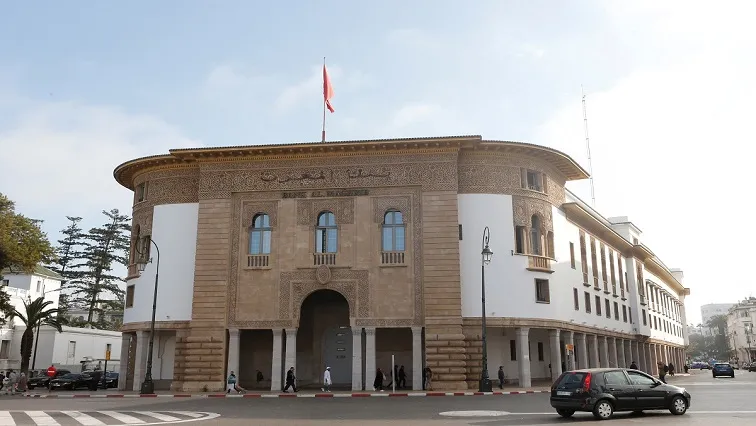
Unveiling Morocco's Monetary Policy Transformation
Since the initiation of significant reforms in 2018, Morocco's monetary policy has demonstrated a marked improvement in effectiveness, particularly as highlighted by recent research from the International Monetary Fund (IMF). This research delves into how the policy decisions made by Bank Al-Maghrib, Morocco's central bank, have influenced various economic indicators, including output, inflation, interest rates, credit availability, exchange rates, asset prices, and economic expectations from late 2006 to September 2025. The findings reveal a nuanced relationship between interest rate adjustments and their impact on the economy, showcasing a gradual yet substantial improvement in policy responsiveness over the years.
The IMF's analysis indicates that a one-percentage-point increase in the policy rate leads to a reduction in economic output by roughly 0.3%, with this effect reaching its peak approximately seven quarters post-adjustment. Concurrently, inflation experiences a decline of about 0.12%, with the most significant impact observable after eight quarters. In contrast, prior to 2018, similar interest rate hikes resulted in a mere 0.1% decrease in output and a 0.05% drop in inflation, underscoring the enhanced potency of current policy measures.
Despite these advancements, the report notes that Morocco's monetary policy response remains comparatively slower and less impactful than that of other emerging markets, where output typically contracts between 0.3% and 0.8% within a span of two to six quarters following rate increases. The IMF attributes Morocco's improved transmission mechanisms to several factors, including greater exchange-rate flexibility, enhanced communication from the central bank, and the formal establishment of price stability as the primary objective of Bank Al-Maghrib.
In terms of practical implications, Morocco expanded the fluctuation band of its currency, the dirham, from 0.3% to 2.5% in 2018 and further to 5% in 2020, allowing for more responsive monetary policy adjustments. The interest-rate channel emerged as the most robust aspect of this transmission system, with changes in policy rates propagating through short-term government securities and bank lending rates, achieving pass-through rates between 50% and 120% within the first one to two quarters. However, deposit rates were less responsive, with only about 60% of policy changes being transmitted within the same timeframe.
The effects of these monetary policy adjustments varied significantly across different sectors, with short-term lending and credit extended to the services sector experiencing declines following rate increases, while long-term lending and agricultural credit displayed only modest responses. Notably, bank loans constitute over 80% of financial claims within the Moroccan economy, emphasizing the critical role that bank lending plays in the effective transmission of monetary policy compared to capital markets.
Moreover, the exchange-rate channel has enhanced since 2018, with monetary tightening resulting in a temporary appreciation of the nominal effective exchange rate and the dirham against the euro. However, the stock market has not responded significantly, and inflation expectations have only adjusted gradually. In light of these findings, the IMF researchers advocate for the development of deeper capital and foreign-exchange markets, improved communication strategies, and enhanced transmission mechanisms to deposits and long-term lending.
As reported by channelafrica.co.za.