Spanish-Moroccan Naval Dialogue to Prevent Misunderstandings
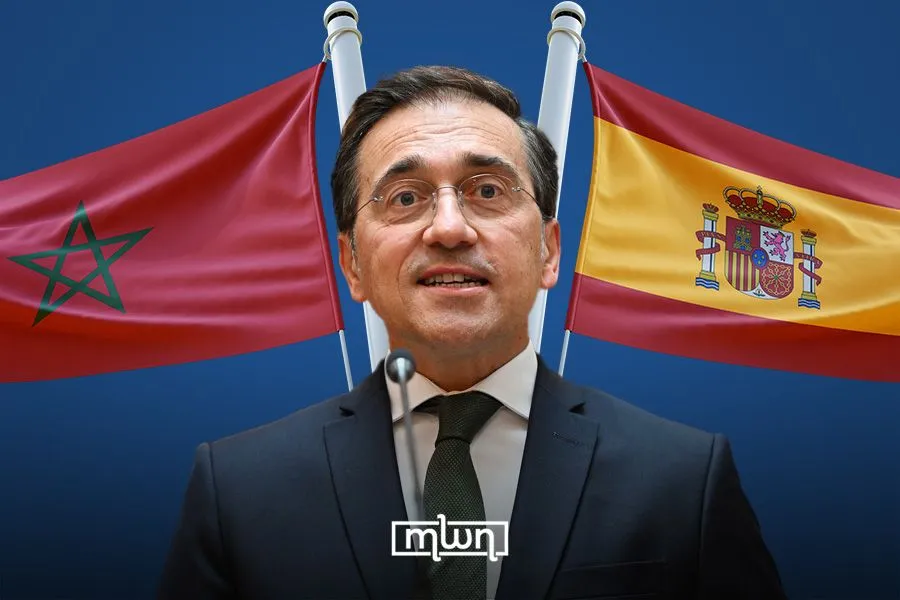
Rabat, Morocco - In a recent statement, Spanish Foreign Minister José Manuel Albares emphasized the ongoing dialogue between the Spanish and Moroccan navies aimed at avoiding any potential "misunderstandings" that could escalate into an "undesired situation." His comments, made during an interview with Telecinco, prompted speculation about the meaning behind the phrase "undesired situation," raising questions as to whether it serves as a diplomatic warning or an attempt to mitigate existing tensions between the two nations.
The dialogue comes at a time marked by heightened tensions, especially following controversial visits by Spanish politicians, including King Felipe VI, to the occupied cities of Ceuta and Melilla. These visits were intended to reaffirm Spain's claims over these enclaves, which have been a focal point of contention in Spanish-Moroccan relations. Furthermore, the Spanish media and politicians expressed outrage over Moroccan media's references to these territories as "occupied" and "colonized," terms that the Spanish government vehemently opposes, framing the issue within the context of its own "territorial integrity."
Albares's remarks also alluded to a supposed Moroccan naval presence in waters claimed by Spain during July, coinciding with a significant irregular migration crisis that saw over 70,000 migrants arriving in the occupied city. This situation incited frustration among the Spanish populace and provided fodder for far-right groups and the People's Party (PP), who leveraged it to intensify their anti-Moroccan rhetoric ahead of the upcoming elections. In response to these challenges, Spanish Prime Minister Pedro Sánchez announced the dissolution of the government and called for elections in November, with the far-right positioning the migration crisis as central to their electoral agenda.
Challenging the Spanish Narrative on Maritime Sovereignty
Adding to the discourse, Moroccan author and analyst Samir Bennis recently challenged the Spanish narrative regarding the alleged presence of Moroccan warships near occupied Ceuta. He questioned the legitimacy of Spain's claim that these vessels violated its sovereignty, arguing that Spain presents its territorial claims as established facts despite the absence of a formal maritime boundary between the two countries. Bennis highlighted that Spain's assertion of a 12-nautical-mile territorial sea around Ceuta cannot be indiscriminately applied, especially considering the enclave's proximity to Morocco's coast and the lack of a bilateral maritime delimitation agreement.
Referencing Article 15 of the UN Convention on the Law of the Sea (UNCLOS), which addresses the delimitation of territorial seas between adjacent states, Bennis asserted that Spain cannot simply declare a maritime boundary based on its claims of sovereignty. He emphasized that Morocco does not recognize Spanish sovereignty over Ceuta, viewing it instead as a remnant of colonial rule. Moreover, the ongoing allegations concerning naval activities continue to circulate online, shaping public perception in Spain regarding Morocco as a perceived threat. A recent poll indicated that 58% of respondents believe that tensions over Ceuta and Melilla could lead to a war between the two nations, with a significant majority also expressing support for far-right parties in the upcoming elections.
As reported by moroccoworldnews.com.