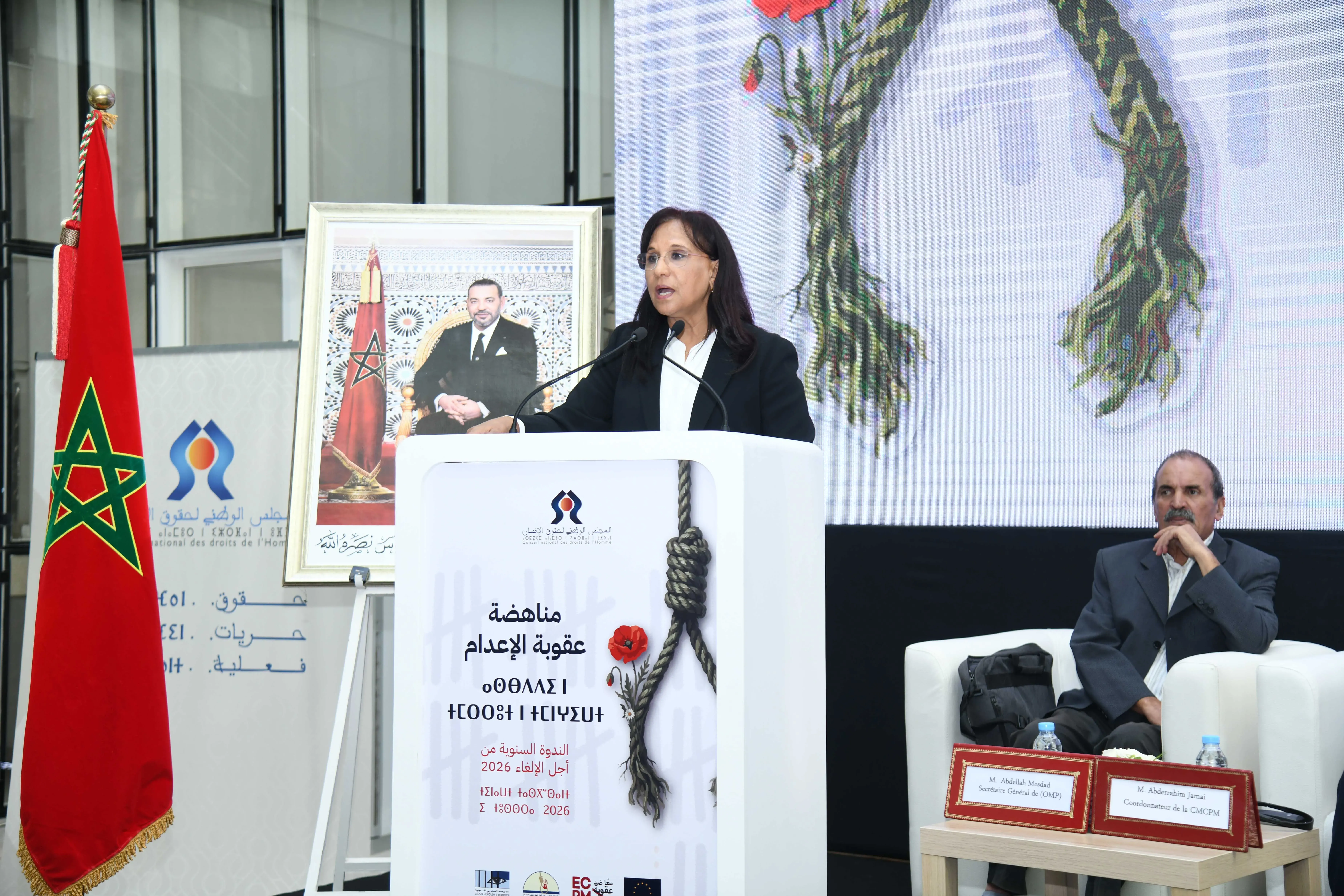
During a recent press conference held in Morocco's capital, Rabat, to mark the World Day Against the Death Penalty, Amina Bouayach, the President of the National Human Rights Council (CNDH), articulated the need to humanize the debate surrounding this contentious issue. Bouayach emphasized that fostering a more compassionate discussion does not equate to diminishing the severity of crimes or equating victims with perpetrators. Instead, it challenges society to reflect on its own humanity by seeking preventive and inclusive solutions that could avert such tragedies from recurring in the future. This approach places a spotlight on the responsibility of both the executive and legislative branches to seize the political moment and transition from a de facto moratorium to a legal abolition of the death penalty.
Abderrahim Jamaï, the coordinator of the Moroccan Coalition Against the Death Penalty (CMCPM), addressed the global challenges associated with protecting the right to life. He highlighted the critical importance of collaboration between human rights advocates and civil society to counter any potential setbacks—whether on an international or regional scale—in this realm. Jamaï expressed his satisfaction with Morocco's proactive stance, particularly the decision to host the 10th World Congress Against the Death Penalty in Marrakech. He regarded this as a political commitment that demonstrates Morocco's dedication to strengthening its human rights framework and paving the way for a complete abolition.
Furthermore, Jamaï urged all stakeholders, especially the youth, to engage actively in preparations for this significant international event. Raphael Chenuil-Hazan, the Director General of the organization Ensemble contre la peine de mort (ECPM), remarked on Morocco's continued moratorium on executions since 1993 and its supportive vote at the United Nations for a resolution advocating for a moratorium on the death penalty. This consistent stance has bolstered Morocco's position on the international human rights stage. The upcoming Congress in Marrakech presents a unique opportunity for Morocco to advance from a de facto moratorium to enshrining total abolition within its penal code, marking the culmination of extensive advocacy and commitment to human rights.
In a related context, Daniele Dotto, the Deputy Head of the European Union (EU) Delegation to Morocco, underscored the human aspect of the suffering endured by death row inmates. He noted the overarching global trend toward abolition and praised the positive developments occurring in Africa, which is now leading the charge in this movement. Dotto reiterated the EU's support for Morocco's hosting of the World Congress, asserting that this initiative represents a strong signal of leadership and trust. He also emphasized the EU's ongoing commitment to collaborating with local institutions and civil society to achieve this shared goal.
Abdallah Mouseddad, a representative from the Moroccan Prison Observatory (OMP), focused on this year's theme for the Day, "Witness for Life," highlighting its role in shedding light on the devastating impacts faced by inmates and their families, as well as combating a culture of vengeance. He stressed the need for ongoing efforts to develop an African protocol for abolition, prioritize the mental health of current inmates, and enhance reintegration programs.
The proceedings culminated in the publication of a final statement by participants, urging the government to prioritize the abolition of the death penalty in legislative reforms and remove it from the penal code. The statement also called on Parliament to "end legislative hesitations" by promptly ratifying the second optional protocol.
This significant event featured speeches and interventions from various professionals opposing the death penalty, all underscoring the commitment from diverse sectors towards advancing human rights. Additionally, it was attended by members of the diplomatic corps accredited in Morocco, as well as representatives from public institutions, including the National Authority for Integrity, Prevention, and the Fight Against Corruption, the Mediator Institution of the Kingdom, and the Council of the Moroccan Community Abroad.
As reported by telquel.ma.