Challenges Facing Tunisian Youth Employment in Morocco
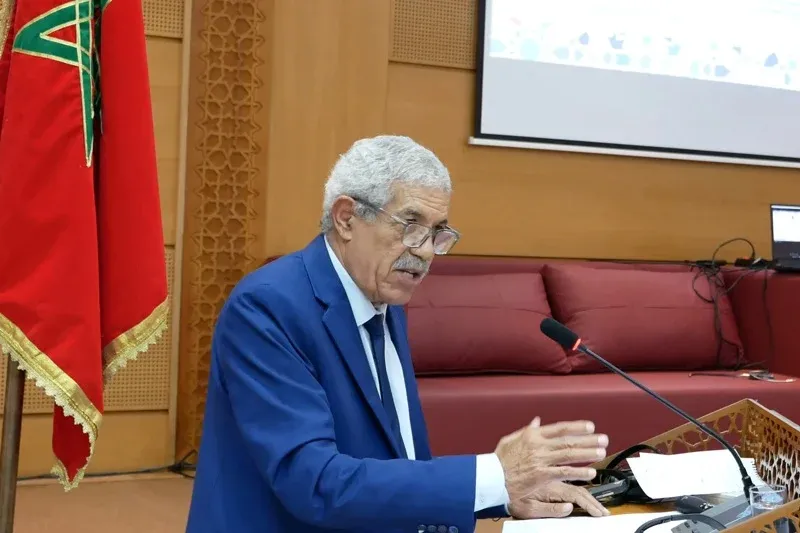
In a recent international conference organized by the International Council on Social Work (ICSW) in Marrakech, Morocco, Abdellatif Hanachi, a distinguished professor of contemporary history at the University of Manouba in Tunisia, shed light on the pressing challenges of economic and social integration faced by Tunisian youth. With youth aged between 15 and 34 constituting approximately 27% of Tunisia's population, Hanachi emphasized that this demographic segment is grappling with significant difficulties in securing employment. Alarmingly, the unemployment rate among this group reached a staggering 35.4% in 2024, highlighting a concerning trend that cannot be overlooked.
Hanachi pointed out that the situation becomes even more dire for university graduates, whose unemployment rate surged to 26.6% during the first quarter of 2024. This sharp rise indicates that, contrary to the common belief in Tunisia that a university degree serves as a key to social mobility and economic independence, this is no longer a guaranteed pathway to job security. The professor articulated that the current transformations in Tunisia are characterized not only by the harsh reality of unemployment but also by a growing disparity between the aspirations of youth and what society can realistically provide.
The Migration Dilemma for Tunisian Youth
Hanachi further elaborated that the Tunisian youth today are more educated, globally connected, and aware of lifestyle options and opportunities beyond their national borders. However, they are often met with a limited job market, stagnant wages that fail to afford them independence, and unstable career paths within their home country. Consequently, many young Tunisians are increasingly considering migration, particularly irregular migration, as a viable response to their challenges. Over the past five years, more than 150,000 Tunisians have reportedly left the country in search of better prospects abroad, a statistic that reflects not only their desire to emigrate but also the broader social significance of seeking a future outside of Tunisia.
The academic stressed that migration does not necessarily stem from a simple wish to leave one’s homeland; rather, it often represents a quest for a space where individuals can achieve what remains unattainable in their native country. Thus, for a considerable segment of the youth, migration has transformed into a means of renegotiating the terms of their social integration.
Hanachi also highlighted that not all young people choose to leave Tunisia; many are actively working to create alternatives within their communities. This has led to the emergence of various forms of freelance work and individual initiatives that often fall within the realm of the informal economy. He noted that the youth protests in Tunisia following the 2011 revolution were not exclusively tied to traditional political parties and organizations. Instead, they manifested in diverse local and digital forms demanding ‘recognition and self-assertion’ within society.
Moreover, he cautioned that the lack of tangible changes resulting from protests could drive some youth toward withdrawal and disengagement. However, he refrained from labeling this as an absolute political apathy. Instead, he emphasized that it reveals a profound shift in the concept of participation, as young people increasingly distance themselves from traditional institutional frameworks like elections and political parties, opting to express their views through digital platforms on a daily basis.
As reported by hespress.com.