Prime Minister's Groundbreaking Address to the Moroccan Parliament
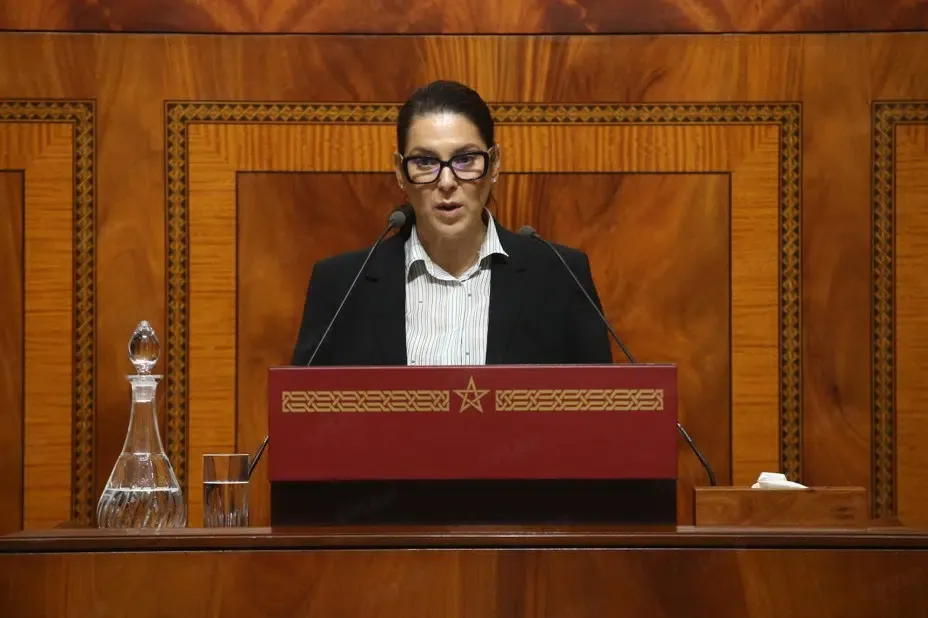
Rabat – A significant political milestone has been achieved in the Kingdom of Morocco as for the first time in its history, a woman is at the helm of the government. On Monday, October 19, 2026, Prime Minister Fatema Ezzahra El Mansouri addressed a joint session of both chambers of Parliament in Rabat to unveil her cabinet's official government program. This address marks the official commencement of a new legislative phase in which the executive branch is expected to deliver on extensive promises related to social security and economic modernization. Additionally, this moment demonstrates that the country is capable of executing a smooth and reliable power transition. Prior to this, symbolic handovers took place across various ministries.
At the core of the presented program is the integration of economic stability with social security. As Prime Minister El Mansouri outlined before the lawmakers, the government plans to significantly increase direct support for households. The monthly social assistance is set to gradually rise from 500 to 1,000 Moroccan Dirhams by the end of her term.
Moreover, the pension system is expected to undergo fundamental reforms, aiming to set the minimum threshold for principal pensions across different systems at 3,000 Dirhams per month. Accompanying these measures will be bureaucratic relief in daily life. According to the Prime Minister, an automatic social compensation scheme will be introduced that covers the monthly electricity bill for eligible households at their primary residence, up to a maximum of 100 Dirhams, entirely without the need for written applications or on-site bureaucratic visits. Additionally, widows will henceforth receive a full pension equating to 100% of the deceased spouse's primary pension, an increase from the previous 50%.
Ambitious Goals for Education and Infrastructure
In the education sector, the Prime Minister articulated a goal of implementing a 'zero-tolerance policy towards school dropouts' by the year 2030, with at least 80% of students expected to master essential learning content by that time. Complementarily, the government announced a rural housing program intending to renovate or construct 100,000 houses in rural centers during her term. Eligible families will receive direct state financial assistance of 40,000 Dirhams, along with free technical support.
Alongside social policy, the government statement intensely addressed the pressing structural challenges facing the nation. In light of ongoing climatic pressures, the water security strategy emphasizes accelerating the construction of seawater desalination plants. It is projected that by 2031, 1.8 billion cubic meters of water will be mobilized, complemented by new dams in arid and mountainous regions, as well as water transfer projects.
In the energy sector, El Mansouri reaffirmed the goal of raising the share of renewable energies in the national energy mix to over 52% by 2030. This will be bolstered by the implementation of Morocco's green hydrogen initiative and the expansion of gas infrastructure. In agriculture, the government announced a shift from short-term aid to a stronger regulation of production factors. A new seed sovereignty program aims to increase the share of domestic seeds from 20% to 50% during her term, thereby stabilizing market supply and livestock resources.
The cabinet's and government program also sends a strong signal regarding cultural identity: a special fund of 2 billion Dirhams has been established for the implementation of the official status of the Amazigh language and culture. A permanent ministerial commission led by the Prime Minister will oversee the integration of the language into education, administration, justice, and media.
According to the Prime Minister, the realization of these reforms requires a stable institutional foundation. El Mansouri emphasized that state institutions can only regain citizens' trust through effective combatting of corruption and conflicts of interest. The establishment of the rule of law is an indispensable prerequisite for political life.
In regional politics, the executive is firmly committed to the concept of advanced regionalization, aiming to specifically reduce regional inequalities in economic strength, infrastructure, and supply. To achieve this, regions will receive more autonomy and financial leeway: state financial transfers to regions will be increased to at least 12 billion Dirhams starting in 2027. This will be complemented by the implementation of the charter for administrative decentralization. At the same time, El Mansouri referred to the ongoing reform of the family code, which will continue in alignment with the guidelines set forth by King Mohammed VI as Emir Al-Mouminine.
With this reform agenda, the government under Fatema Ezzahra El Mansouri has raised expectations significantly. Whether the ambitious timelines for 2030 and 2031 can be met and how the financing of the extensive social and infrastructure packages will be detailed will largely depend on economic development and parliamentary collaboration. The government has announced its intention to actively seek dialogue with the opposition and societal partners to ensure the necessary stability for this transformational process.
As reported by maghreb-post.de.