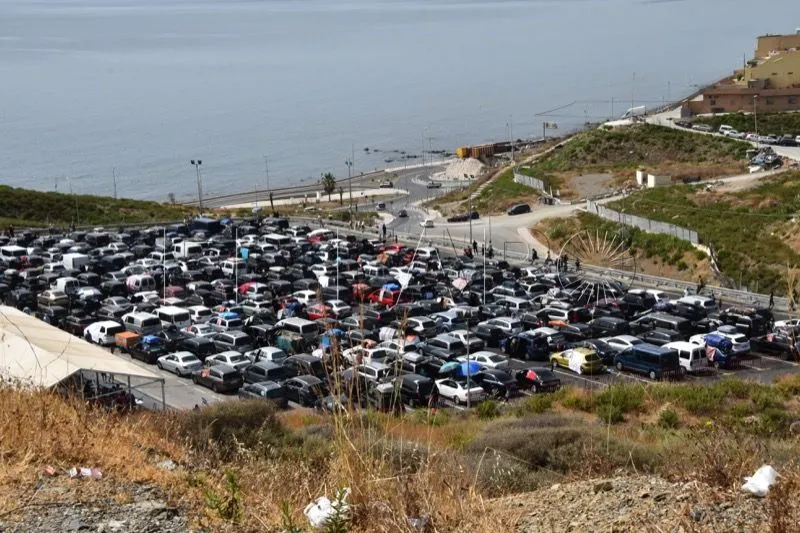

Significant Changes in the 2026 Operation Crossing the Strait
The Operation Crossing the Strait (Operación Paso del Estrecho, OPE) is set to become a major challenge for both Spain and Morocco in 2026, primarily due to the implementation of smart border controls and biometric checks. Ceuta is poised to be one of the critical transit points during this period, as these new protocols are expected to significantly alter the flow of travelers between the two countries.
Biometric controls, which have been introduced within the Schengen Area, require thorough verification of all documents that have not yet been registered. This has raised concerns about potentially long queues during the OPE, particularly at border crossings and while accessing ferry services via Algeciras or Tarifa. Miguel Ángel Pérez Triano, the Government Delegate in Ceuta, has highlighted the enhanced security these measures bring, emphasizing their necessity in monitoring who enters and exits these regions.
Anticipated Challenges and Preparations for the OPE 2026
The newly implemented Entry/Exit System (EES) is already operational at the ports of Algeciras and Tarifa, as well as at the border crossings of Melilla and Ceuta, meaning these systems will be in effect during the upcoming OPE. Recent congestion at the Ceuta and Melilla borders, especially during the Feast of Sacrifice, has been attributed to the sluggish pace of Moroccan border controls. Locals have expressed frustration over the limited operational lanes at Ceuta, calling for an increase in personnel to manage the expected influx of travelers.
The smart border management system collects biometric data through the EES, mandating the registration of all relevant documents. Concerns have arisen that travelers who have not previously crossed through the activated smart border may experience delays during the OPE 2026. Furthermore, there are worries in Morocco regarding the potential shortage of ferries, not only on the Strait route but also on alternative routes such as the one from Genoa to Tangier, leading to increased prices for crossing.
This year, Morocco plans to enhance health control measures in response to a recent hantavirus outbreak, further complicating the operational landscape. Estimates indicate that this year’s Operation Crossing the Strait could see a 3% increase in travelers compared to last year, when approximately 3.5 million people traveled to Spain in over 800,000 vehicles.
Additionally, the OPE 2026 will coincide with the first of three solar eclipses that will traverse the Iberian Peninsula over the next three years, a celestial event that may boost transit activity. The specific operational plan for OPE 2026 outlines a fleet strategy, detailing the number and capacity of vessels required to ensure a smooth flow of vehicles and passengers, along with provincial coordination plans for each of the nine participating ports and specific road safety initiatives for each region.
The Government Delegate has indicated that there will be additional support during this OPE, although specifics regarding timing and roles have yet to be disclosed. This announcement follows the first official meeting held at the Plaza de los Reyes with various stakeholders involved in the successful execution of the Operation Crossing the Strait.
Spain’s efforts must be aligned with those undertaken by Morocco, the destination for many travelers returning to their country of origin for vacation. The two phases of arrival and return are critical in this significant movement of people and vehicles, highlighting the importance of collaboration across borders.
As reported by elfarodeceuta.es.