
Unveiling the Historical Context of May 24, 1926
One hundred years after its publication, the cover of the Santa Fe newspaper El Litoral serves as a vivid window into the historical climate of a world still reeling from the aftermath of World War I, yet dazzled by technological advancements and an increasingly interconnected globe. On May 24, 1926, El Litoral's pages captured an era marked by a fascination with technology, political tensions in the wake of the Great War, and the burgeoning aviation industry, which was beginning to symbolize modernity and national prestige.
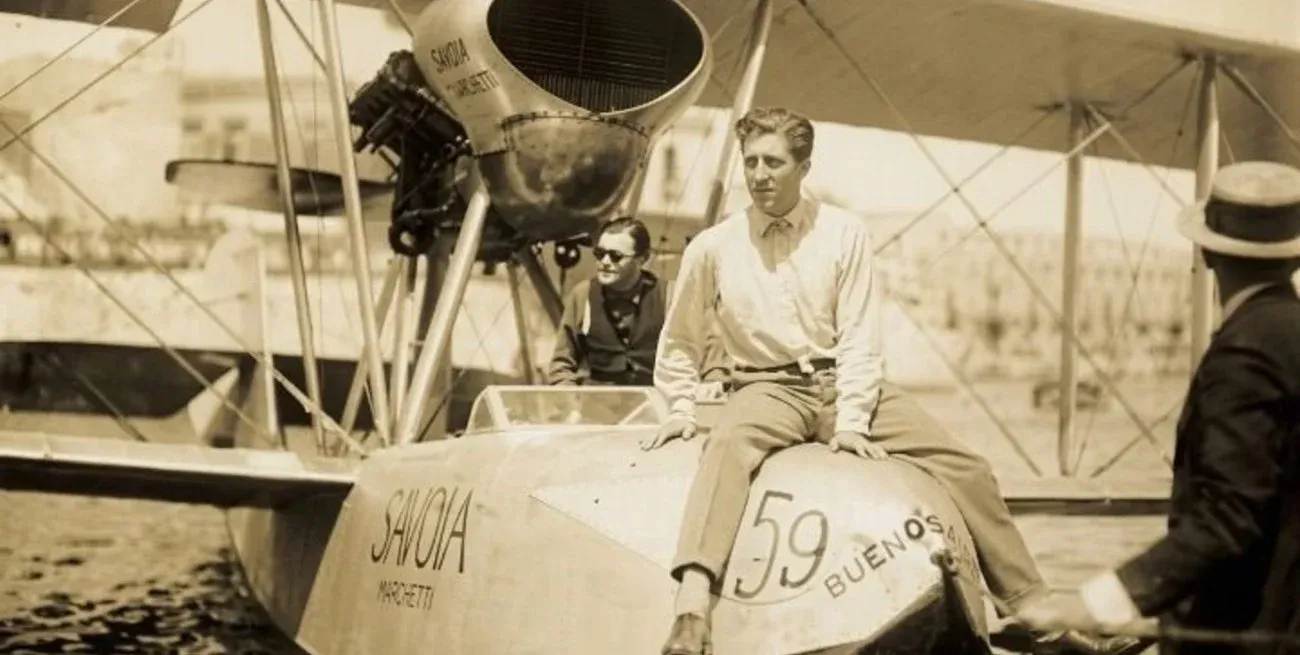
On that significant day, the international news sections were filled with a variety of stories, ranging from armed conflicts in Morocco and patriotic ceremonies in Italy to labor strikes in Great Britain and scientific experiments aimed at preserving film reels for a century. However, the main focus of the day's coverage was aviation. The edition dedicated substantial space to the daring flight of Argentine aviators Duggan and Olivero, who had embarked on their ambitious journey from New York to Buenos Aires. The anticipation surrounding their endeavor was palpable, and the tone of the reporting conveyed a deep admiration for these aviation pioneers.
“The aircraft piloted by aviators Duggan and Olivero, along with mechanic Campanelli, departed from this port at 8:04 AM,” reported the dispatch from the United States. The article elaborated that the plane “glided for nine minutes over the water” before finally taking off “amid cheers from the crowd.” Aviation was portrayed not just as a technical achievement; it represented a blend of adventure, diplomacy, and national pride. The pilots were not merely undertaking a challenging flight; they were also carrying letters addressed to Argentine President Marcelo T. de Alvear and messages from leaders in Brazil, Cuba, and Haiti. This flight was framed as a continental mission aimed at fostering connections and enhancing Argentina’s prestige.
The coverage meticulously followed the journey of the seaplane “Buenos Aires,” and shortly after its departure, news from Norfolk confirmed the successful landing in Assateague, indicating that the Argentinians had completed the first leg of their voyage. Additionally, reports highlighted the flight of Uruguayan Lieutenant Farías between Rio de Janeiro and Asunción, while Madrid announced a grand tribute for Spanish aviators Loriga and Gallarza, who were key figures in the Madrid-Manila flight. The newspaper ABC was preparing a reception that would include King Alfonso XIII and notable figures from the arts, sciences, politics, literature, and journalism.
Global Conflicts and National Sentiments
However, not all aviation news was met with excitement. From Tokyo came tragic reports: “Two of those aircraft collided in midair and crashed to the ground,” indicated the dispatch regarding an accident involving two Japanese military planes, resulting in the deaths of both pilots. This juxtaposition highlighted that while technological progress was being celebrated, the aviation industry was still fraught with significant risks and uncertainties. Another major international story was the Rif War, a conflict pitting France and Spain against forces led by Abd-El-Krim in Morocco. The coverage exhibited a clear pro-European tone, depicting a supposed definitive weakening of the rebel movement. A French official communiqué spoke of the “collapse of Abd-El-Krim’s military power” and claimed that allied tribes were “gradually disbanding.”
Despite this narrative, the edition illustrated the contradictions inherent in wartime reporting. While rumors circulated about the capture of the Riffian leader, reports from London denied such claims: “Abd-El-Krim has not been captured,” asserted dispatches from Tangier. The reports detailed military advances by French and Spanish forces, surrenders by tribes, and triumphal declarations from military commanders. General Jordana confidently told reporters, “I am very pleased, as the success has exceeded our expectations.” The war in Morocco was a primary strategic concern for European powers during the 1920s, consistently occupying prominent space in international press coverage.
Seven years post-World War I, Italy was engulfed in a strong nationalist fervor under the leadership of Benito Mussolini. El Litoral's cover reflected this atmosphere with extensive reporting on patriotic events held nationwide. “The eleventh anniversary of Italy's entry into the great European war has been celebrated throughout the kingdom with patriotic ceremonies,” announced a dispatch from Rome. King Victor Emmanuel inaugurated a monument in Belluno dedicated to the fallen alpine veterans, detailing the immense human cost borne by the honored regiment: “It lost 3,600 men in the war” and had accumulated numerous military decorations. Concurrently, Mussolini was seen touring Genoa, engaging with labor delegations and participating in public events. The coverage emphasized how the fascist regime sought to solidify an image of national unity through patriotic symbols and the memory of the war.
Sports news also held a significant place in the May 24, 1926, edition, with the much-anticipated match between Argentina and Paraguay for the Chevalier Boutell Cup being a highlight. The Paraguayan team’s arrival aboard the steamship “Lambaré” was met with excitement in Buenos Aires after inclement weather had delayed their journey. The match was set to be played at the Sportivo Barracas stadium. Additionally, the cover announced an international cycling race between Argentine and Uruguayan teams, reflecting the growing popularity of cycling as a spectator sport in the Río de la Plata region.
Beyond aviation and sports, the edition presented a comprehensive snapshot of a politically unstable world. Reports from Warsaw detailed Marshal Józef Piłsudski and the political tensions in Poland, with the leader ordering troop disbandment “to demonstrate that he has no dictatorial intentions,” amidst growing fears of military movements at the Lithuanian border. In Cuba, authorities were heightening security around the U.S. embassy due to potential retaliation for the death sentence imposed on Sacco and Vanzetti, a case that had sparked international protests. In Great Britain, the historic miners' strike of 1926 continued, marking one of the most significant labor crises of the twentieth century. Reports from China indicated an attack on the British consul in Swatow, amid political unrest and the rise of communist movements.
Economic issues were also central to the discussions of the day, with France debating measures to stabilize the franc and reintroduce gold circulation, while Sweden was negotiating a trade treaty with Germany. A century after this significant edition, the cover of El Litoral provides a lens through which we can observe a world striving to move beyond the devastation of the Great War, yet still marked by military conflicts, ideological tensions, and profound technological transformations. In this context, aviation emerged as a symbol of future promise: a modern conquest capable of uniting continents and igniting the imagination of an era captivated by progress.
As reported by ellitoral.com.