
Walking Through History: A March of Solidarity
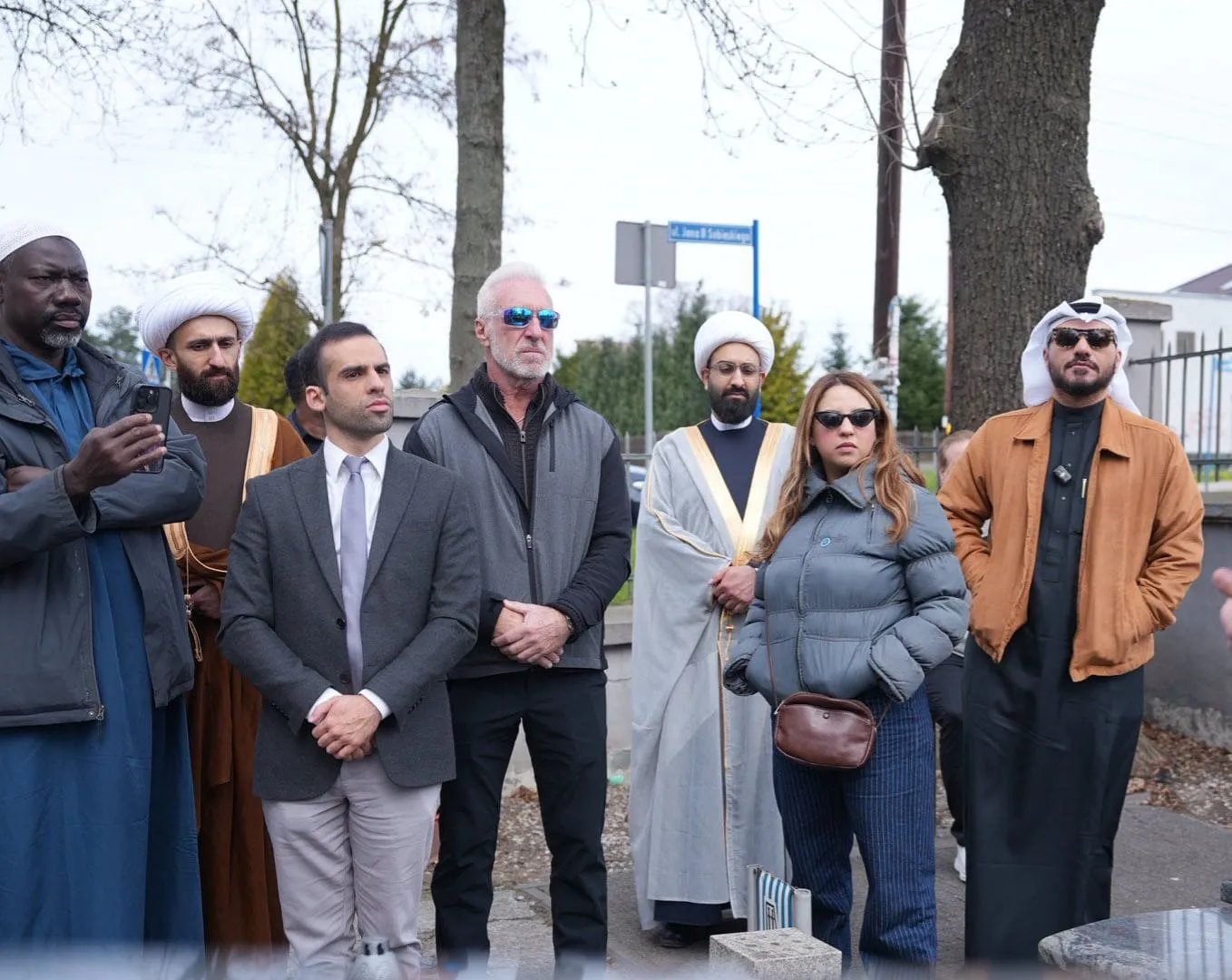
At this very moment, I find myself walking through the gates of Auschwitz for the first time as part of the March of the Living, accompanied by a diverse group of Muslim leaders and imams hailing from nations such as Pakistan, Azerbaijan, the United Arab Emirates, Saudi Arabia, Bahrain, Morocco, Somaliland, the United Kingdom, Canada, and the United States. Together, we traverse the somber path of the death march, united in our vow that such atrocities must never recur, declaring unequivocally, 'Never Again.'
This event transcends a mere historical gesture; it stands as a living testament to the possibility of forging alliances of peace even from the depths of unimaginable darkness.
Acts of Remembrance and Lessons from History
Amin Drissi, a prominent public opinion leader from Morocco, undertook a significant journey prior to his arrival in Auschwitz. He visited the grave of Rabbi Raphael Ankawa in Salé, Morocco, who is revered as one of the greatest sages of the last century and the first Chief Rabbi of Morocco. In a touching act of remembrance, Drissi lit three candles on the rabbi's grave, carrying three additional candles with him to Auschwitz. This poignant act is almost unfathomable—a Muslim from Morocco lighting candles in memory of a Jewish rabbi and bringing that light into the heart of one of history's darkest places for the Jewish people.
Yet, as we reflect on the Holocaust, we must confront a disquieting truth regarding the nature of humanity and the potent influence of ideology. We often picture the Nazis and their collaborators as monstrous beings, as if they were inherently evil. However, the unsettling reality is that they were, in many respects, ordinary individuals—people who led normal lives with families, neighbors, and careers. What transformed them into perpetrators of industrial-scale murder was not an inherent malevolence but a pervasive and systematic indoctrination that permeated all aspects of their lives: literature, science, economics, and even security. This indoctrination cultivated a worldview in which Jews were scapegoated for societal ills, portrayed as an inferior race that needed to be eradicated.
In a chilling parallel, the Hamas terrorists responsible for the atrocities on October 7 exemplify this same pattern. These individuals, who returned to their families after committing horrific acts, illustrate the profound dehumanization that has been instilled over decades through education, religious teachings, and media rhetoric that vilifies Jews, stripping them of their humanity and casting them as the root of all evil in the Arab world. Yet, from this grim understanding emerges a glimmer of hope for the future.
Just as European society has largely come to terms with the injustices of the Holocaust and engaged in a comprehensive process of denazification, a similar transformation is essential within the Muslim world. This requires acknowledging the legitimacy of the Jewish people's existence and the recognition of Israel as a state in the region, coupled with a systematic eradication of incitement in educational systems and media narratives. The imams and Muslim leaders who have chosen to participate in this march, confronting historical truths and expressing solidarity, exemplify a rare courage that may come at great personal risk. Their actions possess the potential to catalyze change in the very places where it matters most: in classrooms, mosques, and within the consciousness of future generations in the Muslim world.
If their voices resonate within their communities, this endeavor will transcend being merely a symbolic visit to memorial sites; it could herald the onset of a genuine transformation in relationships between the Jewish people, the State of Israel, and the Muslim world.
As reported by blogs.timesofisrael.com.