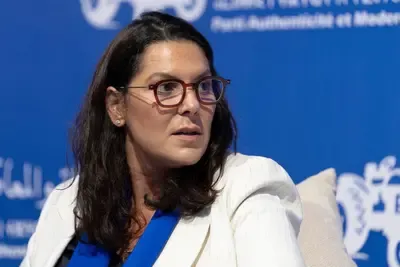

Africa is witnessing a remarkable shift in political leadership, with an increasing number of women achieving high-ranking positions across the continent. Among these trailblazers, Namibia's President Netumbo Nandi-Ndaitwah, Tanzania's President Samia Suluhu Hassan, Judith Suminwa as Prime Minister of the Democratic Republic of Congo, and Sara Zaafrani as Prime Minister of Tunisia stand out. Recently, Morocco has joined this progressive movement by appointing Fatima Ezzahra El-Mansouri as the country's first-ever woman Head of Government, marking a significant milestone in the region's political landscape.
This development is particularly noteworthy in a continent where women's representation in executive roles lags behind their presence in national parliaments. For instance, in South Africa, women occupy approximately 45% of the seats in the National Assembly, making it one of the leading examples of female parliamentary representation in Africa. The African National Congress (ANC) has also instituted a constitutional requirement that mandates at least 50% of its elected structures to be comprised of women. Nevertheless, the question of whether South Africa will ever see a woman president remains unanswered. Although women have held prominent political positions, including the role of Speaker of the National Assembly, the Constitution stipulates that the National Assembly may elect either a woman or a man as president, leaving the outcome uncertain.
In contrast, the rise of women in political leadership within the Middle East and North Africa has been a more recent phenomenon. A significant milestone was achieved in 1988 when Benazir Bhutto became Pakistan's first woman prime minister, making her the first woman to lead a Muslim-majority country. Five years later, in 1993, Tansu Çiller took office as Türkiye's first woman prime minister. Now, with Morocco's appointment of Fatima Ezzahra El-Mansouri, this historic narrative continues to expand.
On September 29, 2023, Morocco's King Mohammed VI appointed El-Mansouri as Head of Government, a groundbreaking achievement in the nation's history. Her appointment followed parliamentary elections in which her party, the Authenticity and Modernity Party (PAM), secured 97 out of 395 seats in the House of Representatives—the highest number won by any party in this election cycle. According to Morocco's constitutional framework, the King designates the Head of Government from the political party that obtains the most seats in the House of Representatives, and El-Mansouri must now proceed to form a coalition government.
A lawyer with a prominent political background, El-Mansouri previously held the position of housing minister and served as the mayor of Marrakech. Her appointment comes at a critical juncture for Morocco, which is poised to make significant investments in connection with the 2030 FIFA World Cup, while also grappling with economic and social challenges, including rising inflation, employment, and wage issues. Following her appointment, El-Mansouri expressed her commitment to formulating a government that meets the expectations of both His Majesty the King and the Moroccan populace. She articulated her enthusiasm for this historic moment, emphasizing the pride it brings not only to her but also to women across the country, and acknowledging the high expectations from citizens, especially the youth. She pledged to develop a program that would provide realistic and actionable solutions.
El-Mansouri's appointment adds Morocco to a broader narrative of changing political leadership in Africa. Notably, Namibia's Nandi-Ndaitwah became the country's first woman president in 2025, while Tanzania's Samia Suluhu Hassan has held the presidency since 2021. Judith Suminwa stepped into the role of prime minister in the Democratic Republic of Congo in 2024, and Tunisia appointed Sara Zaafrani as prime minister in 2025. Hence, while Morocco's new Head of Government is not the first instance of a woman leading an African government, it undoubtedly represents a historic first for Morocco and contributes to the continent's evolving record of female political leadership.
The implications of this appointment extend beyond the individual achievement of El-Mansouri. Although strides have been made in increasing women's representation in legislative bodies across Africa, women continue to be underrepresented in the highest executive positions. A 2025 analysis by the Center for Strategic and International Studies reported that Africa has seen 24 female heads of state or government across 18 different countries, yet only two women have been directly elected by voters to the presidency: Ellen Johnson Sirleaf of Liberia and Namibia’s Netumbo Nandi-Ndaitwah.
South Africa presents an intriguing contrast; while its parliament approaches gender parity, with women currently making up 45% of the National Assembly, the nation has yet to elect a woman president since the end of apartheid, and it remains to be seen if this will change in the future. Morocco's appointment of Fatima Ezzahra El-Mansouri is a pivotal addition to this ongoing narrative, further enhancing the significance of women's political leadership within Africa's dynamic political landscape.
As reported by mg.co.za.