

Embarking on a Journey from Oujda to Fkih Ben Salah
In the heart of the Eastern capital, where the paths of travelers converge and their stories intertwine, the adventure towards the enchanting oases of Fkih Ben Salah begins the moment one sets foot at the bustling bus station in Oujda. This station is not merely a dry transit point; it is a vibrant space pulsating with movement, sound, and life, encapsulating the daily rituals of travel and exploration among Moroccans. Upon entering the main gate of the station, one is greeted by a unique chorus of human voices; here stand the bus attendants and representatives, their voices rising in a cacophony as they call out the names of cities: “Fes! Meknes! Casablanca!” Amidst these calls, the familiar echo of “Fkih! Fkih!” resonates, stirring within travelers a profound longing and an indescribable desire to embrace that serene oasis. This call becomes the first signpost and a warm welcome guiding footsteps through the throng of bags and faces.
As one moves past the clamor of the entrance, the rhythm shifts dramatically to a more organized ambiance in front of the information desks and neatly arranged ticket counters, where staff are busily ensuring that every passenger secures their ticket. Continuing through the corridors that resemble a self-contained village, small shops line the way, offering snacks and beverages. Visible in a corner is the police office, alongside facilities ensuring safety and order, with sanitation workers diligently maintaining the cleanliness of the area despite the overwhelming influx of visitors. Before the final steps, the aromatic scents of black coffee and mint tea waft from the cafes, where travelers sit, their eyes glued to the clock. As the hands signal the time for departure, emotions intertwine, exhaustion fades, and a sense of comfort, tranquility, and joy replaces it. It feels as though the spirit senses the calm of the oasis and its ancient palaces even before the bus begins to roll, with large buses lined up in an aesthetically pleasing manner while workers busily load luggage amid the watchful gazes of those saying goodbye and those waiting to welcome.
The Scenic Route to Fkih Ben Salah
The bus departs for Fkih Ben Salah, leaving behind the hubbub of the station as it surrenders its wheels to the long road ahead. Once the vehicle surpasses the outskirts of the city, a contrasting visual tableau unfolds through the winding roads of Kanfouda; on either side of the road, small agricultural plots emerge, timid green patches defying the arid climate and barren soil, interspersed with residential buildings—some warm and close, greeting passersby, while others loom in the distant horizon like silent witnesses to a bygone era. With every kilometer, signage for nearby villages and towns appears, guiding travelers across this vast expanse. Inside the bus, distances dissolve, transforming it into a microcosm bustling with life, where conversations in Arabic (Darija) and Amazigh Fqijji intertwine to dispel the specter of fatigue. Outside, the geography begins to morph into a captivating visual poem as the bus delves deeper into the high plateaus, passing through Ain Beni Mathar and Tindrara.
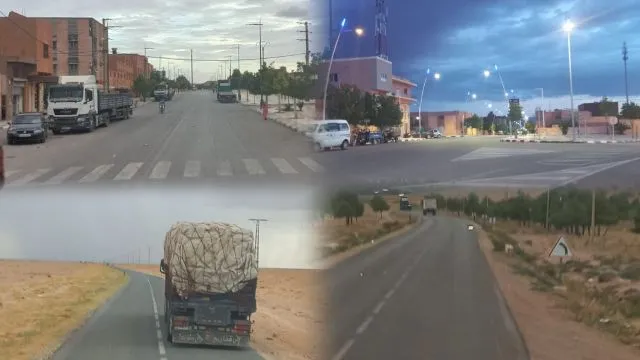
Here, towering mountains reveal themselves, adorned in shades of pink, purple, and gray, surrounded by dry valleys that have carved their paths into the earth, awaiting rains that may or may not come. Expansive, barren landscapes stretch out as far as the eye can see, disrupted only by the shy appearances of resilient desert grasses. In the distance, the historic railway that once connected Oujda to Bouarfa emerges like a black line, narrating memories of a distant time. Amidst this exploratory scene, the stark absence of development is glaring; the ongoing hours of travel collide with the complete lack of modern and organized rest areas, turning the journey into a physical ordeal for passengers, exposing the frailty of service infrastructure along this strategic corridor. Nevertheless, the bus remains the only lifeline here, stopping abruptly in response to signals from nomads on the roadside, ready to transport them to the nearest urban center. As the bus approaches some villages and towns that appear simple and primitive in architecture, the vigilant presence of the Royal Gendarmerie ensures road safety, meticulously checking identities with professionalism.
As the journey nears the larger urban centers along this route, specifically at the outskirts of Bouarfa and passing through the town of Abou Lakhal, the security dynamics shift noticeably; in addition to the gendarmerie checkpoints, passengers encounter intensified national security barriers in Bouarfa and Fkih Ben Salah due to their strategic and border locations. Upon reaching the final bends leading into Fkih Ben Salah, the weight that accompanied travelers throughout the route from Oujda dissipates, and fatigue gradually gives way to an overwhelming wave of joy and relief, filling the heart with gratitude for arriving safely after a taxing journey. Emotions in these moments oscillate between the negative aspect of physical exhaustion and muscle tension from prolonged sitting and the ceaseless hum of the engine, and a predominant positive sense of belonging, the enchanting air of the oasis filled with the scent of palm trees and damp earth, and the psychological comfort accompanying the end of the long road’s perils. Finally, the bus halts and opens its doors, completing the joy before the station, where eyes meet and the long-awaited reunion with friends and relatives unfolds. They rush to the curb with broad smiles, greeting me warmly and enveloping me in heartfelt welcomes infused with expressions of longing, declaring the authentic hospitality of Fqijji. In that moment, all the travel hardships dissolve, and Fkih Ben Salah reveals itself as not merely a destination for travelers, but as a haven welcoming back its children into its warm embrace after a long absence.
As reported by anfaspress.com.
