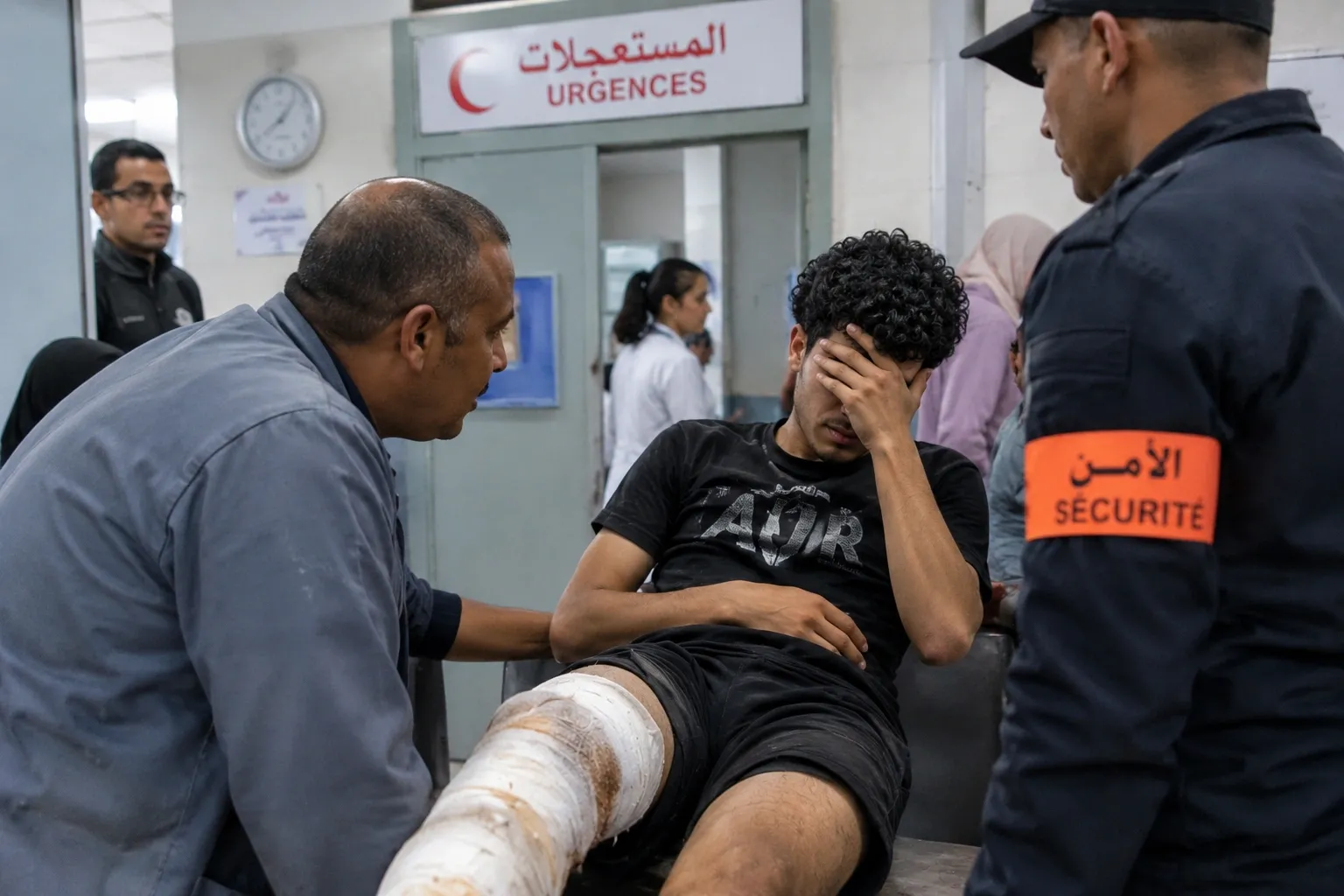

In a distressing incident that has captured public attention, a young man from Fes, Morocco, suffered severe burns on his leg due to a gas cylinder explosion while at work. Following the accident, he was rushed to the university hospital in Fes by a taxi driver, desperately seeking medical assistance. However, what transpired next has sparked a significant reaction, as it underscores the ongoing struggles faced by many citizens within the healthcare system, particularly regarding prolonged wait times and difficulty accessing timely care.
Reports indicate that the young man was left waiting for over three hours before receiving any medical attention, all the while enduring excruciating pain from his injuries. Observing his dire condition, fellow patients at the hospital intervened, urging the medical staff to prioritize his care. This incident has transcended the individual plight of one young man, reigniting a pressing question that resonates with many: what happens to patients in need of urgent care when they enter a hospital?
Many citizens find themselves navigating a harrowing journey through the healthcare system, facing long waits for examinations, difficulties securing appointments, or struggling to obtain necessary services and medications. For these patients, the experience becomes a secondary layer of suffering, compounding the pain of their illness or injury. It is crucial to note that the issues within the healthcare sector should not be seen as a blanket indictment of all healthcare workers. Doctors, nurses, and medical staff continue to fulfill their duties under challenging circumstances and limited resources. However, the accounts of such incidents highlight the urgent need for improvements in patient reception and care standards, ensuring that every patient is treated with the dignity they deserve.
Furthermore, reports of a confrontation between the young man's companion and a security personnel at the hospital raise critical conversations about the necessity for calm and effective communication within healthcare settings, especially when patients are in distress or fear, and their families or companions are in a state of emotional turmoil.
For many, the hospital represents not just a place for treatment but a last refuge when faced with illness or injury. Consequently, providing medical care must go hand in hand with fostering an environment of respect, empathy, and attentive service. While the specifics of this incident warrant clarification from all parties involved, it reflects a broader suffering experienced by numerous individuals, posing a fundamental question: can patients expect to find not only medical treatment but also compassion, dignity, and humanity within the hospital walls?
As the young man hopes for a swift recovery from his injuries, it is essential that such occurrences be viewed as opportunities to identify systemic issues and enhance the conditions under which patients are received. The ultimate aim should be to ensure that illness or injury does not mark the beginning of another ordeal within a place that should epitomize compassion and healing.
As reported by anwarpress.com.